


Introduction
Before buying a flat, plot or resale property, most buyers check price, location, payment plan and possession date. But the real safety of a property deal depends on its documents.
Two terms often create confusion during this stage: Sale Deed and Title Deed.
A sale deed and title deed are connected, but they are not exactly the same. A sale deed is usually the registered document through which ownership is transferred from seller to buyer. A title deed, in common property language, refers to the document or set of documents that prove legal ownership or clear title over the property.
For a buyer, this difference is important because having one document does not automatically mean the entire property is legally safe. The buyer must understand what each document proves and what still needs to be verified.
What Is a Sale Deed?
A sale deed is the main legal document that records the sale of a property. It is executed between the seller and the buyer and usually contains the property details, sale consideration, payment terms, possession status, seller declarations and transfer of ownership rights.
In simple words, a sale deed shows that the seller has sold the property and the buyer has purchased it.
For most property buyers, the registered sale deed becomes the most important document after purchase. It works as proof that the sale transaction has taken place and that ownership has been transferred as per the document.
What Is a Title Deed?
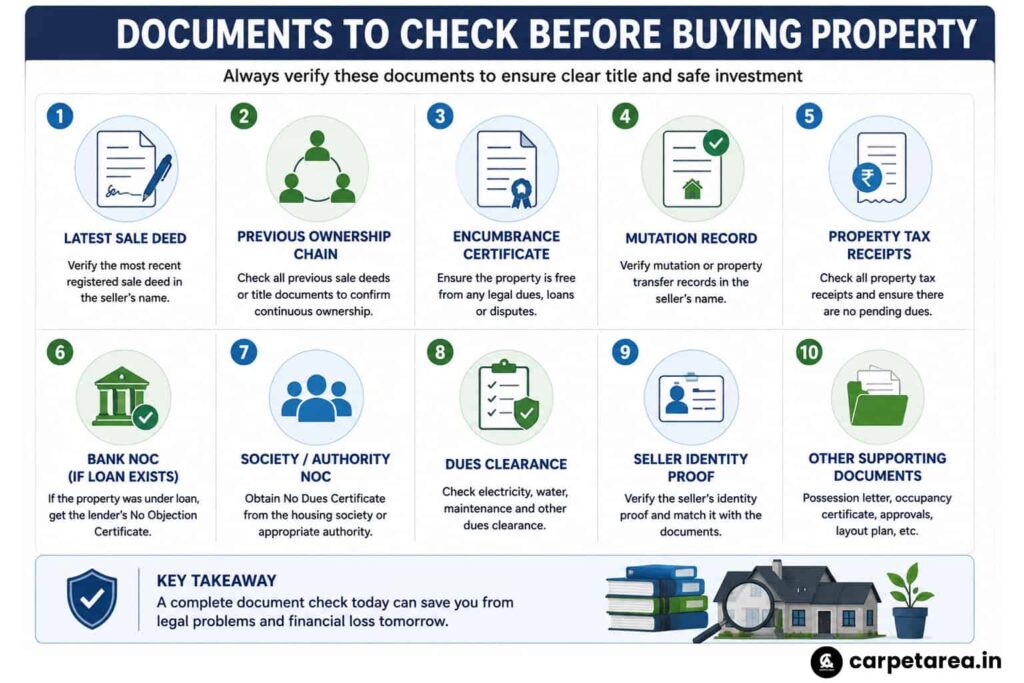
A title deed is commonly understood as a document that proves ownership or legal title over a property. However, in practical property verification, title is not always proved by one document alone.
Title means the legal right to own, use and transfer the property. To confirm clear title, a buyer may need to check several documents, such as previous sale deeds, conveyance deed, allotment records, mutation record, property tax receipts, encumbrance certificate, bank NOC and authority or society records.
So, while the latest sale deed may be a key title document, a proper title check usually requires reviewing the complete ownership chain.
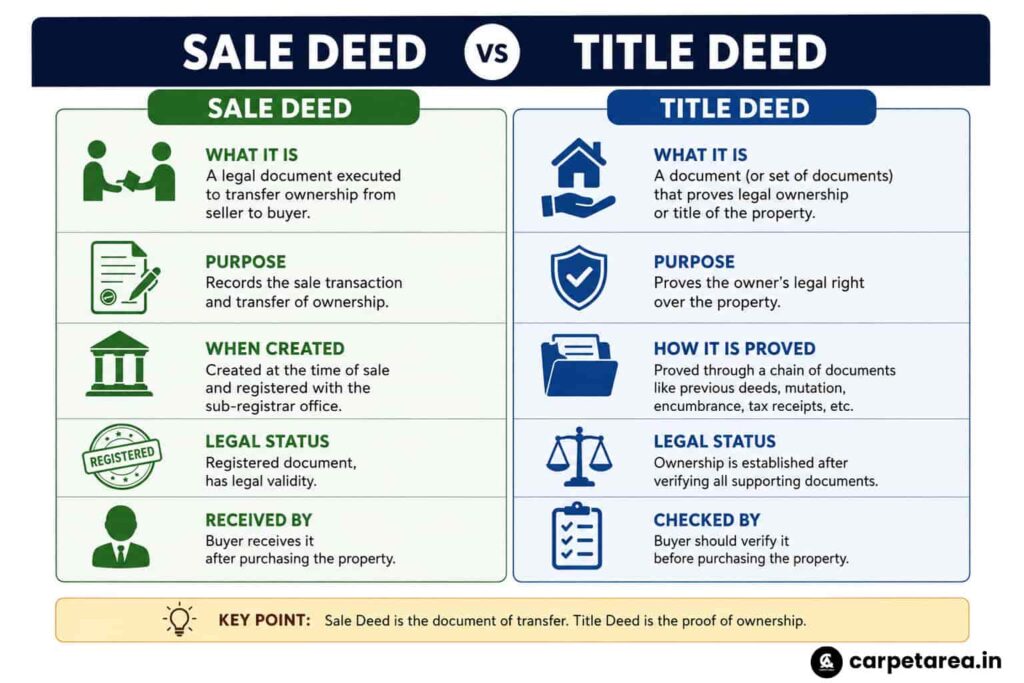
Sale Deed vs Title Deed: The Main Difference
The easiest way to understand the difference is this:
A sale deed is the transaction document. It records the actual transfer of property from seller to buyer.
A title deed is the ownership proof concept. It shows or supports the legal right of a person to own the property.
A sale deed can become part of the title documents, but title verification may need more than just the latest sale deed. This is especially important in resale flats, inherited properties, leasehold plots, authority properties and properties that were previously mortgaged.
Why Buyers Should Not Depend on Only One Document?
Many buyers make a common mistake. They see a sale deed in the seller’s name and assume that the property is completely safe.
That is not always enough.
A sale deed proves that a transaction happened. But the buyer must still check whether the seller had the legal right to sell, whether the previous ownership chain is complete, whether any loan or dues are pending, whether the property is under dispute and whether the property details match official records.
This is why a buyer should not ask only, “Is the sale deed available?”
A better question is, “Is the complete title chain clear?”
Agreement to Sell Is Not the Same as Sale Deed
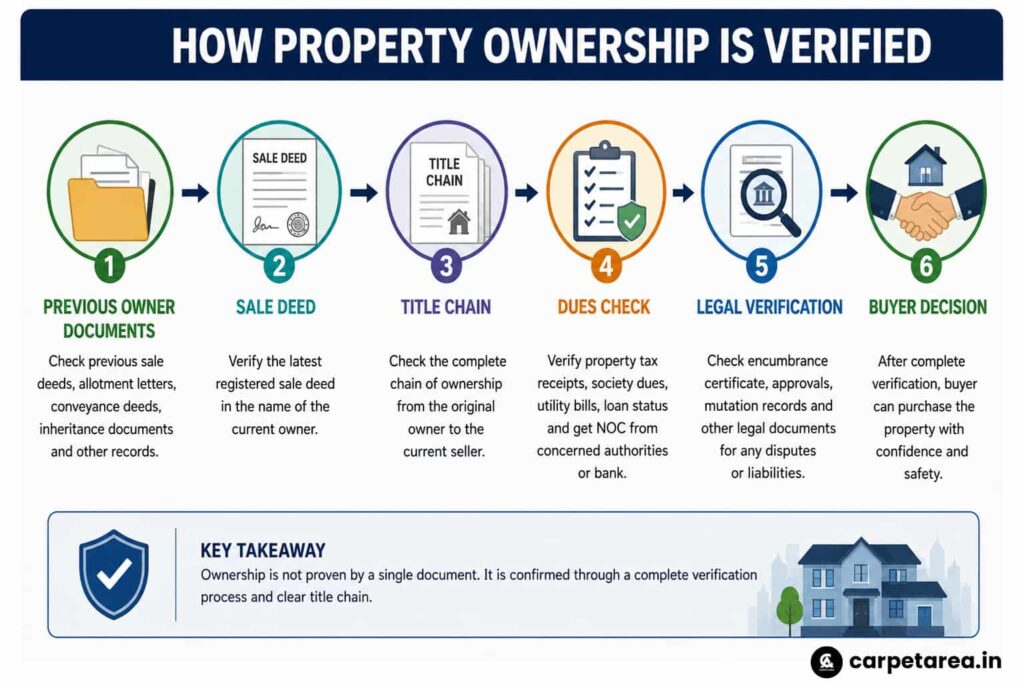
Another major confusion is between Agreement to Sell and Sale Deed.
An agreement to sell is usually a contract between buyer and seller stating that the property will be sold on agreed terms. It may include the price, payment schedule, timeline, conditions and obligations of both parties.
But an agreement to sell does not always mean that ownership has been finally transferred.
A sale deed is the final transfer document. Once it is properly executed, stamped and registered, it records the actual sale and transfer of ownership.
This difference matters because a buyer may sign an agreement and pay a large amount, but the legal transfer is usually completed only through the registered sale deed.
Documents Buyers Should Check Along With Sale Deed
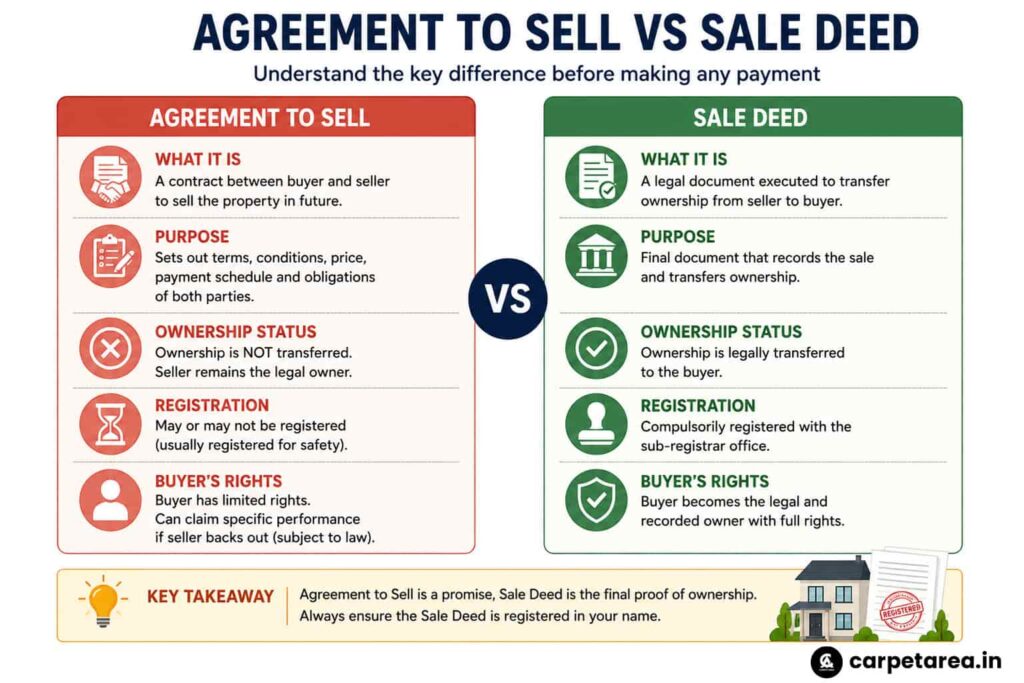
Before buying a flat, plot or resale property, a buyer should not rely only on one document. A proper document check gives a clearer picture of ownership, dues, approvals and legal safety.
Important documents may include:
- Latest registered sale deed
- Previous ownership chain
- Encumbrance certificate, where applicable
- Mutation record
- Property tax receipts
- Bank NOC, if loan exists
- Society or authority NOC
- Dues clearance
- Seller identity proof
- Other supporting documents such as possession letter, occupancy certificate, approvals or layout plan, depending on the property type
This document check helps the buyer understand whether the seller has a clean and marketable right to transfer the property.
Flat Buyers: What Should Be Checked?
For a flat buyer, the documents should be checked at two levels: ownership documents and project or society-related documents.
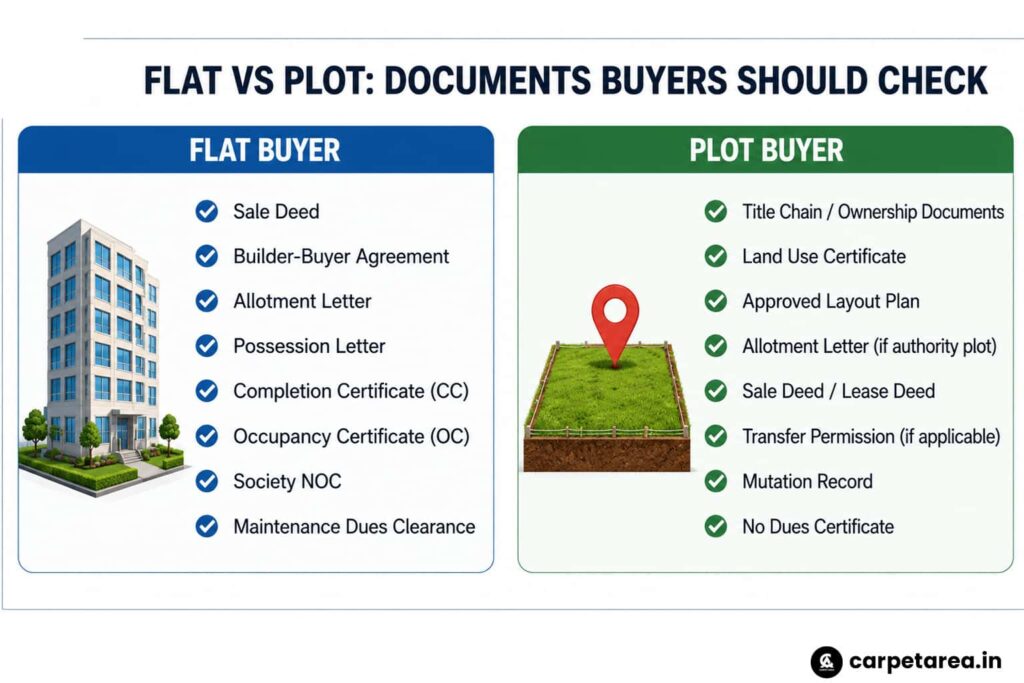
A buyer should verify the latest sale deed, builder-buyer agreement, allotment letter, possession letter, occupancy certificate, completion certificate, society NOC, maintenance dues clearance and loan closure papers if the property was mortgaged.
The buyer should also check whether the flat number, tower, floor, area and parking details match the documents and society or builder records.
Plot Buyers: What Should Be Checked?
For plot buyers, title verification is even more important because land records can be complicated.
A plot buyer should check the title chain, land use, approved layout plan, allotment letter if it is an authority plot, sale deed or lease deed, transfer permission, mutation record, possession proof and no-dues certificate.
The buyer should also verify whether the plot has clear access, correct boundaries and no pending authority or revenue-related issues.
Warning Signs in Property Documents
A buyer should become careful if the seller is not transparent with documents.
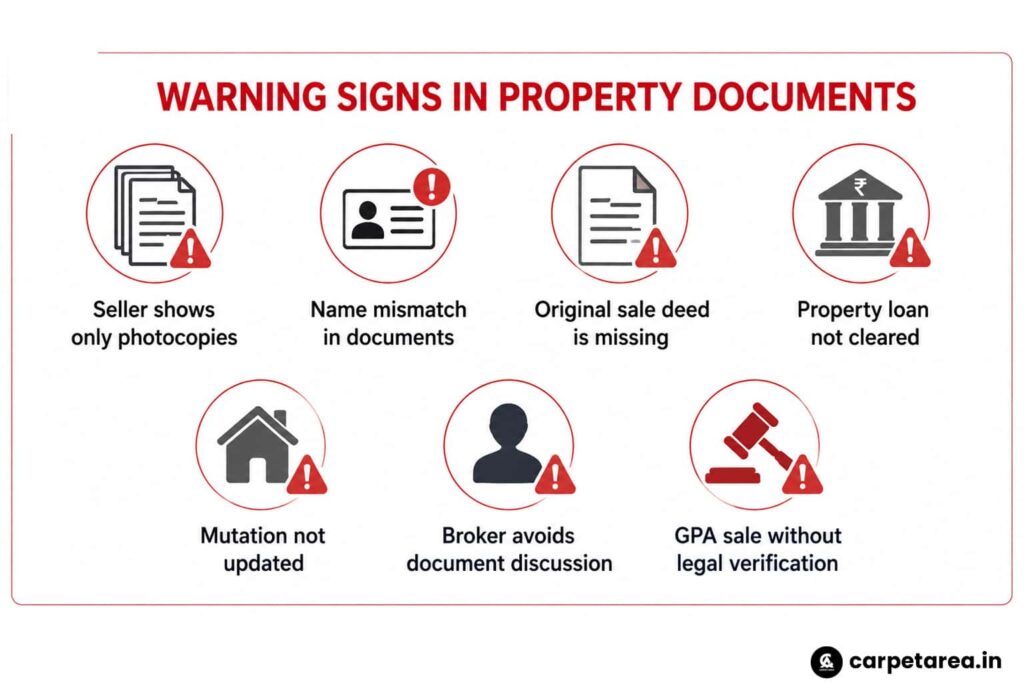
Some warning signs include:
- Seller shows only photocopies
- Original sale deed is missing
- Name mismatch appears in documents
- Property loan is not cleared
- Mutation is not updated
- Previous ownership chain has gaps
- Broker avoids document discussion
- GPA sale is being pushed without proper legal verification
- Seller is rushing the buyer for payment
- Dues, tax receipts or NOC documents are unclear
These warning signs should not be ignored. A small document issue can become a serious legal or financial problem later.
Simple Example
Suppose a seller shows a registered sale deed for a resale flat. That is important, but the buyer should still check how the seller got the property.
Was it bought directly from the builder? Was there a previous owner? Was the property ever mortgaged? Are society dues cleared? Is there an occupancy certificate? Is the flat number and area matching the records?
If these supporting documents are clear, the buyer gets a stronger picture of the property’s title.
This is why sale deed is important, but the complete document trail is equally important.
Final Buyer Advice
A buyer should never purchase property only on the basis of broker confidence, verbal assurance or a single document.
The practical rule is simple:
Sale Deed shows the property transfer.
Title verification confirms whether the seller had the legal right to transfer it.
Before making a major payment, buyers should verify the sale deed, title chain, dues, approvals, encumbrance status and authority or society records. If there is any doubt, the documents should be reviewed by a qualified property lawyer.
In real estate, one unchecked document can create a bigger problem than one wrong price decision.
Disclaimer
This article is for public awareness and buyer education only. Property laws, registration rules, stamp duty, title verification process and documentation requirements may vary by state, property type and individual case. Buyers should verify the latest details from official registration portals, local authorities, banks and qualified legal professionals before making any payment or signing any property document.
Sources:-
- Transfer of Property Act, 1882 — Section 54
https://www.indiacode.nic.in/show-data?actid=AC_CEN_3_20_00042_188204_1523272233671&orderno=55§ionId=44152§ionno=54 - Registration Act, 1908 — India Code PDF
https://www.indiacode.nic.in/bitstream/123456789/15937/1/the_registration_act%2C1908.pdf - Delhi Revenue Department — Property Registration
https://revenue.delhi.gov.in/revenue/property-registration - Delhi Revenue Department — Important Information Regarding Registration of Property
https://revenue.delhi.gov.in/revenue/important-information-regarding-registration-property - Delhi District — Model Deed Page
https://dmeast.delhi.gov.in/model-deed-page/ - Delhi Revenue Department — Non-Encumbrance Certificate
https://revenue.delhi.gov.in/revenue/non-encumbrance-certificate - Karnataka Registration Department — Registration of Documents
https://igr.karnataka.gov.in/190/registration-of-documents/en - Karnataka Registration Department — Certified Copy
https://igr.karnataka.gov.in/new-page/Certified%20Copy%20after%2001-04-2004/en - Karnataka Registration Department — Encumbrance Certificate
https://igr.karnataka.gov.in/new-page/Encumbrance%20Certificate%20After%2001-04-2004/en

Leave a Reply