

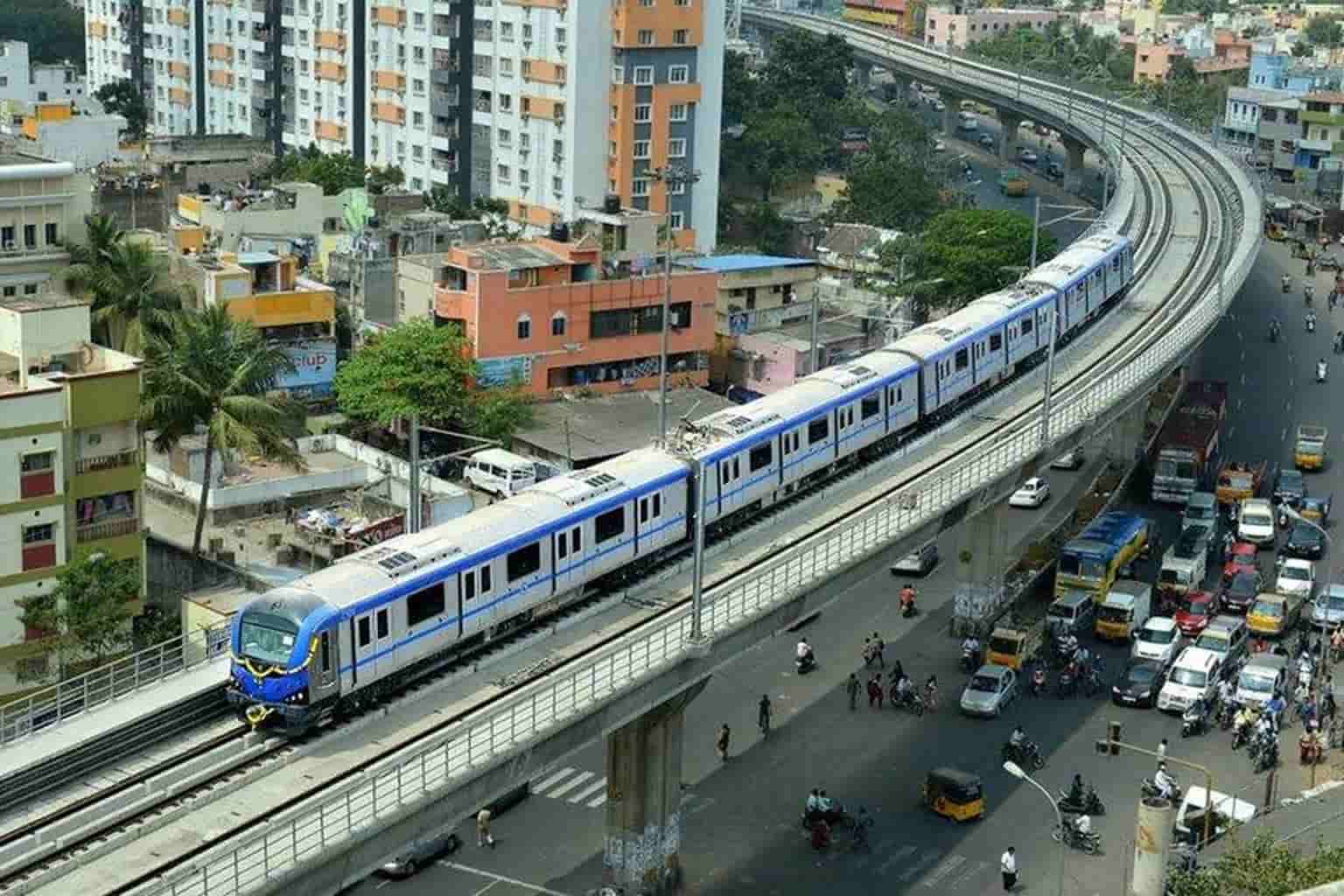
A property site visit often starts with the same promise.
“Metro station paas mein aa raha hai.”
For many homebuyers, this one line is enough to create excitement. The flat may be expensive, the location may still be developing, the road may not be fully ready, but the moment a broker or sales team says “metro connectivity,” the property suddenly starts looking safer.
And this is where the real question begins.
Is buying near a metro corridor a smart investment, or are you paying extra for a future promise that may already be included in the price?
Metro connectivity can genuinely improve a location. It can reduce travel time, improve rental demand, increase buyer interest and make a developing area more acceptable for working families. But metro alone does not make every project a good investment.
A bad location does not become good only because a metro line is planned nearby. A delayed project does not become safe only because a station is coming. And an overpriced flat does not become affordable only because the builder is using metro as the main selling point.
This guide will help buyers understand when metro-linked property makes sense, and when it becomes an overpriced mistake.
Why do metro corridors matter in real estate?
Metro corridors matter because they change how people move inside a city.
In Indian cities, traffic, long commutes and poor last-mile access are major problems. If a metro line reduces travel time and connects residential areas to office hubs, schools, markets and commercial zones, the location becomes more practical for daily life.
That is why metro corridors are being discussed as major real estate triggers in cities like Noida-Greater Noida, Pune, Mumbai, Navi Mumbai, Bengaluru, Hyderabad and Chennai. These corridors are not only transport projects. They also influence how buyers look at emerging housing pockets.
For a buyer, metro can help in three ways.
First, it can improve daily travel comfort.
Second, it can make a developing location easier to accept.
Third, it can support rental and resale demand if the station is actually usable.
But the word “if” is important.
Metro helps only when the station is close, the route is useful, the project is legally clear and the price is still reasonable.
Is “metro coming soon” the biggest trap?
Many buyers make the mistake of treating “metro coming soon” as a guarantee of price appreciation.
But real estate does not work only on future announcements.
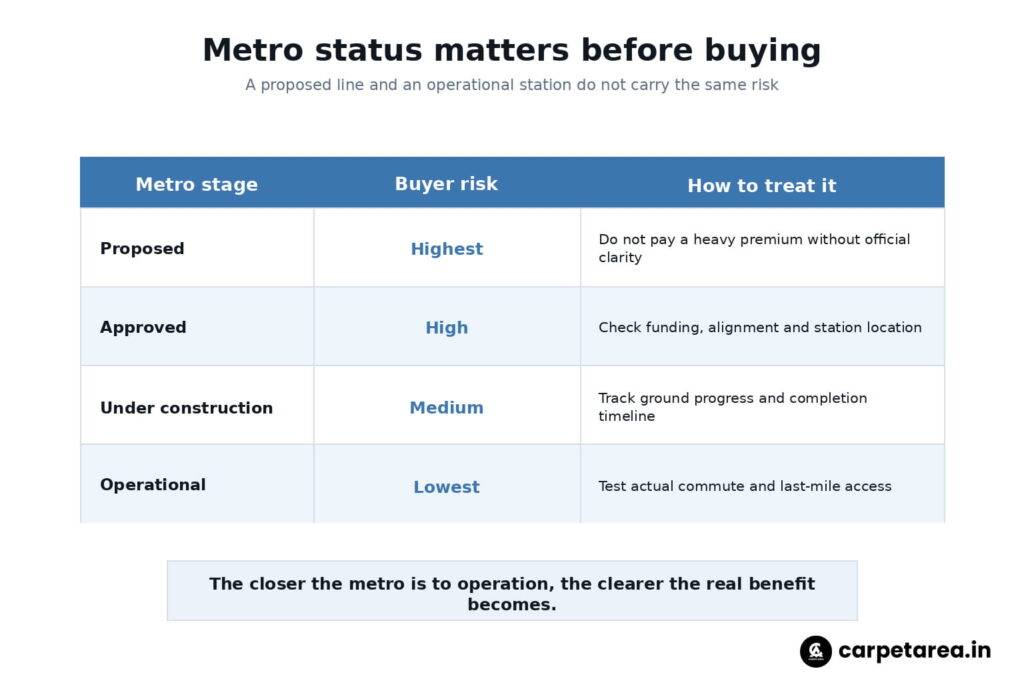
A metro line may be proposed, approved, under construction or already operational. These four stages are very different.
A proposed metro may take years to become a reality.
An approved metro may still face land, tender, funding or construction delays.
An under-construction metro may change buyer sentiment, but the benefit becomes real only after operations begin.
An operational metro gives the clearest advantage because buyers can actually use it.
This is why buyers must ask one simple question during every site visit:
Is the metro actually operational, under construction, officially approved or only being used in marketing language?
If the answer is unclear, the buyer should not pay a heavy metro premium.
How close should a property be to the metro station?
Distance matters more than marketing.
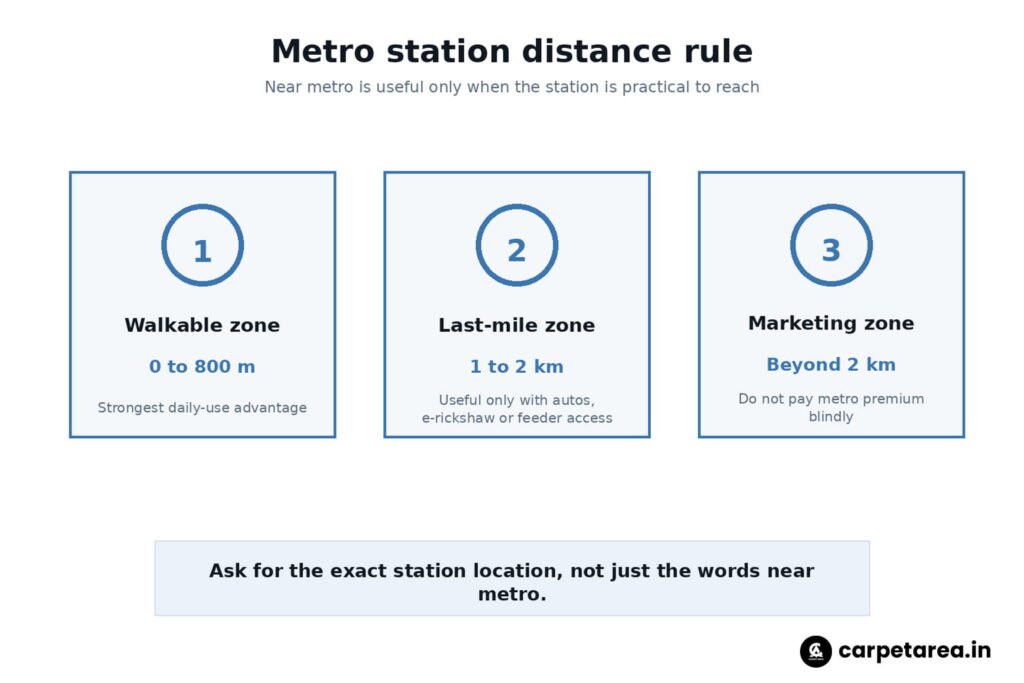
A project may say “near metro,” but near can mean 500 metres, 1.5 km, 4 km or even 8 km in broker language.
For practical use, a buyer should think in three distance zones.
A property within comfortable walking distance of a metro station can be useful for daily commuters. This is usually the strongest zone because the buyer does not need a car, cab or long rickshaw ride every day.
A property within 1 to 2 km can still benefit if last-mile transport is good. But the buyer must check road condition, safety, availability of e-rickshaw, auto, feeder bus and walking environment.
A property far from the station should not be priced like a metro-adjacent project. If the buyer still needs a long commute to reach the station, the actual metro benefit becomes weaker.
This is where many buyers get trapped. They pay for “metro connectivity,” but later realise that the station is not truly convenient.
When does metro property become a smart investment?
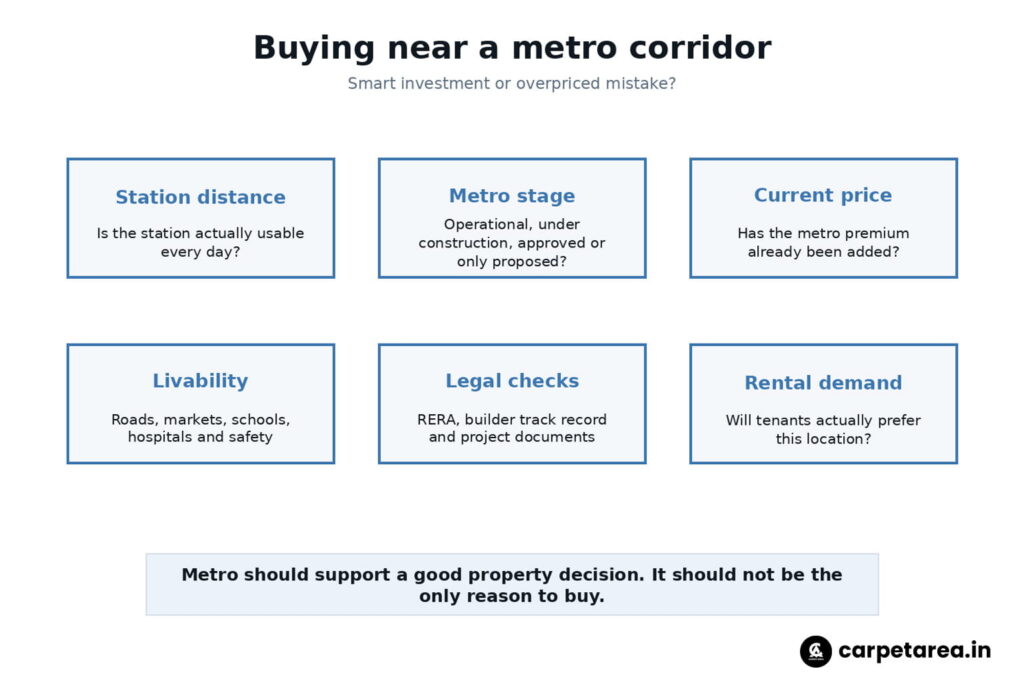
Buying near a metro corridor can be smart when several conditions come together.
The station should be close enough to use regularly.
The metro line should connect to real job centres or important city nodes.
The project should be RERA-registered and legally clear.
The price should not be inflated beyond the location’s current reality.
The surrounding area should have roads, markets, schools, hospitals and basic daily-life infrastructure.
The builder should have a reasonable track record.
The location should have both end-user and rental demand.
If these conditions are present, metro connectivity can become a strong support factor. It can improve the daily life of residents and make the property more attractive for future buyers or tenants.
In simple words, metro should add value to an already sensible property decision. It should not be the only reason for buying.
When does it become an overpriced mistake?
A metro-linked property can become a mistake when the buyer pays for a future promise without checking present reality.
This happens when the builder has already increased prices because of the upcoming metro, but the station is still far away or the completion timeline is uncertain.
It also happens when the property is in a weak location with poor roads, limited social infrastructure, low occupancy and no clear rental demand.
Sometimes, the project may be marketed as metro-connected, but the actual station may not be easy to reach. In such cases, the buyer pays the metro premium but does not get metro convenience.
Another common mistake is comparing only future appreciation and ignoring current affordability. If the EMI becomes stressful, the investment becomes risky even if the location improves later.
A property is not a good investment only because “rates may rise.” It must also be affordable, usable and legally safe.
What should buyers check before booking near a metro corridor?
Before booking a flat or plot near a metro corridor, buyers should check these points carefully.
Check the exact station distance.
Check whether the metro is operational, under construction or only proposed.
Check the expected completion timeline from official sources.
Check whether the station connects to real office, education or commercial hubs.
Check last-mile connectivity.
Check current road access and traffic situation.
Check schools, hospitals, markets and daily needs.
Check RERA registration and project documents.
Check builder track record.
Check current price compared with nearby non-metro locations.
Check resale and rental demand.
Check whether the metro premium is already included in the price.
This checklist is important because a property decision should not be based on one selling point.
A buyer is not buying a metro station. A buyer is buying a home, location, legal title, construction quality, payment plan and future livability.
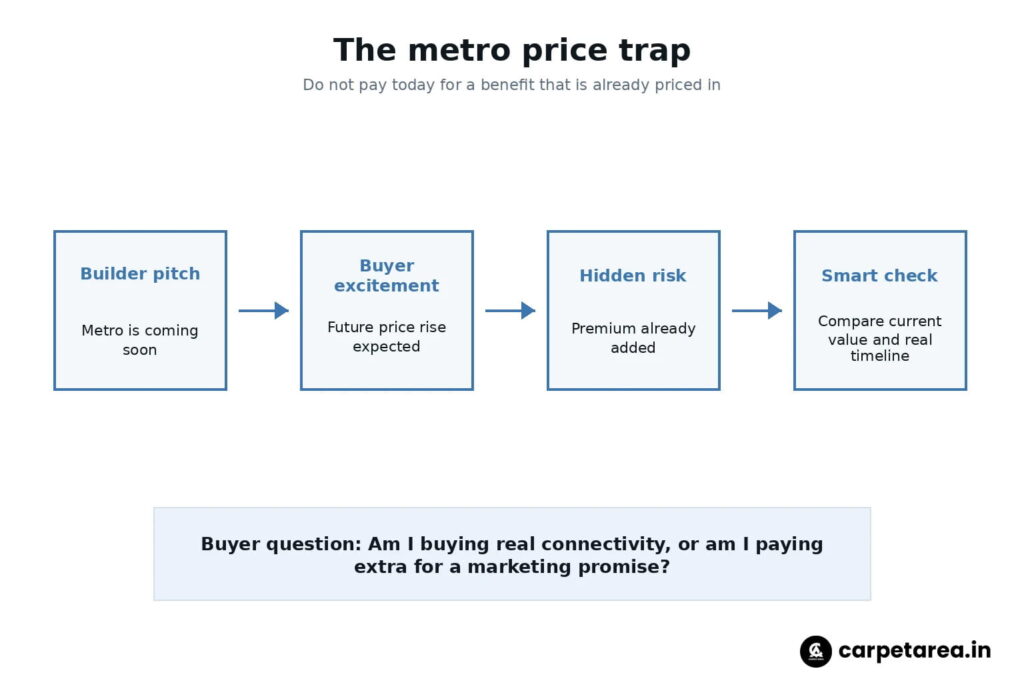
What is the price trap?
The price trap is simple.
By the time a metro corridor becomes popular, builders and sellers often start increasing prices in advance.
So the buyer must ask:
Am I buying before the market has priced in the metro benefit, or am I buying after the benefit has already been fully added to the price?
If the price is already too high, future appreciation may be slower than expected.
For example, if a project is 20 percent costlier only because a metro line is expected, the buyer must check whether the location, builder, amenities and timeline justify that premium.
If the answer is no, the buyer may be paying today for a benefit that will come years later.
The smartest buyers do not blindly pay for future stories. They compare current price, actual infrastructure status and realistic demand.
What about rental income near metro stations?
Metro connectivity can support rental demand because tenants often prefer homes with easier commuting.
But rental demand also depends on job hubs, colleges, hospitals, commercial centres and local convenience.
A metro station near an empty or poorly developed location may not immediately create strong rental demand. On the other hand, a metro station connected to an employment corridor can make a property more attractive for working tenants.
So, before buying for rental income, check:
Who will rent here?
Where will tenants work or study?
Is the station actually usable?
Are there shops and services nearby?
Is the rent enough to justify the price?
A high property price with weak rent can reduce investment returns.
Should you buy before metro completion or after completion?
Buying before completion can offer better entry pricing, but it carries higher risk.
The risk is delay, route uncertainty, station location changes, slow area development and overpromising by developers.
Buying after metro operations begin gives better clarity, but prices may already be higher.
There is no one right answer.
A risk-taking investor may enter early after checking official approvals and ground progress.
A normal homebuyer should be more careful. If the family plans to live in the property, current livability matters more than future appreciation.
If the area is not comfortable today and the metro is still years away, the buyer must think twice.
What should first-time buyers remember?
First-time buyers should not let metro marketing create pressure.
A home purchase is a long-term financial decision. It affects EMI, savings, lifestyle and peace of mind.
Before booking, first-time buyers should ask:
Can I live here comfortably even if the metro is delayed?
Is the current road access acceptable?
Can my family manage daily needs here?
Is the project legally clear?
Is the price within my budget?
Will I still like this property without the metro promise?
If the answer is no, the buyer should pause.
Metro is a bonus. It should not be the foundation of the entire decision.
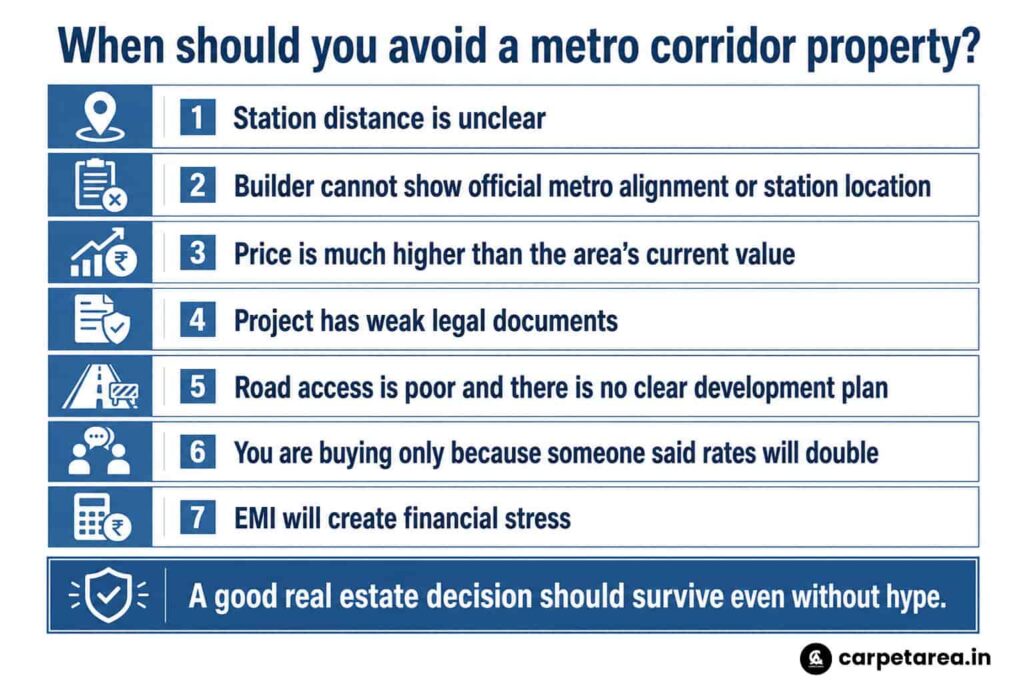
When should you avoid a metro corridor property?
Avoid the property if the station distance is unclear.
Avoid it if the builder cannot show official metro alignment or station location.
Avoid it if the price is much higher than the area’s current value.
Avoid it if the project has weak legal documents.
Avoid it if the road access is poor and there is no clear development plan.
Avoid it if you are buying only because someone said “rates will double.”
Avoid it if the EMI will create financial stress.
A good real estate decision should survive even without hype.
The Carpet Area view
Buying near a metro corridor can be a smart decision, but only when the buyer studies the details.
Metro connectivity can improve travel, rental demand and resale comfort. It can make a developing location more practical. It can also create long-term value if the corridor connects real demand centres.
But metro cannot fix everything.
It cannot fix an overpriced project.
It cannot fix poor construction.
It cannot fix weak legal documents.
It cannot fix bad road access.
It cannot fix a location where the station is too far to use daily.
The safe rule is simple.
Do not buy only because metro is coming.
Buy only when the property is legally clear, correctly priced, practically connected and livable even before the full metro benefit arrives.
A metro corridor can make a good property better. But it cannot turn a bad property into a safe investment.
Sources:-
Times of India metro corridor real estate feature:
MoHUA TOD advisory:
https://mohua.gov.in/pdf/6530ca05dcbc5advisory.pdf
Hindustan Times report on Mumbai metro and housing demand:



Leave a Reply