


A viral video from Gurugram’s DLF area has started a bigger real estate conversation. Reports said a ramp outside actor Chandrachur Singh’s Gurugram residence was demolished during an enforcement drive against unauthorised construction. The video went viral because of his calm response, but the real issue is not celebrity news. It is a property-owner warning.
In a planned colony, owning a house does not mean the owner can build anything anywhere. Ramps, stilt parking changes, extra rooms, sheds, boundary extensions, commercial use and deviations from the sanctioned building plan can become violations.
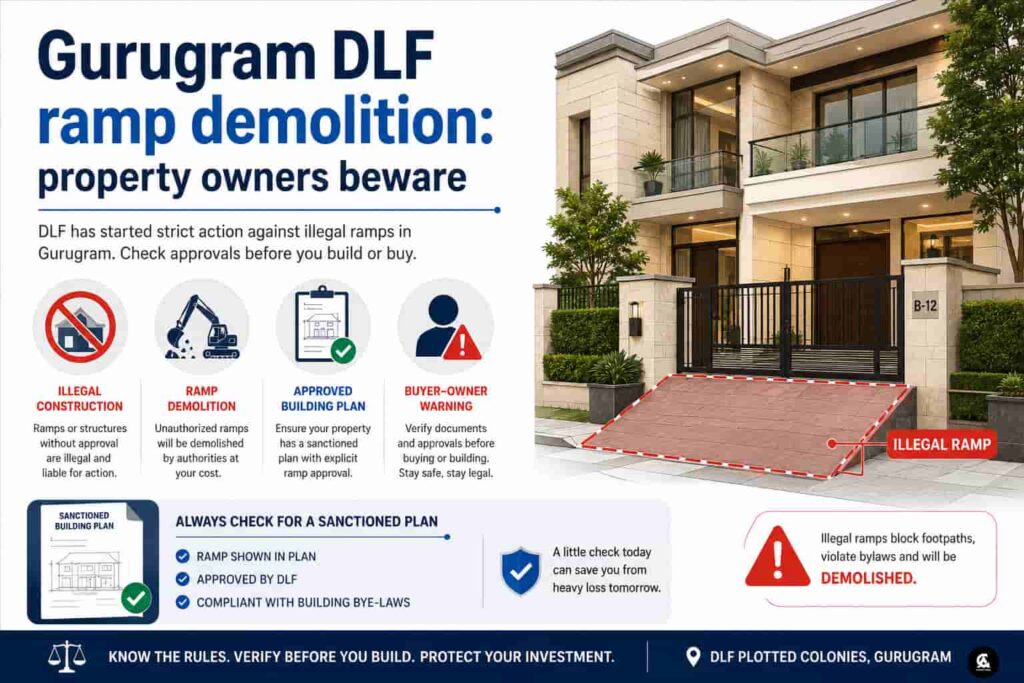
Why this incident matters for property owners?
The Gurugram DLF ramp demolition should be seen as a reminder that property ownership has limits. A homeowner may own the plot or house, but construction still has to follow approved building plans, setback rules, parking norms, land-use restrictions and local authority regulations.
The issue is much bigger than one ramp. In Gurugram’s DLF Phases 1–5, notices were reportedly served to 4,565 properties for illegal construction and unauthorised commercial activities in residential areas after survey findings and court-related proceedings.
That means the enforcement focus is not limited to one viral incident. It is part of a wider scrutiny of construction deviations and misuse in planned residential colonies.
What counts as unauthorised construction?
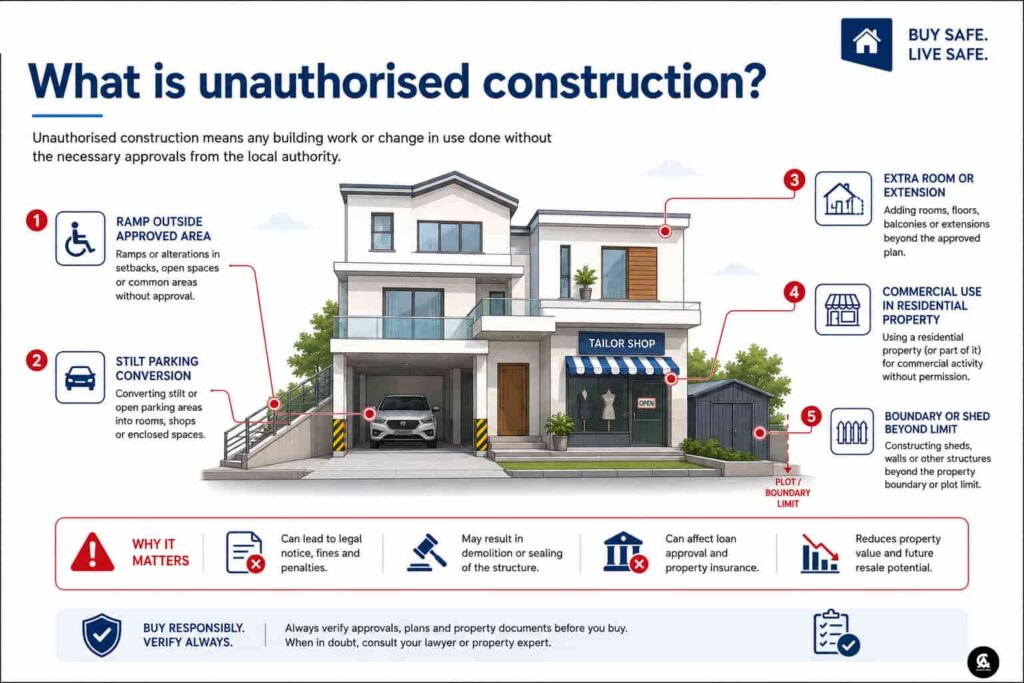
Unauthorised construction means any construction, extension or use that is not approved under the sanctioned building plan or violates permitted land use.
| Common issue | Why it can become risky |
|---|---|
| Ramp outside approved area | May block right-of-way or common/public space |
| Stilt parking conversion | Parking area may not be legally usable as room, shop or storage |
| Extra room or extension | May violate sanctioned building plan |
| Commercial use in residential property | Can violate residential land-use rules |
| Shed or boundary extension | May be treated as encroachment |
| Balcony or front-area covering | Can breach setback or layout rules |
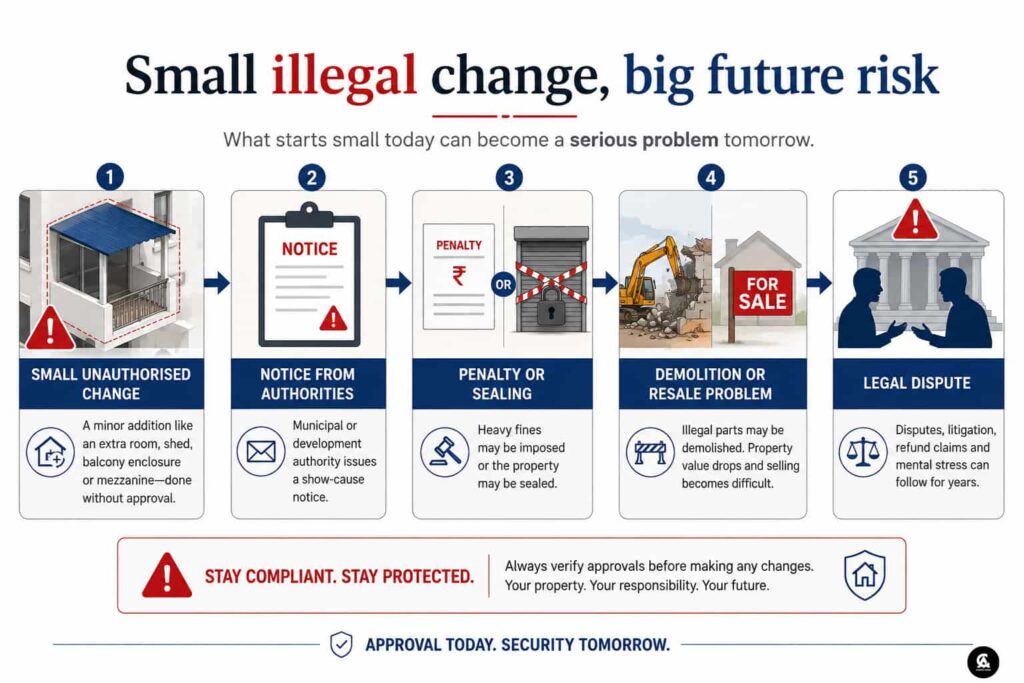
Many owners assume that small modifications do not matter. But if the structure is outside the approved plan, it can attract notice, penalty, sealing or demolition.
Why stilt parking and ramps are sensitive?
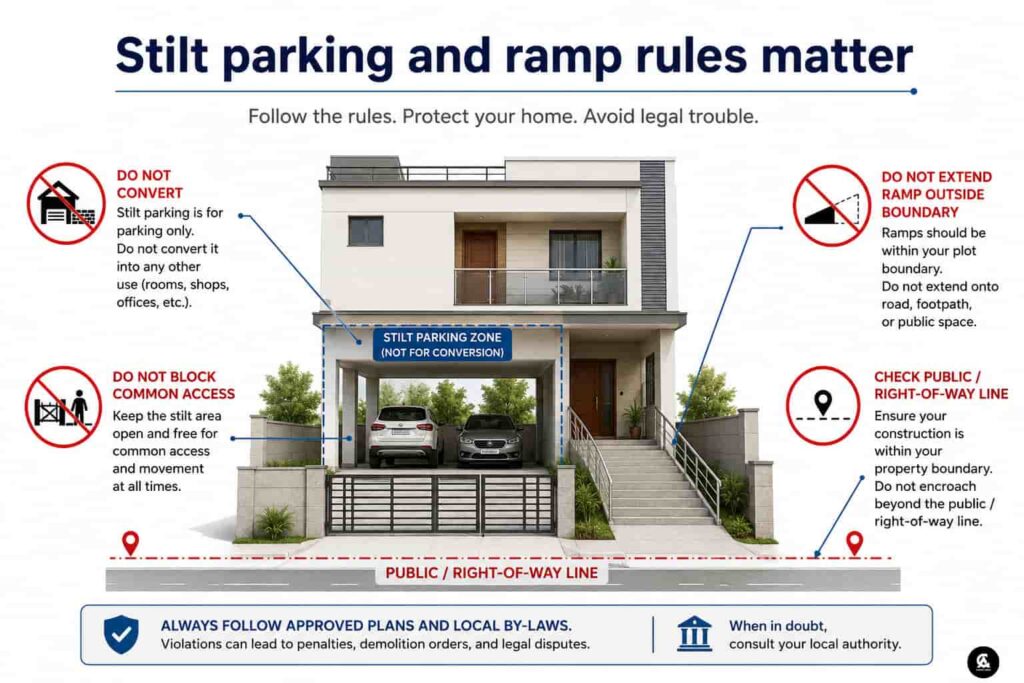
Stilt parking is one of the most commonly misused areas in plotted colonies and builder floors. Owners often convert it into rooms, offices, storage areas, shops or extended living space.
Ramps are also sensitive because they may extend beyond the private property line or affect common access. Even if the ramp is useful for vehicle movement, it may still be removed if it violates layout rules or occupies public/common land.
The key point is simple: convenience does not automatically mean approval.
Why sanctioned building plan matters?
A sanctioned building plan is the legal map of what can be built on a property. It shows the permitted layout, covered area, setbacks, parking, floor use and construction limits.
Before buying or modifying a property, a buyer should compare the existing structure with the sanctioned plan. If there is a mismatch, the buyer may inherit the violation.
This is especially important in resale properties. A house may look complete, premium and ready to use, but some part of it may be unauthorised.
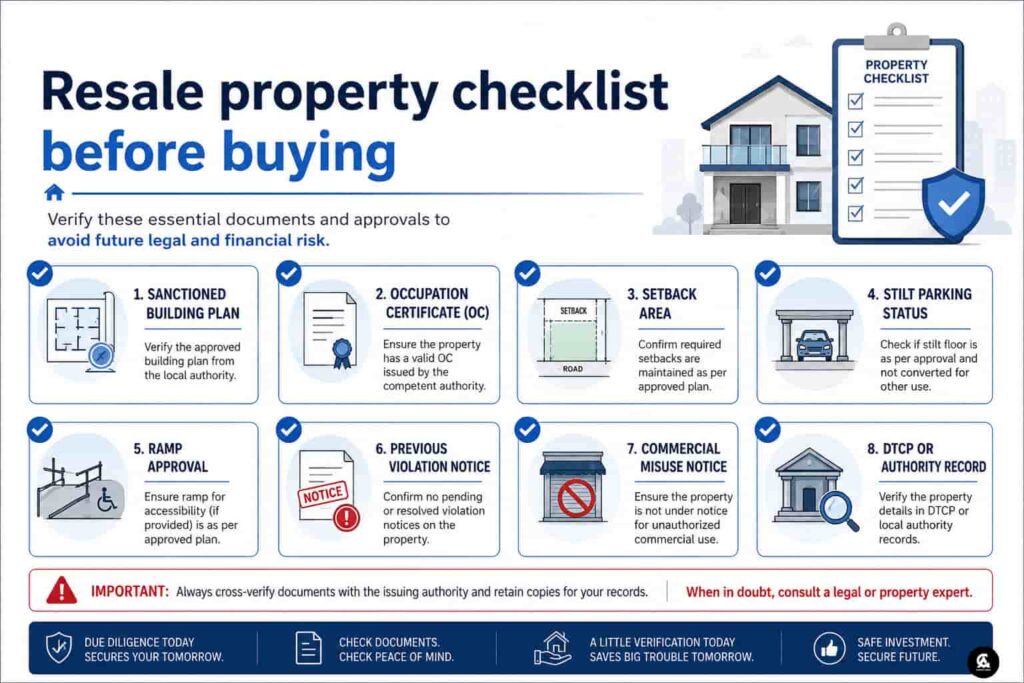
What resale buyers must check before buying?
If you are buying a house, villa, builder floor or plotted property in Gurugram, Noida, Faridabad, Delhi-NCR or any planned colony, check these points before payment:
| Check | Why it matters |
|---|---|
| Sanctioned building plan | Confirms what construction is approved |
| Occupation certificate | Shows completion/occupation status |
| Stilt parking status | Prevents future parking or conversion disputes |
| Setback area | Helps identify illegal extensions |
| Ramp or access approval | Avoids right-of-way issues |
| Commercial misuse notice | Important if property was used as office, clinic, salon or shop |
| Previous violation notice | Buyer may inherit old problems |
| RWA/developer restrictions | Colony-level rules may apply |
| DTCP/authority record | Confirms official position |
| Physical inspection | Helps compare actual structure with approved plan |
A resale buyer should not rely only on registry, broker assurance or seller claims. Legal ownership and legal construction are two different things.
What homeowners must check before renovation?
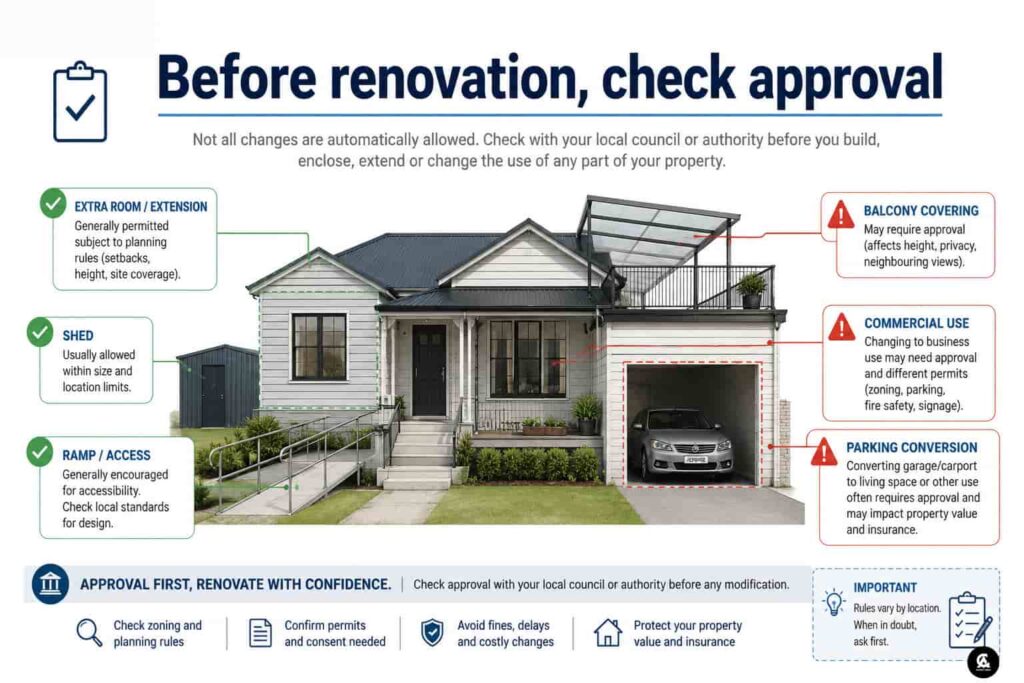
Homeowners should also be careful before modifying any property. Renovation does not always mean free construction.
Before making changes, check:
| Question | Why it matters |
|---|---|
| Is the change inside the approved private area? | Prevents encroachment risk |
| Does it affect setback or common area? | Setback violations can lead to action |
| Is stilt parking being converted? | Parking misuse is a common violation |
| Is the ramp entering public land or right-of-way? | Can lead to demolition |
| Is the property being used commercially? | Residential misuse can attract notices |
| Does the change need authority approval? | Approval should come before construction |
| Has the RWA or developer placed restrictions? | Colony-level rules may apply |
| Will the change affect resale? | Future buyers may avoid risky properties |
If the answer is unclear, get written clarification before spending money.
Why enforcement is getting stricter?
Gurugram authorities have been moving toward more active inspection and enforcement. DTCP reportedly started “Office-on-the-spot” inspections to check building code violations, unauthorised commercial activity and illegal extensions in licensed colonies. In one inspection, 150 residential buildings were reportedly found violating building-use norms.
This shows a shift from complaint-based action to proactive inspections. Property owners should not assume that old violations will always remain unnoticed.
The biggest lesson from the viral DLF case
The viral ramp demolition raises a basic question for every property owner:
If you own a house, can you build anything outside or inside it without approval?
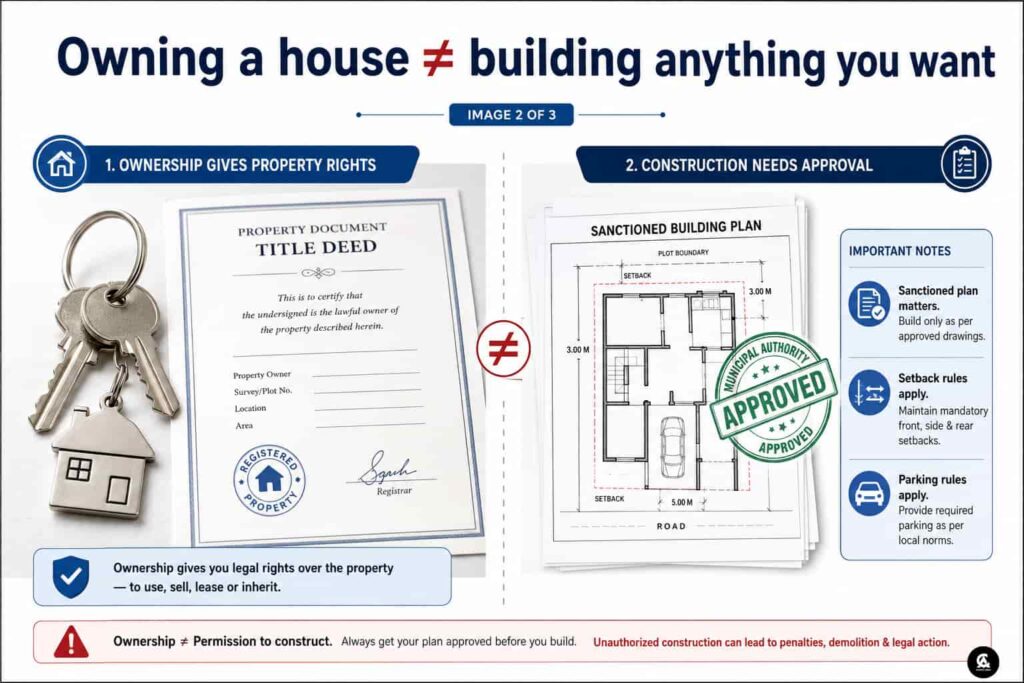
The answer is no.
Ownership gives rights, but it does not give unlimited construction freedom. In planned colonies, the building plan, land-use rules, parking norms, setback rules and authority regulations still matter.
Final buyer and owner checklist
Before buying or modifying any property, check:
- Sanctioned building plan
- Occupation certificate
- Approved land use
- Stilt parking status
- Setback area
- Ramp and access position
- Common area or public land boundary
- Previous notices or violations
- RWA/developer restrictions
- Local authority rules
A property may look attractive, but if part of it is unauthorised, the buyer can face future demolition, sealing, penalty or resale difficulty.
Final view
The Gurugram DLF ramp demolition story is viral, but the lesson is serious. In a planned colony, a house is not judged only by its size, location or price. It must also follow approved construction rules.
For buyers, the message is clear: do not buy a resale property without checking whether the existing construction is legal.
For homeowners, the message is equally clear: do not build ramps, convert stilt parking, extend rooms or use residential property commercially without checking approvals.
A small unauthorised change can become a big legal and financial problem later.




Leave a Reply