


Maharashtra’s housing market has sent a strong supply-side signal. In FY 2025-26, MahaRERA approved 10,379 real estate project proposals across the state, showing that the project pipeline is not slowing down quietly. For buyers, this is not just a regulatory number. It tells us where developers are still active, where housing supply is building up, and which regions continue to dominate Maharashtra’s property story.
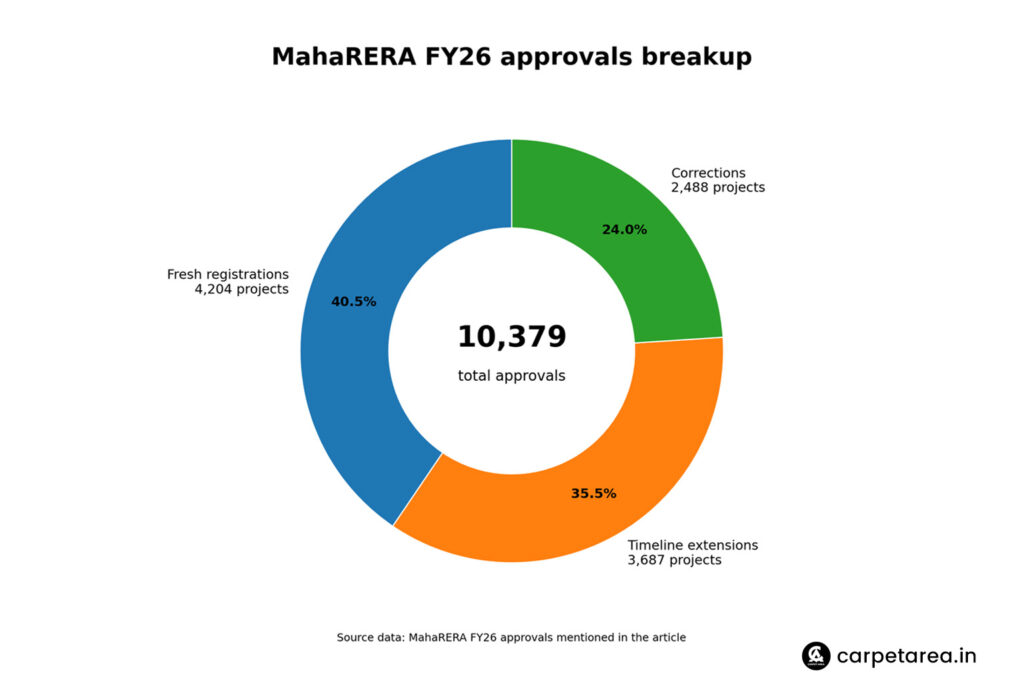
The headline looks simple: more than ten thousand approvals in one financial year. But the real story is inside the breakup. Out of the total approvals, 4,204 were fresh project registrations, 3,687 were timeline extensions, and 2,488 were corrections. That means the market is not only seeing new launches. It is also seeing older or ongoing projects being updated, extended, corrected, and kept within the regulatory system.
This is why the development should be read carefully. A big approval number does not automatically mean that thousands of brand-new projects are entering the market at once. Nearly 40% of the approvals were fresh registrations, while the rest were linked to corrections and extensions. In simple terms, Maharashtra’s housing market is active, but it is also managing the practical realities of project changes, revised timelines, and compliance requirements.
For homebuyers, that distinction matters. Fresh registrations show developer confidence. Extensions show that many projects still need more time. Corrections show that developers are making changes to already approved plans. Together, these numbers describe a market that is moving, but not without pressure. This is not a blind boom story. It is a story of growth mixed with regulatory housekeeping.
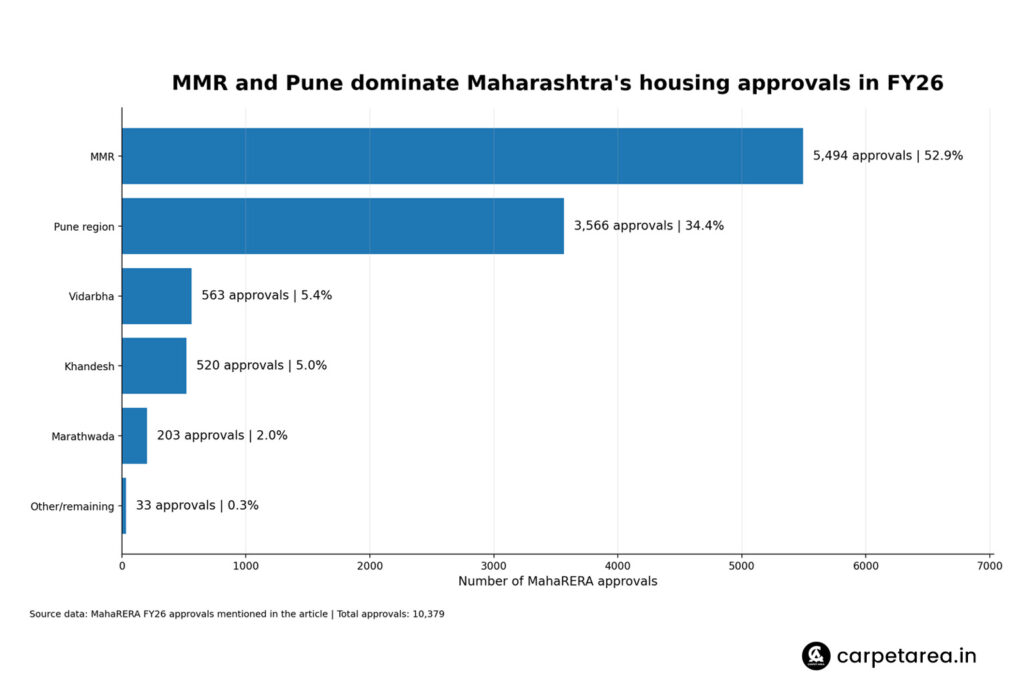
The regional picture makes the trend even clearer. The Mumbai Metropolitan Region led with 5,494 approvals, followed by the Pune region with 3,566 approvals. Vidarbha accounted for 563 approvals, Khandesh had 520, and Marathwada recorded 203. This shows that the strongest housing activity remains concentrated around Maharashtra’s biggest urban and economic hubs.
MMR’s dominance is not surprising. Mumbai, Thane, Navi Mumbai, Raigad, Palghar and surrounding growth corridors continue to attract major developer interest because of employment, infrastructure, redevelopment opportunities, and high housing demand. Even when affordability remains a challenge, the depth of the market keeps MMR at the centre of Maharashtra’s real-estate activity.
Pune’s position is equally important. At the district level, Pune recorded 3,150 approved projects, ahead of Thane, Mumbai Suburban, Raigad and other districts. Pune has become one of India’s most balanced housing markets because it combines IT employment, education, manufacturing, improving infrastructure, and comparatively wider housing choices than Mumbai.
For buyers in Pune, this level of approval activity means more choice may continue entering the market. But more choice also means buyers must become more careful. Not every project will have the same delivery quality, location strength or developer track record. When supply expands, the best projects do not compete only on price. They compete on trust, design, amenities, connectivity and execution discipline.
This is where MahaRERA’s role becomes important. The approvals are not just a list of projects. They are part of a regulatory framework where developers must seek permission for new registrations, changes and extensions. Under RERA, developers are expected to disclose timelines and follow the approved plan. If a project requires a timeline extension or correction, regulatory approval becomes necessary to keep the project valid and compliant.
That is a positive signal for buyers because it means project changes cannot remain completely informal. If a developer needs more time or wants to alter project details, that movement has to enter the regulatory record. This does not remove all risk, but it improves transparency compared with the older era when many buyers had little visibility into project-level changes.
The extension number deserves special attention. 3,687 extensions in one year is a large figure. It tells us that many projects needed revised timelines. For buyers, this is both a caution and a reassurance. The caution is obvious: delays remain part of the real-estate ecosystem. The reassurance is that these delays are being recorded and processed through the regulator rather than being left outside the system.
The correction figure also matters. 2,488 corrections suggest that project details, plans or submissions needed changes during the year. In a complex market like Maharashtra, where projects often involve multiple approvals, land conditions, planning revisions and construction-stage adjustments, corrections are not unusual. But for buyers, the important point is that such changes should be visible and regulated.
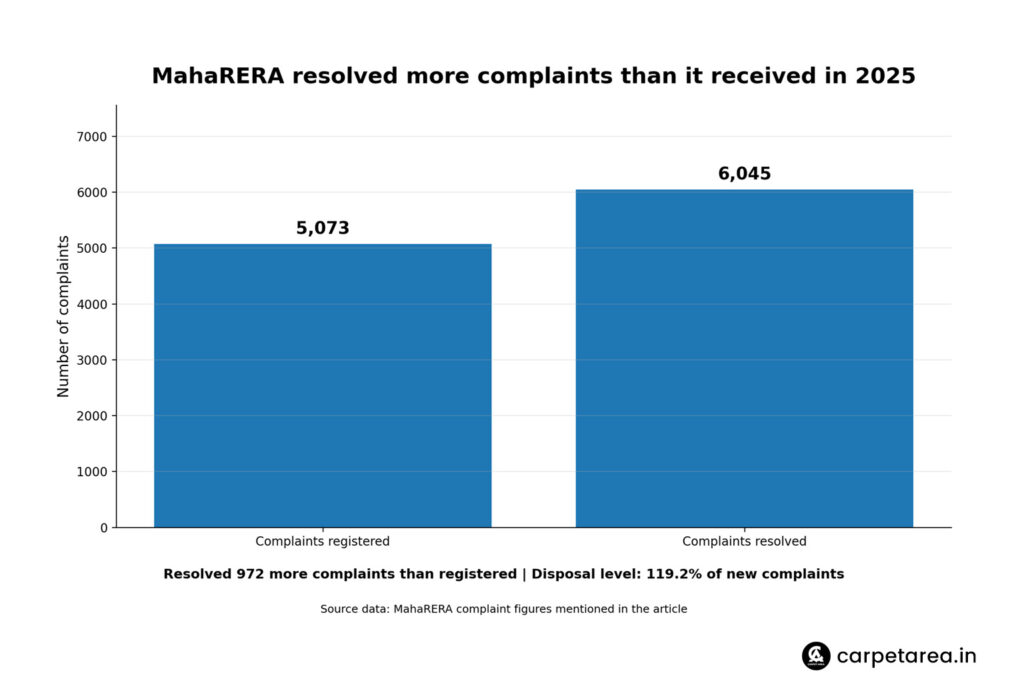
Another strong signal comes from MahaRERA’s complaint-disposal performance. Hindustan Times reported that MahaRERA resolved 6,045 homebuyer complaints in 2025, compared with 5,073 complaints registered during the year, and the disposal rate improved sharply. This matters because a regulator is not judged only by how many projects it approves, but also by how efficiently it handles disputes.
For Maharashtra’s market, the broader message is clear. Housing activity is still strong, especially in MMR and Pune. Developers are continuing to register projects, seek extensions, and correct earlier submissions. Buyers are getting more regulatory visibility. And the regulator is trying to keep the market moving while maintaining compliance standards.
But this is not a signal for buyers to rush blindly. A strong pipeline can create excitement, but it also increases the need for due diligence. Before booking a home, buyers should check the MahaRERA registration details, project timelines, extension history, construction progress, approvals, and past delivery record of the developer. In a market with thousands of approved projects, the biggest advantage belongs to the buyer who compares carefully.
For developers, this approval data sends a different message. Maharashtra remains one of India’s most active housing markets, but regulatory discipline is becoming central to doing business. Developers cannot treat timelines, corrections and project disclosures casually. The market may reward strong launches, but the regulator will continue to demand paperwork, clarity and compliance.
The real takeaway is that Maharashtra’s housing pipeline is still moving strongly, but the nature of that movement is layered. Fresh registrations show confidence. Extensions show pressure. Corrections show adjustment. MMR and Pune show where the strongest activity is concentrated. And MahaRERA’s role shows how deeply regulation now sits inside the state’s property market.
For buyers, this is useful news. It means supply is active, options are expanding, and project information is becoming more structured. But it also means the smart buyer must look beyond the launch headline. In today’s market, the question is not only “how many projects are coming?” The better question is “which projects are credible, compliant and likely to deliver?” That is where the real value lies.




Leave a Reply