


For many families in Mumbai, buying a home is not just a financial decision. It is a long emotional journey. The city offers jobs, opportunity and lifestyle, but owning a house in Mumbai often remains difficult because private-market prices are beyond the comfort zone of many buyers.
That is why every MHADA lottery becomes more than a housing scheme. It becomes a sign of how many people are still waiting for a realistic chance to buy a home in Mumbai.
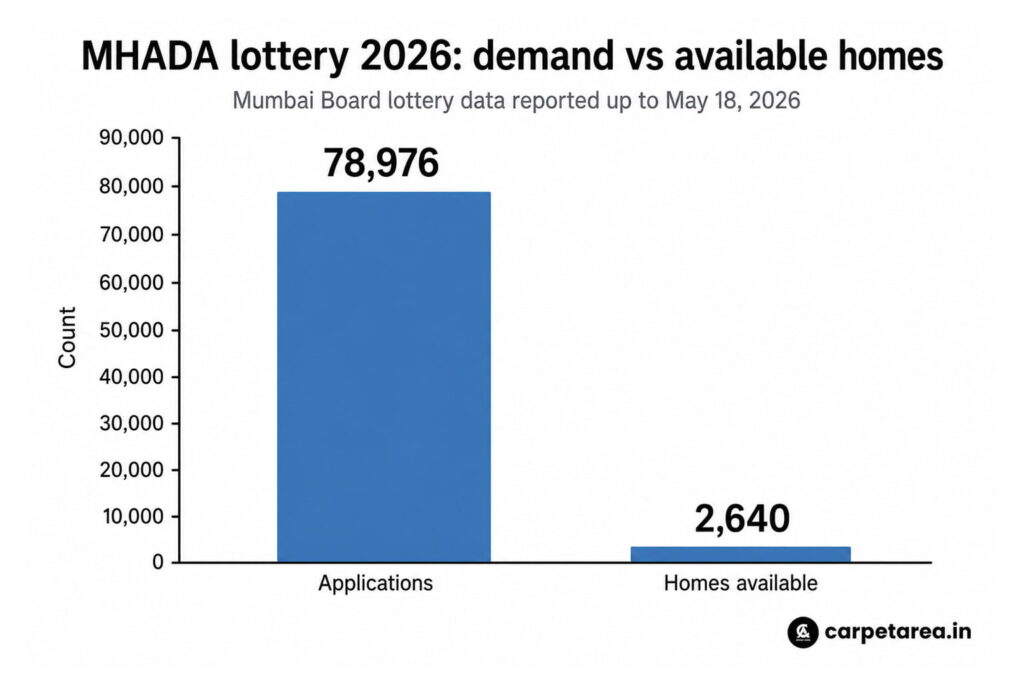
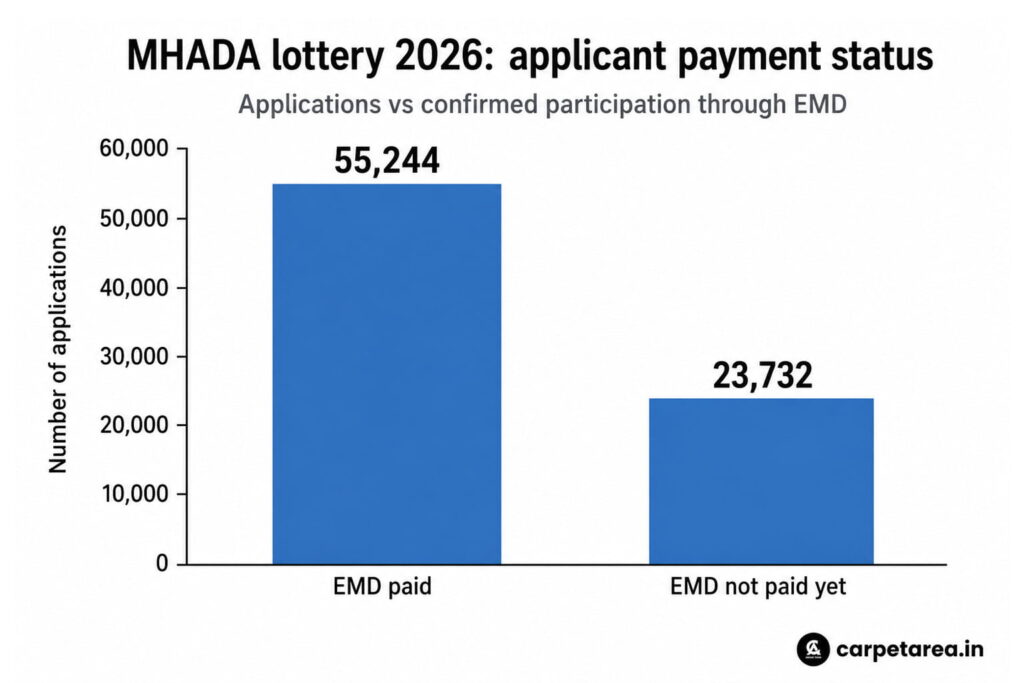
The latest MHADA Mumbai Board lottery data shows this pressure clearly. According to HT, MHADA received 78,976 applications for 2,640 apartments up to May 18, 2026. It also received 55,244 Earnest Money Deposits, which means a large number of applicants did not only fill the form, but also confirmed serious participation by paying the deposit.
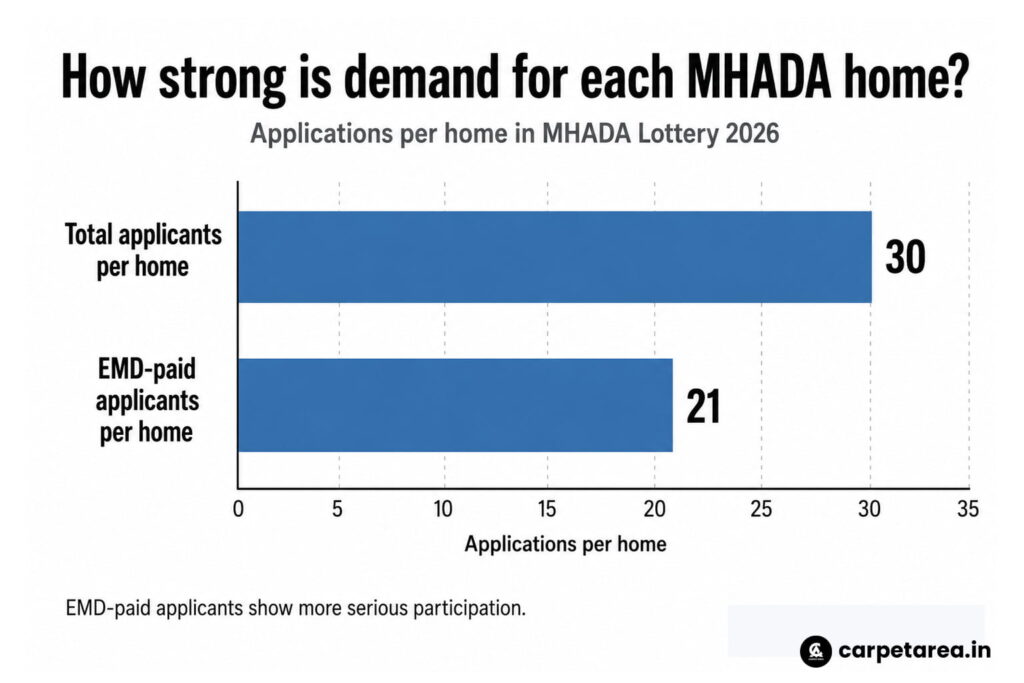
The numbers are powerful. For every MHADA home on offer, there are almost 30 applications. Even if only EMD-paid applicants are counted, there are still about 21 serious applicants for every available home. This tells us that Mumbai’s affordable housing demand is not just visible, it is intense.
But this story has another side. High application numbers do not mean buyers will accept any price. MHADA has already extended the application deadline and reduced prices for several Vikhroli homes. HT reports that the prices of 1,221 tenements in Vikhroli were reduced by 7.5%, and 610 apartments were shifted from MIG to HIG category after weaker response from middle-income buyers.
This is the real lesson from the MHADA lottery 2026. Mumbai has huge housing demand, but affordability remains sensitive. Buyers want homes, but they are also calculating loan burden, location value, construction status, size, income category and long-term financial comfort.
The EMD number is important because it separates casual interest from serious participation. Out of 78,976 applications, 55,244 applicants had paid EMD at the reported stage. That means around 70% of applicants had converted their application into a stronger commitment. At the same time, 23,732 applications were still without EMD payment, showing that some applicants may still be undecided or waiting before completing participation.
This is very common in a high-cost city like Mumbai. A buyer may apply because the lottery gives hope, but the final decision depends on payment ability. Even a government-backed housing option can feel expensive if the price is too close to private-market alternatives or if the income category does not match buyer comfort.
The location mix also explains the demand. The MHADA lottery includes homes in several Mumbai locations such as Vikhroli, Goregaon, Borivali, Gorai, Chembur, Bandra, Ghatkopar, Wadala, Powai and Dadar. These are not distant, unknown locations. Many are established or well-connected parts of Mumbai, which is why buyers continue to look at MHADA as a serious option.
At the same time, the supply is limited. Only 2,640 homes are available in a city where lakhs of families want ownership security. That is why the application-to-home ratio matters. It shows the gap between what the market needs and what public housing supply can currently provide.
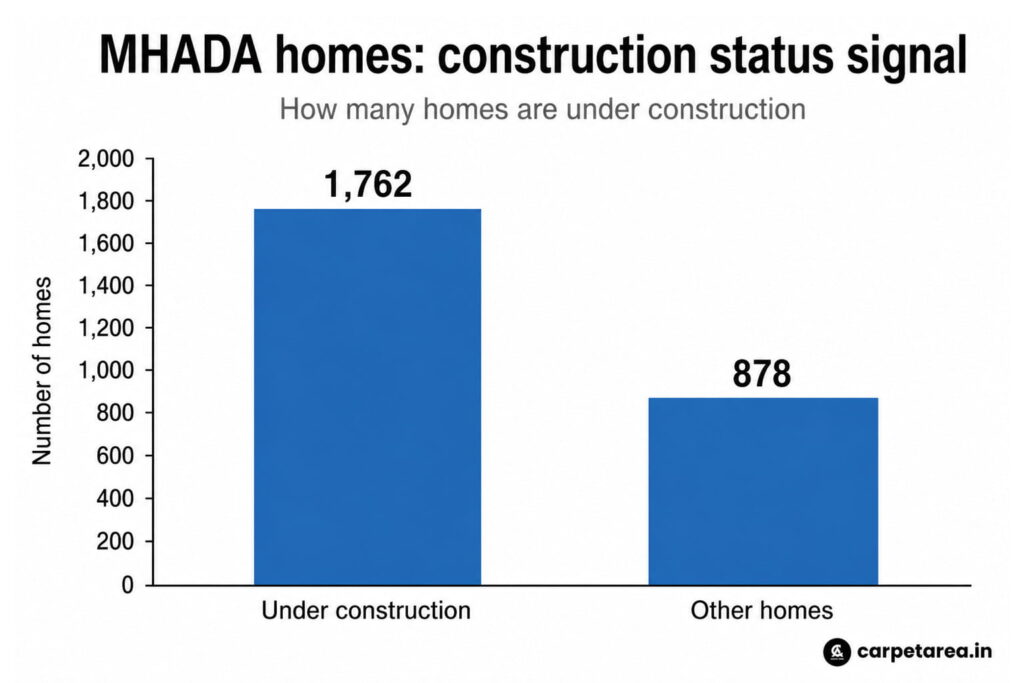
There is also a construction-status angle. HT reports that 1,762 out of 2,640 apartments, around 66%, are under construction. This means many applicants are willing to consider future possession if the project comes through MHADA and fits their budget or location expectations.
For a real-life example, imagine a salaried family living on rent in Mumbai for years. They may find private homes too expensive in preferred locations. When a MHADA lottery opens, they apply because it gives a structured, transparent and relatively trusted route to ownership. But if the flat price crosses their loan comfort, they may hesitate, even if they badly want the home. This is exactly why high demand and price sensitivity can exist together.
The revised schedule also matters for applicants. As per the reported MHADA schedule, online applications can be submitted till May 28, 2026, 11:59 pm. Online EMD payment is allowed till May 29, 2026, 11:59 pm, while RTGS/NEFT payment can be made till bank working hours on May 29. The provisional list is expected on June 10, objections can be submitted till June 12, and the final accepted list is expected on June 16. The draw date, venue and time will be announced later on the MHADA website.
For homebuyers, the biggest lesson is simple. A lottery home should not be treated as an automatic bargain. Buyers must check location, carpet area, total cost, maintenance, construction stage, payment schedule, loan eligibility, income category and possession timeline before applying or paying further.
For Mumbai’s real estate market, the message is even bigger. The city has no shortage of buyers. It has a shortage of homes that match real income levels. When nearly 79,000 applications come for 2,640 homes, the demand pressure is clear. But when prices are reduced and categories are changed, the affordability pressure is also clear.
So the MHADA lottery 2026 is not only a housing draw. It is a mirror of Mumbai’s affordable housing challenge. It shows that people still want to own homes in Mumbai, but they need options that fit their income, loan capacity and long-term financial safety.
The final view is this: MHADA’s 78,976 applications show the strength of demand, while the price cuts and deadline extensions show the limits of affordability. Together, they tell the real story of Mumbai housing today. The dream of owning a home is still strong, but for many families, the gap between demand and affordable supply remains very wide.

Leave a Reply