

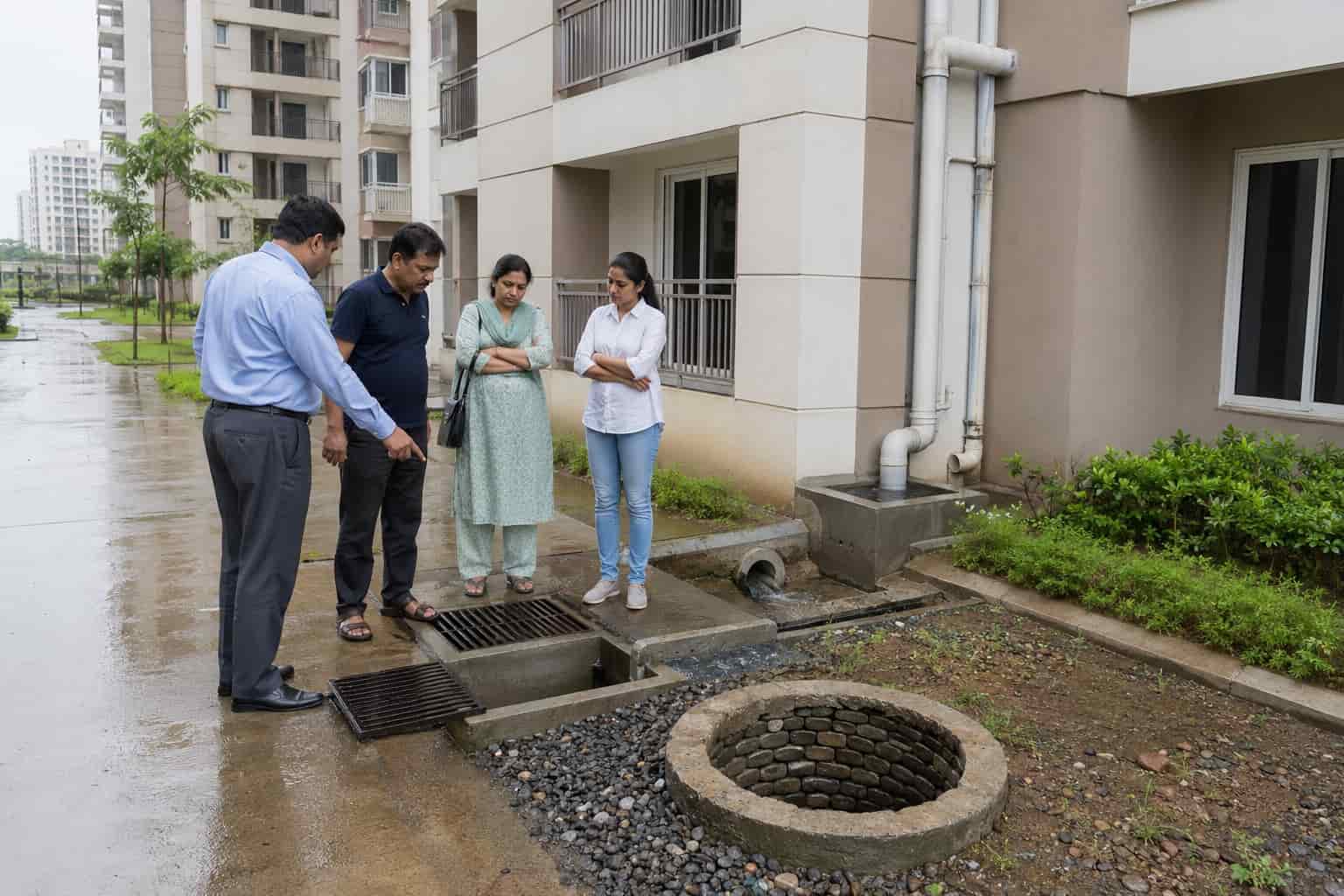
A homebuyer usually checks the flat, price, location, builder name, amenities and Occupation Certificate before making a property decision. If the society has an OC, many buyers feel that the property is fully safe. But Haryana’s latest rainwater harvesting warning shows that the real picture can be more complex.
A housing society may have received an Occupation Certificate years ago, but if mandatory building systems are not maintained after possession, the society can still face compliance pressure later. This is why the issue is not only about rainwater harvesting. It is about post-possession compliance, homebuyer safety, RWA responsibility and long-term property value.
Haryana has amended the Haryana Building Code 2017 to strengthen inspection and action against non-functional rainwater harvesting systems. As per reports, authorities can inspect rainwater harvesting systems installed in houses, plotted colonies and condominiums. Property owners are also required to submit online self-certification confirming that the rainwater harvesting system is functional. If defects are found, owners may get time to fix them, and continued non-compliance can create OC-related risk.
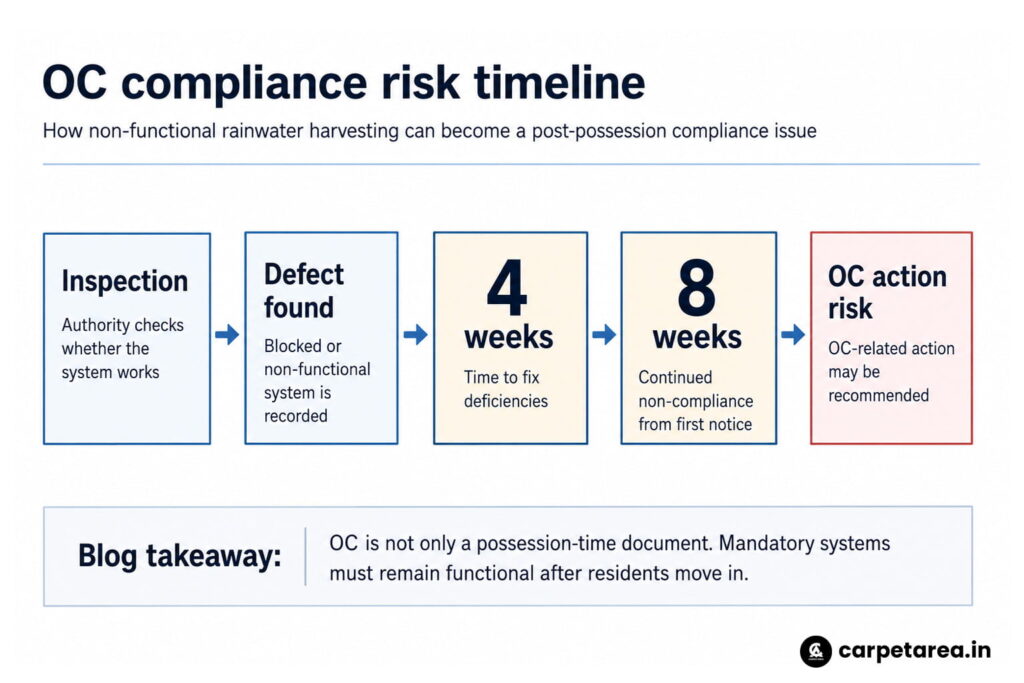
This makes the story important for every buyer, property owner, resident welfare association and investor in Haryana, especially in Gurugram real estate, where large housing societies, plotted colonies, condominiums and premium residential projects are common.
Rainwater harvesting is often treated like a green feature, but in building compliance it is much more than that. It is connected to groundwater recharge, drainage pressure, waterlogging control and the basic conditions under which a project is approved. A rainwater harvesting system that exists only on paper is not enough. It has to work on the ground.
A society may have shown rainwater harvesting provisions in the approved building plan, but if the recharge pits are blocked, chambers are not cleaned, pipes are broken or water does not actually recharge into the ground, then the system is not serving its purpose. For homebuyers, this means one simple thing: compliance should be checked in real life, not only in documents.
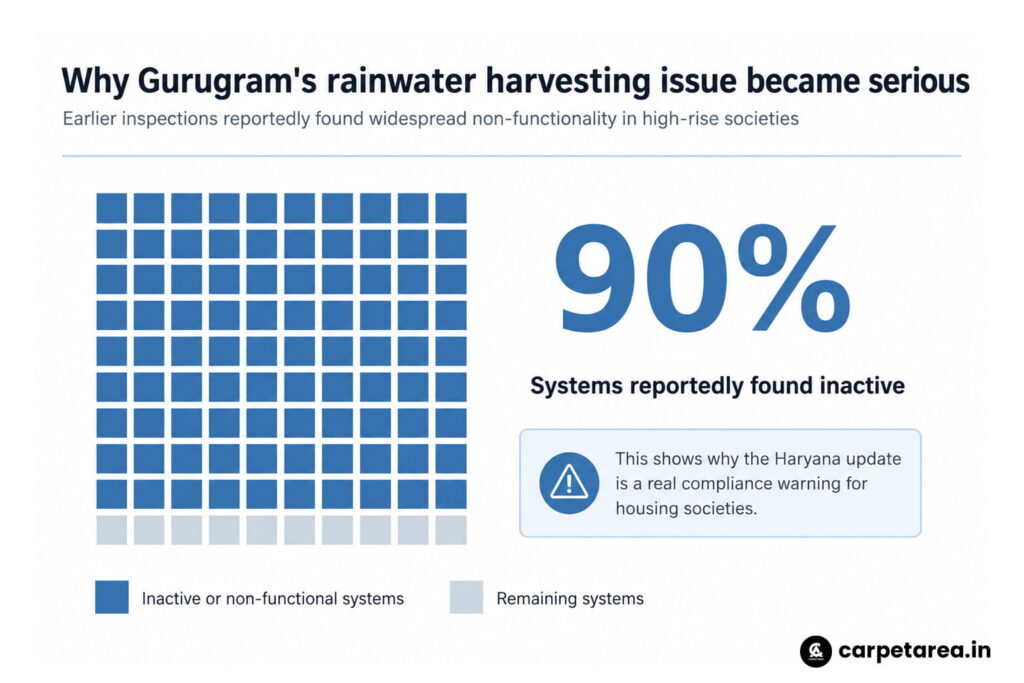
Gurugram makes this issue even more serious. The city has seen rapid real estate growth, but it also faces waterlogging, groundwater stress and heavy pressure on civic infrastructure. Earlier inspections had reportedly found widespread non-functionality of rainwater harvesting systems in high-rise societies. Developers and RWAs were asked to restore these systems and submit documentary proof. This shows that Haryana’s latest move is not coming out of nowhere. It is connected to a real maintenance gap in occupied housing societies.
Most buyers ask for the OC copy. Very few ask whether the systems connected with that OC are still working. This is where the risk begins.
A buyer may visit a premium Gurugram society where the entrance looks impressive, the clubhouse is active, the towers are occupied and the seller has basic documents ready. But if the rainwater harvesting system is blocked or non-functional, the society may already be carrying a hidden compliance issue. That issue can later turn into repair costs, authority notices, RWA disputes, resale concerns or uncertainty around the compliance status of the society.
So the buyer’s question should not be only: does the society have an OC? The better question is: are the systems on which the OC was granted still functional today?
Imagine a family planning to buy a resale flat in Gurugram. The flat is well maintained, the location is strong and the price fits their budget. The seller shares the OC copy, maintenance bill and property tax record. Everything looks fine. But before finalising the deal, the buyer asks the RWA whether the rainwater harvesting system is functional. The RWA says the recharge pits need cleaning, the system has not worked properly for months and the society has received communication to fix deficiencies. Suddenly, the deal looks different. The flat may still be good, but the society has a compliance issue that the buyer cannot ignore.
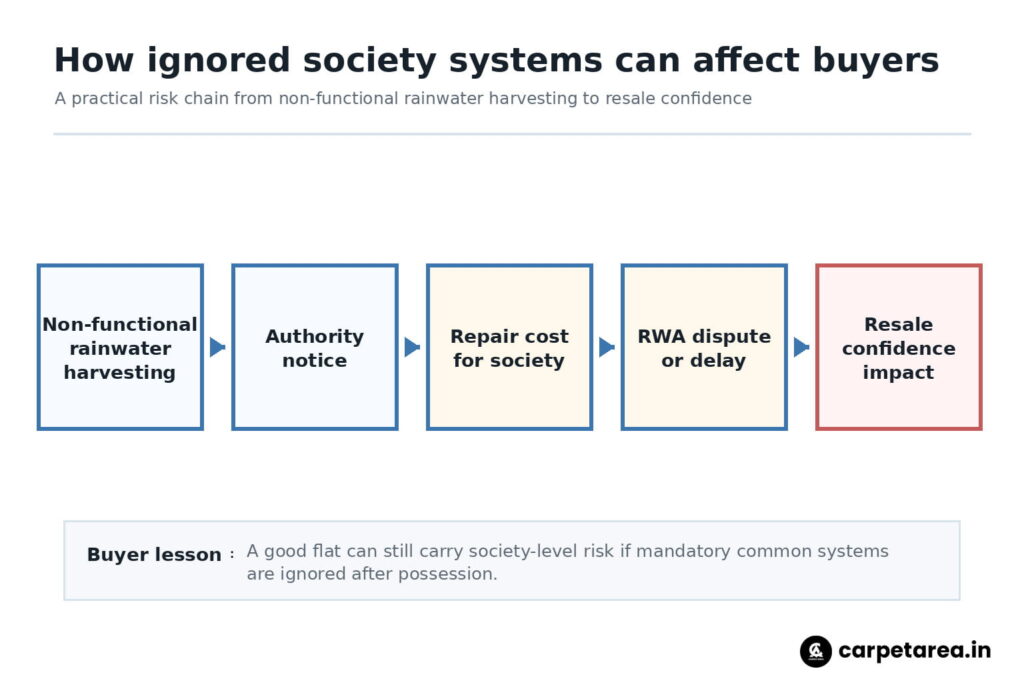
This is why post-possession compliance matters. A buyer is not purchasing only four walls. The buyer is also entering a housing society that must maintain common systems, civic obligations and authority-linked conditions.
The Haryana rainwater harvesting rules also put responsibility on RWAs and property owners. Once residents take over society maintenance, mandatory systems cannot be treated as the builder’s old responsibility forever. Rainwater harvesting needs periodic cleaning, technical inspection and proof of functionality. In many societies, the system may have been installed during approval but later ignored because residents do not see it every day. That can become expensive later.
If an authority inspection finds deficiencies, the society may have to arrange repairs quickly. The cost may come through maintenance funds or special contributions. If the issue is ignored, compliance risk becomes bigger. For RWAs, the message is clear: maintain the system before the notice comes.
Before buying a flat, plot or resale property in Haryana, buyers should ask whether the rainwater harvesting system is installed, whether it is functional now, whether the society or owner has submitted self-certification, whether there are any pending notices from the authority, whether the recharge pits and drainage channels were recently cleaned, and whether the OC is free from compliance-related risk.
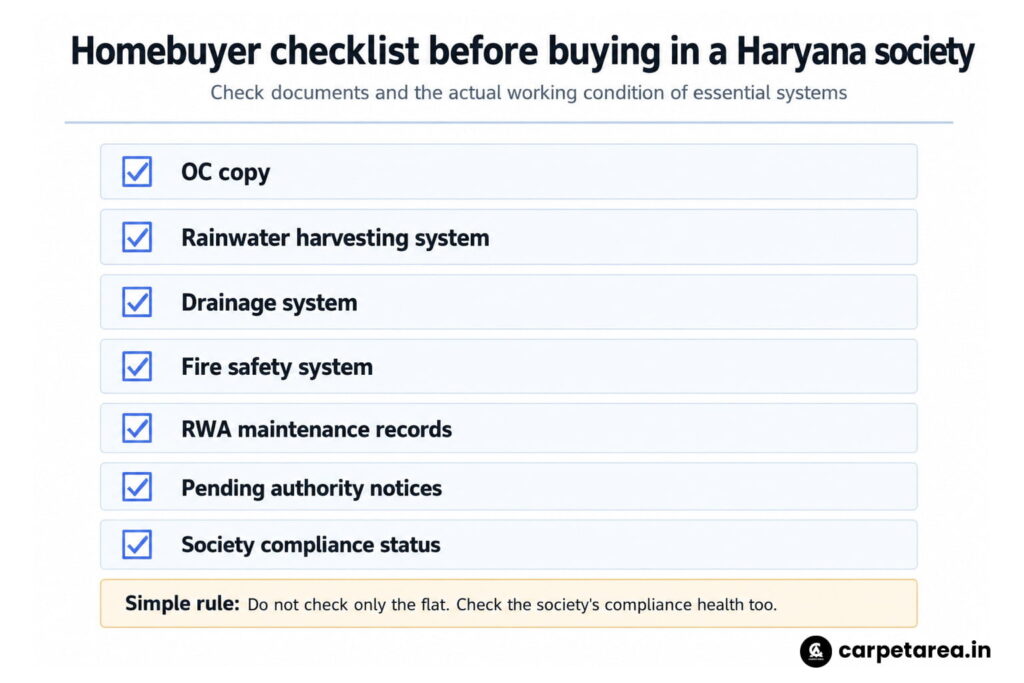
For larger societies, buyers should also check whether the RWA has maintenance records, vendor reports, inspection proof or written communication from the authority. These records may not look exciting, but they can reveal whether the society is being managed responsibly.
This issue also affects property value. A property’s value is not decided only by location, tower quality, interiors and amenities. It is also shaped by the quality of society management. A well-managed society with working systems, clean records and active compliance is easier to trust. It can support resale confidence and buyer comfort. On the other hand, a society with repeated notices, ignored maintenance and non-functional mandatory systems can make serious buyers cautious.
For developers also, the lesson is clear. Approvals should not be treated as one-time paperwork. If mandatory systems are shown during approval but do not function properly after possession, the project’s long-term reputation can suffer. Homebuyers are becoming more aware. They are checking RERA, OC, fire safety, water supply, drainage, maintenance quality and now even rainwater harvesting. Better documentation and better maintenance records can become an advantage for responsible developers and societies.
Haryana’s rainwater harvesting warning is not just about water conservation. It is a reminder that property due diligence does not end at possession. For homebuyers, an OC is important, but it is not the only thing to check. The real question is whether the building continues to meet the conditions that made it compliant in the first place.
A safe property is not only one that has a good location, strong construction and attractive amenities. It is also one where mandatory systems are functional, society records are clean and compliance is actively maintained. The lesson for homebuyers is simple: before buying, check the flat, check the documents and also check whether the society’s essential systems are working today.
Sources
Haryana may revoke OCs over non-functional rainwater harvesting systems
Gurgaon RWAs get 6 weeks to fix defunct rainwater harvesting systems


Leave a Reply