

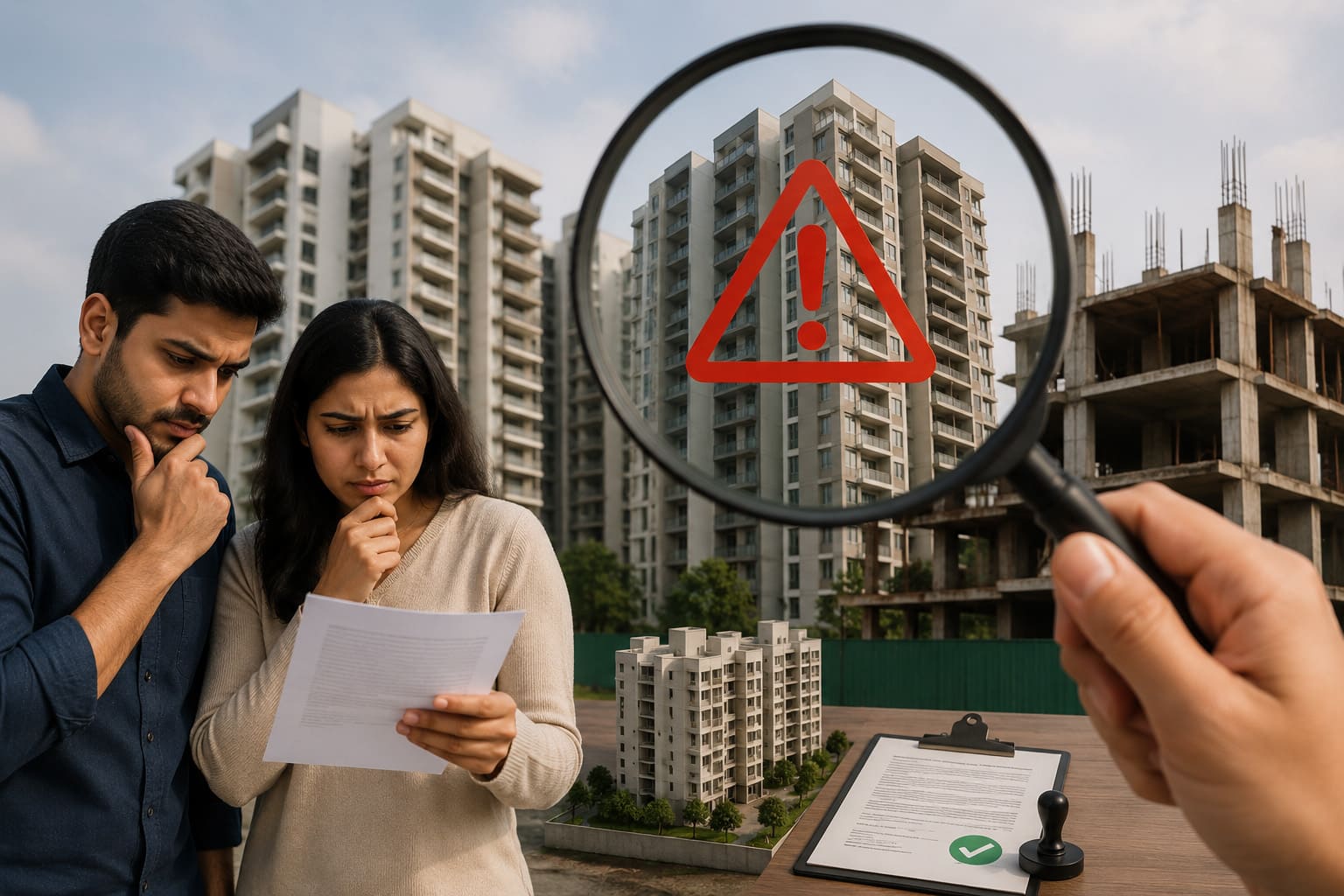
For most homebuyers, a property decision starts with location, price, builder reputation, amenities and payment plan. These things matter, but they are not enough. A project may look attractive from the outside, but if the land approval, Change of Land Use permission, layout sanction or ownership documents are under question, the buyer can face serious problems later.
That is why the latest development involving GMADA and the Enforcement Directorate is important for property buyers, especially in fast-growing real estate markets like Mohali.
According to reports, officials from the Greater Mohali Area Development Authority, or GMADA, submitted records to the ED in Jalandhar in connection with an ongoing ₹150 crore money laundering investigation. The probe is linked to alleged irregularities in Change of Land Use approvals, commonly called CLU approvals, for real estate projects connected with Suntec City and Altus Space Builders Pvt Ltd.
This is still an investigation, so buyers should avoid jumping to conclusions. The important point for homebuyers is different: the case shows why project approvals must be checked carefully before buying any plot, flat, villa or commercial unit.
What is a CLU approval and why does it matter?
CLU means Change of Land Use. In simple terms, it is permission to use land for a purpose different from its earlier classification. For example, agricultural land may need approval before it can be used for a residential colony, commercial project, industrial project or institutional use.
This approval is not a small formality. It is one of the documents that tells a buyer whether the project is being developed on land that has been legally permitted for that kind of development.
GMADA’s official website lists Permission for Change of Land Use as a developer service and shows that the CLU process includes documents such as location map, Shajra plan, proof of ownership, Fard Jamabandi and copies of sale deeds. The official process also refers to reports like the District Town Planner’s field report and Tehsildar verification report.
For a buyer, this means CLU is not just a government stamp. It is connected to ownership, land records, planning checks and official verification.
Why this probe matters for real estate buyers?
The ED probe reportedly focuses on whether regulatory norms were bypassed while granting CLU permissions for certain real estate projects. Reports also state that the ED asked for approval files, names of officials involved and financial transaction records between GMADA and developers.
This matters because many buyers assume that if a project is being advertised publicly, all approvals must be in place. That assumption can be risky.
A project can have a sales office, brochures, hoardings, sample flats and online advertisements. But the real strength of the project lies in its documents. If CLU approval, colony licence, layout plan, land title or other permissions are weak or disputed, the buyer’s risk increases.
This is the first lesson from the GMADA CLU probe: do not trust marketing alone; verify approvals.
A real-life example for buyers
Imagine a family buying a plot in a promising township near Mohali. The location looks excellent. The sales team says the area is developing fast. The price looks reasonable compared to nearby projects. The buyer pays the booking amount and later discovers that some approval connected to land use or layout is under question.
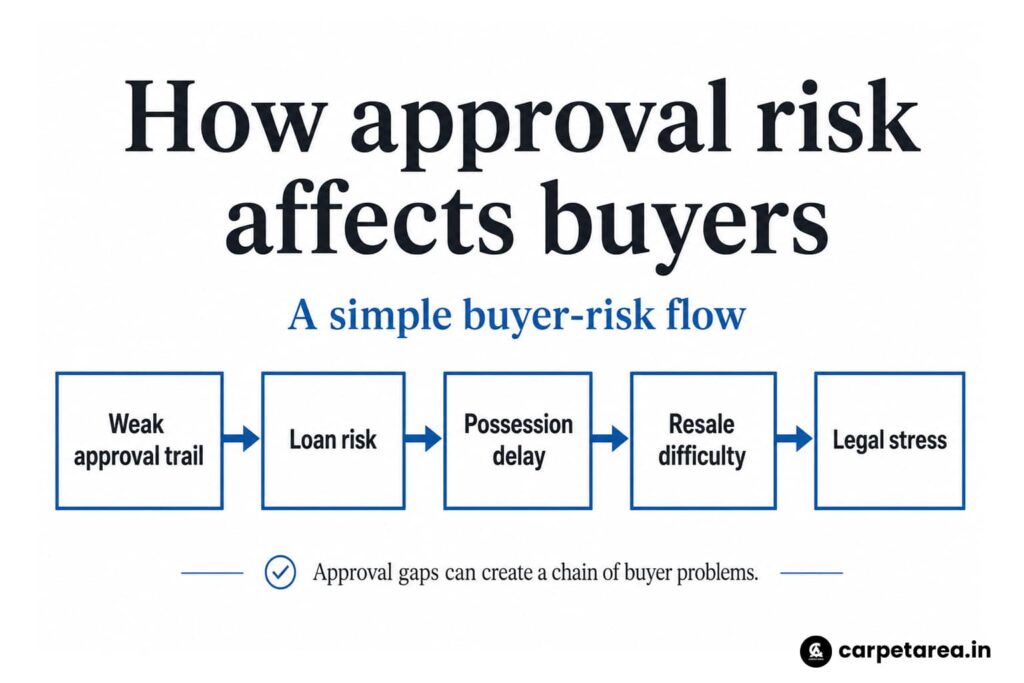
Now the problem is no longer only about price. The buyer may face delay in possession, uncertainty over bank loan, difficulty in resale, legal stress and lack of clarity on basic infrastructure. Even if the buyer has paid honestly, a weak approval chain can create long-term trouble.
Now imagine the same buyer asking for the CLU approval, layout approval, licence details, ownership records, RERA registration where applicable, and payment receipts before booking. The decision becomes safer. The buyer may still take legal advice, but the risk reduces because the approval trail is visible.
This is why approval due diligence is not optional. It is part of the property’s real value.
What homebuyers should check before buying?
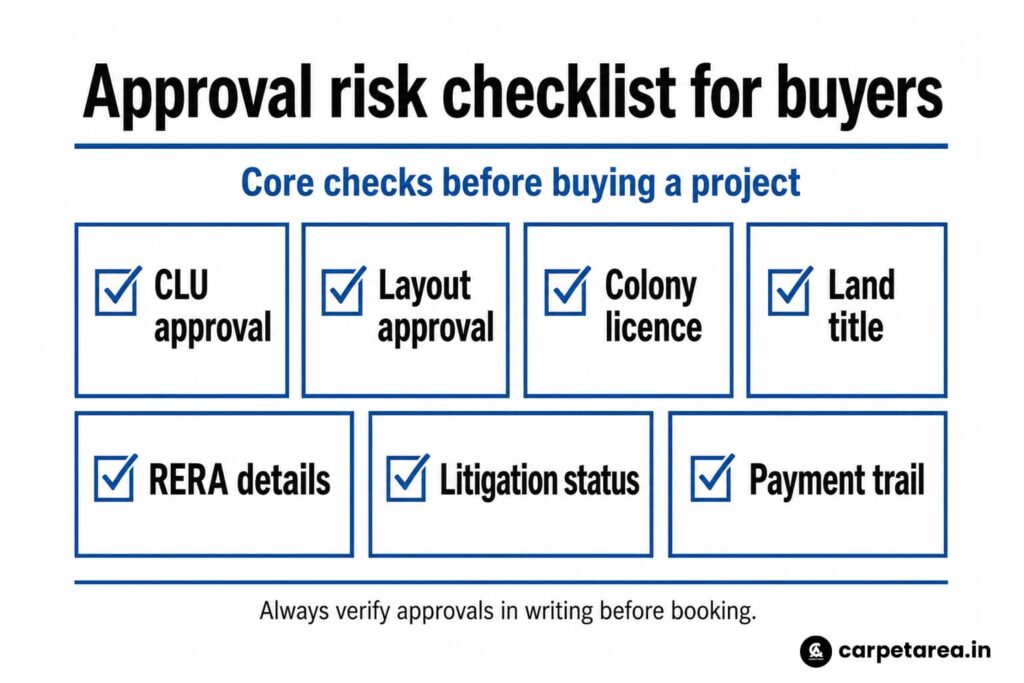
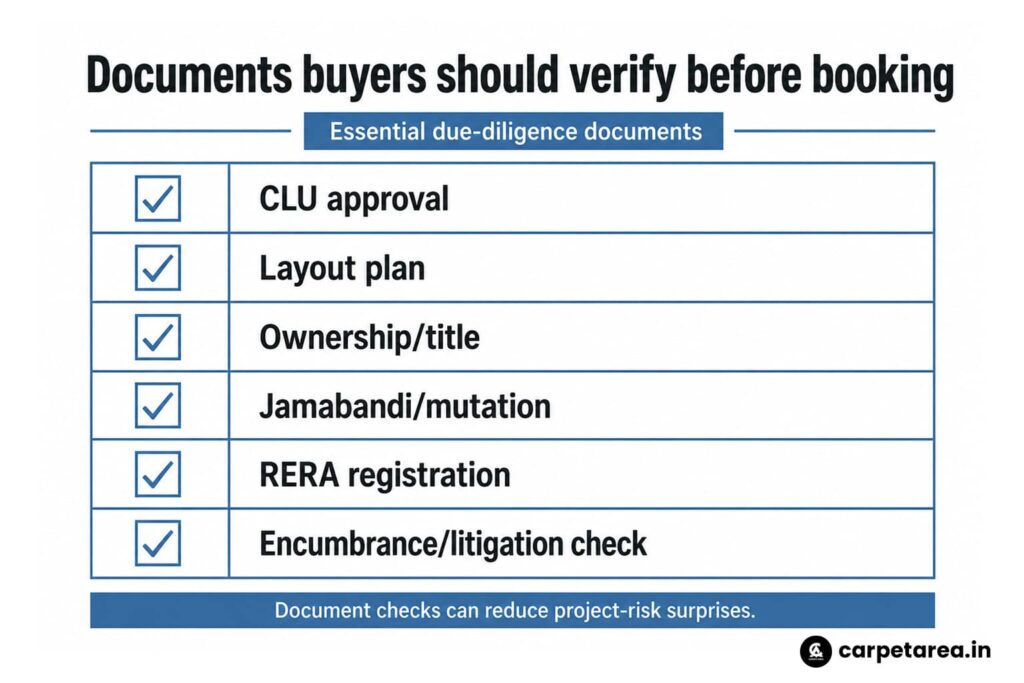
Before buying in any township, plotted development, apartment project or commercial real estate project, buyers should ask for the core approval documents. These should include:
- CLU approval
Check whether the land is approved for the type of project being sold. - Layout plan approval
Verify whether the project layout has been approved by the competent authority. - Colony licence or development permission
In plotted and township projects, this is especially important. - Land ownership and title documents
Ask whether the developer legally owns the land or has valid development rights. - Jamabandi, mutation and revenue records
These records help show land ownership and changes in ownership. - RERA registration where applicable
For eligible projects, RERA details can help buyers check project declarations, timelines and promoter information. - Encumbrance and litigation status
Check whether the land or project is under mortgage, dispute or court case. - Payment trail and receipts
Avoid cash-heavy or unclear payment structures.
This checklist matters more in high-growth regions, where buyers often rush because they fear missing an early opportunity.
Why authority records matter more than verbal claims?
GMADA is an official planning and development authority. Its official website says the authority’s object is to promote and secure better planning and development, and it has powers linked to land management, planning, development and infrastructure services.
This is why authority records are important. If a project is under a development authority’s jurisdiction, buyers should not rely only on the builder’s words. They should check whether approvals can be verified from official records or through written documents issued by the authority.
In approval-related matters, verbal assurance is weak. Written approval is stronger. Officially verifiable approval is even stronger.
Why this is a governance story, not only a crime story?
The GMADA CLU probe should also be seen as a governance story. Real estate markets grow only when buyers trust the approval system. If land-use permissions are unclear or disputed, the damage is not limited to one project. It affects confidence in the wider market.
Mohali and the larger Punjab real estate belt have seen interest because of infrastructure growth, airport connectivity, township development and demand from end-users as well as investors. But when approval-related probes emerge, they remind buyers that governance quality is as important as location quality.
For developers also, the lesson is clear. Transparent approvals, clean land records and proper disclosures are not just legal requirements. They are part of market credibility.
What buyers should do if a project is under scrutiny?
If a buyer has already invested in a project that comes under official scrutiny, panic is not the right response. The first step is to collect documents. Buyers should keep allotment letters, payment receipts, builder-buyer agreement, approval copies, emails, brochures and communication records safely.
The second step is to ask the developer for a written update. The third step is to check whether the project is registered with RERA and whether any official orders, complaints or status updates are available. The fourth step is to consult a property lawyer before making further payments.
Buyers should also avoid spreading unverified claims. In any investigation, facts can change as documents are examined and authorities respond.
Final view
The GMADA CLU probe is a reminder that real estate due diligence must go beyond price, location and builder pitch. The foundation of a safe property purchase is documentation.
A buyer should ask a simple question before paying: is the land legally approved for what is being sold to me?
If the answer is unclear, the buyer should pause.
In growing real estate markets like Mohali, approval checks are not paperwork headaches. They are buyer protection. CLU approval, layout approval, title records, licence details and RERA information can decide whether a property becomes a secure asset or a long-term problem.
The safest lesson from this story is simple: before buying, verify the approval trail. A good location can attract attention, but clean documents protect the buyer.



Leave a Reply