

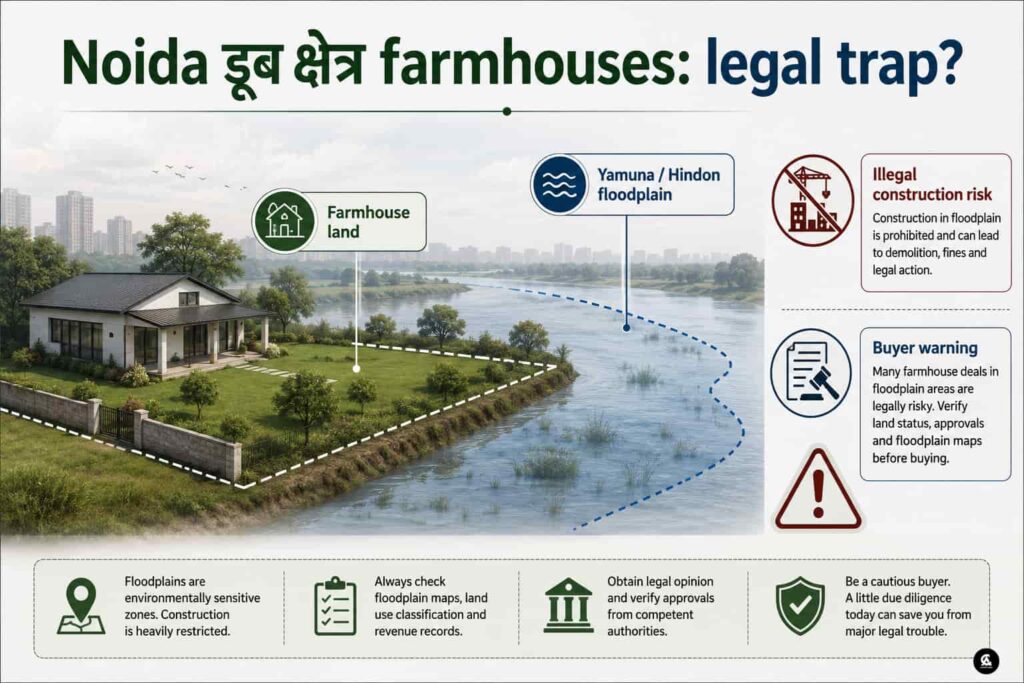
A farmhouse near Noida looks attractive on paper. Open land, greenery, river-side location, weekend-home dream and a price that may look cheaper than city property. For many buyers, this sounds like a smart real estate investment.
But the recent discussion around Noida डूब क्षेत्र farmhouses, Yamuna floodplain land and Hindon floodplain illegal construction has made one thing clear: buying land and legally building a farmhouse are not the same thing.
The issue became fresh again after reports of action against illegal construction in the Yamuna-Hindon floodplain belt. For farmhouse buyers, NCR land investors and NRIs, this is not just viral news. It is a serious property-risk warning.
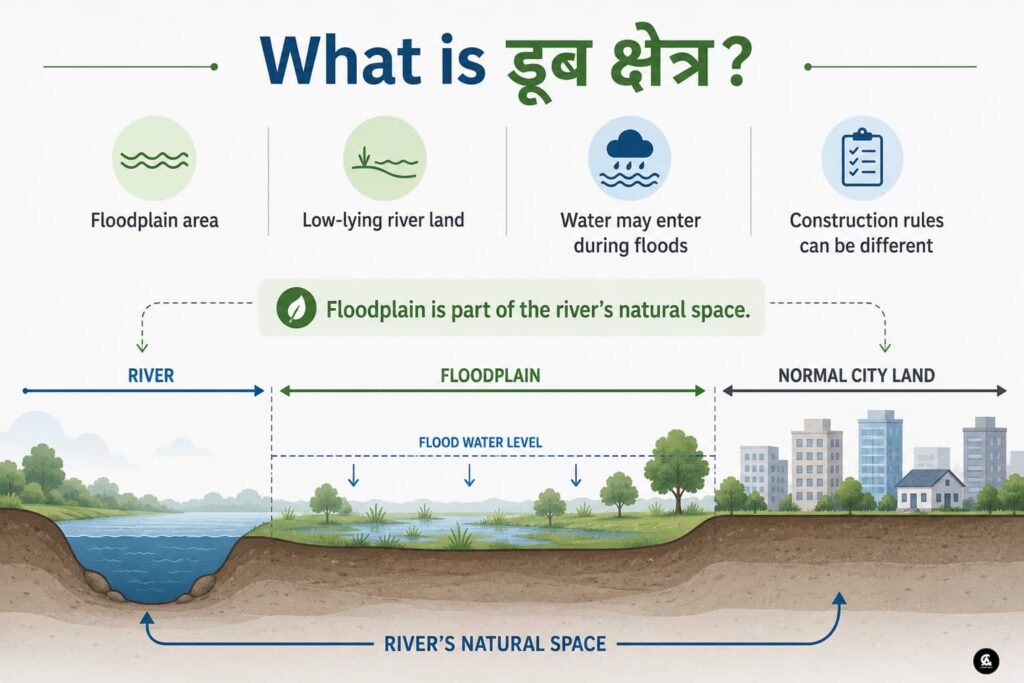
What is डूब क्षेत्र?
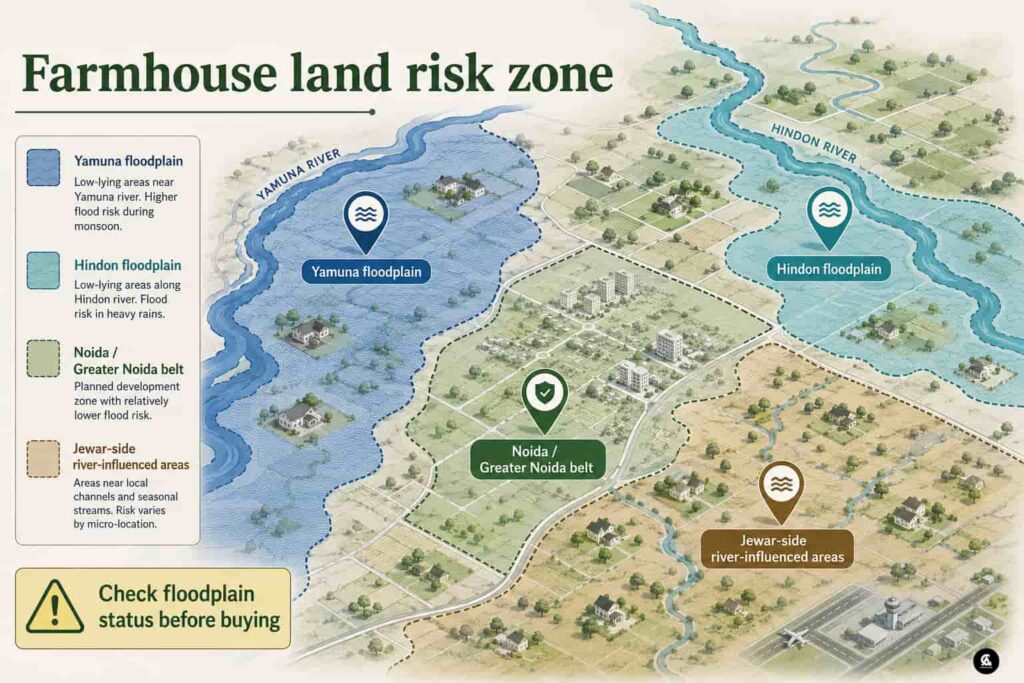
डूब क्षेत्र generally means a floodplain or low-lying river-influenced area where water can enter during floods. In Noida and Greater Noida, this issue is mainly connected with land around the Yamuna and Hindon rivers.
A floodplain is not normal vacant land. It is part of the river’s natural space. That is why construction rules here can be very different from normal residential, commercial or plotted development zones.
The biggest mistake buyers make is assuming that if registry is possible, farmhouse construction is also allowed. That may not be true.
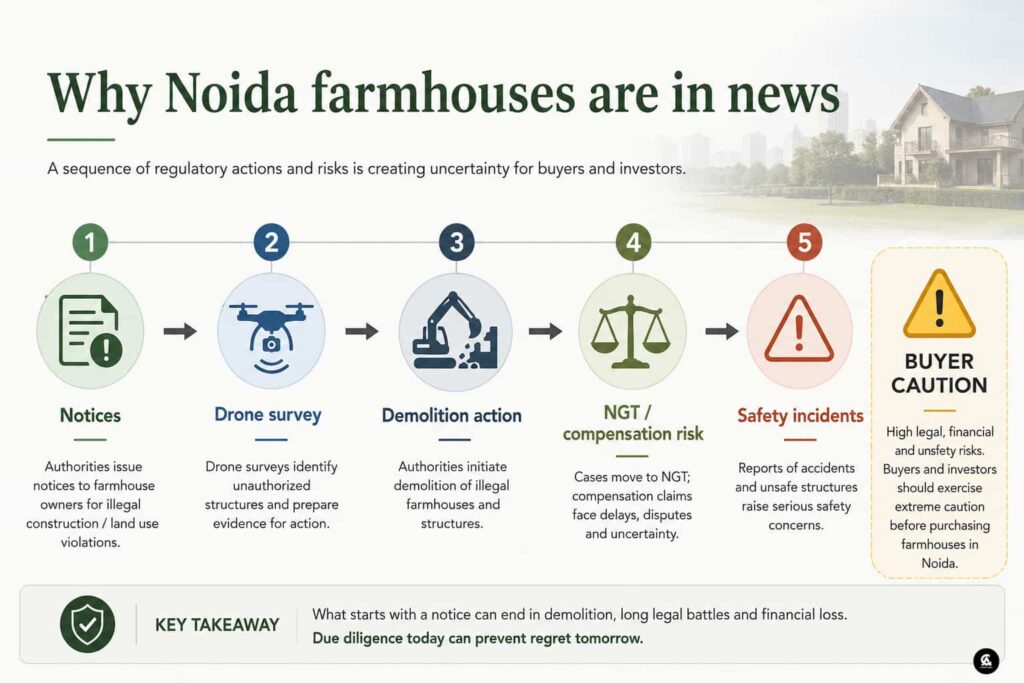
Why are Noida floodplain farmhouses in news?
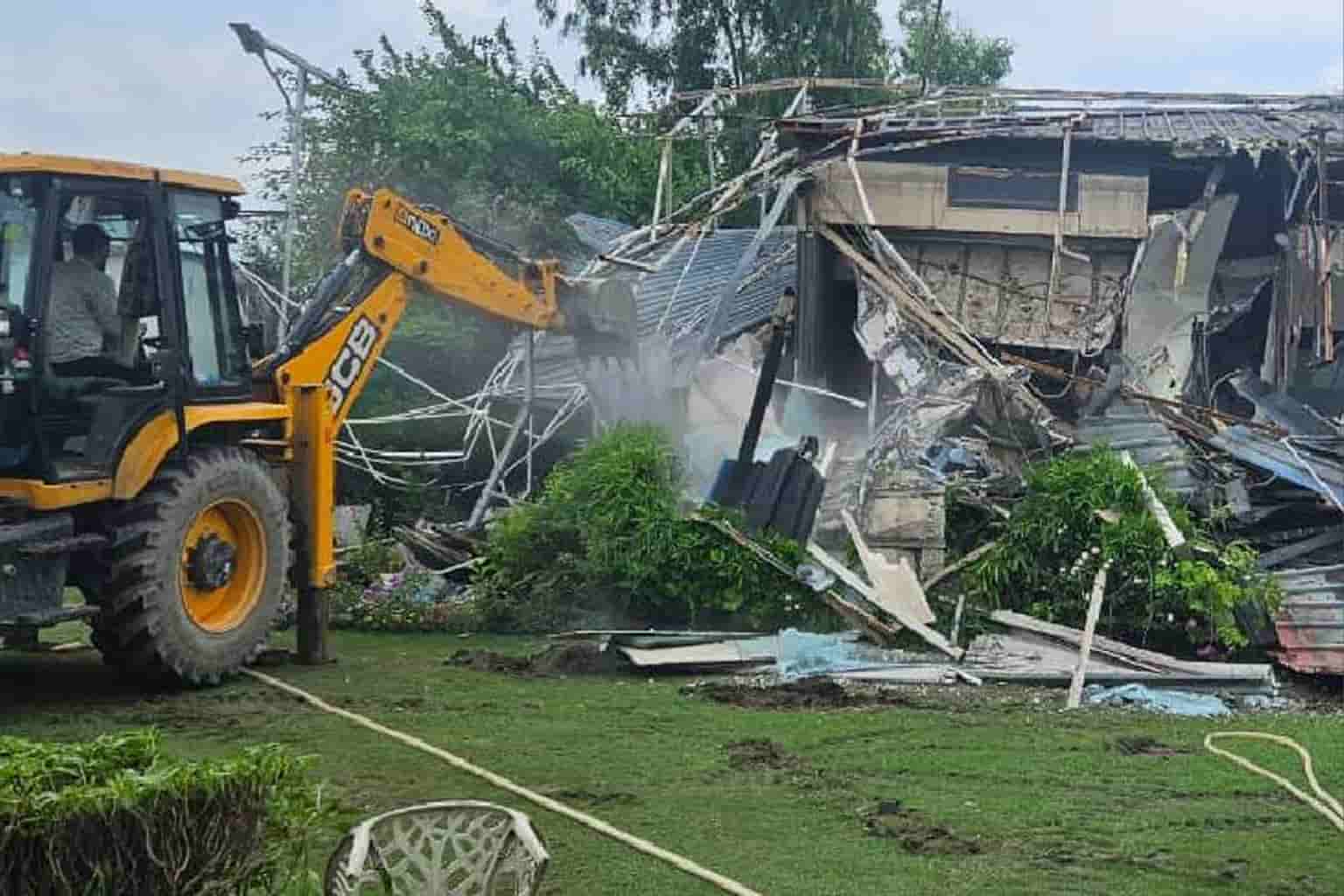
The issue has become important because authorities have been looking at illegal farmhouses, roads, boundary walls and construction in Yamuna and Hindon floodplain areas.
Reports have mentioned notices, drone surveys, demolition action, NGT-related compensation disputes and safety incidents linked with illegal farmhouse use. This shows the problem is not limited to one demolition drive. It is a larger issue around floodplain land-use and unauthorised construction.
For buyers, the key warning is simple: a farmhouse deal may look attractive, but if the land falls in a restricted floodplain area, permanent construction can become legally risky.
Farming may be allowed, but farmhouse construction can be illegal
This is the most important part of the story.
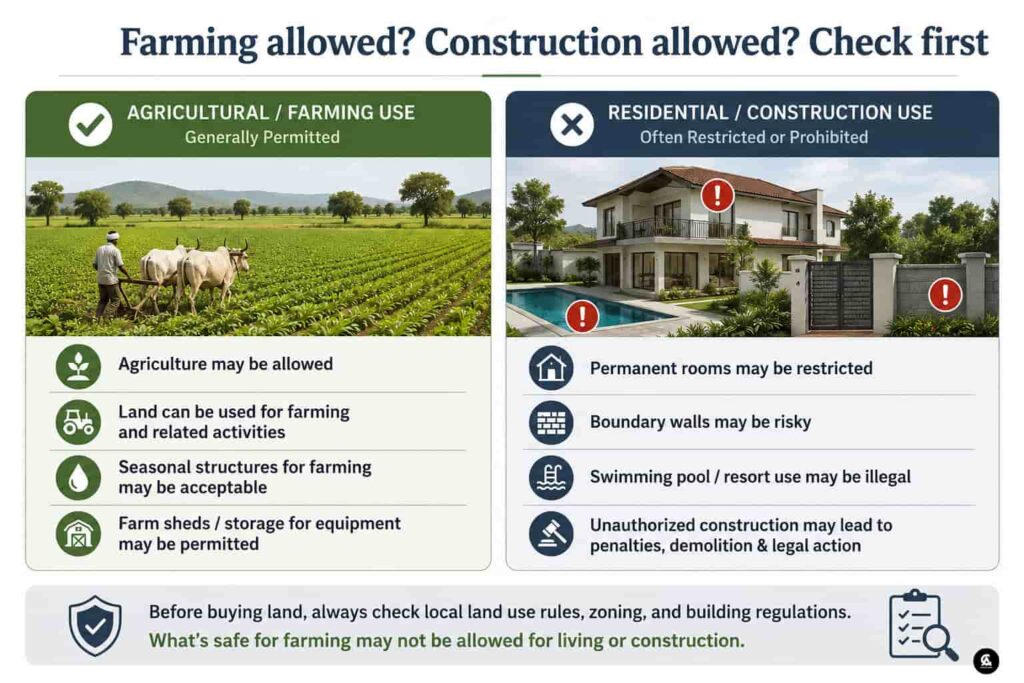
In some floodplain areas, farming or agricultural activity may be allowed. But that does not automatically permit permanent construction such as rooms, boundary walls, swimming pools, party lawns, resort-style use or farmhouse buildings.
A buyer should ask one direct question before buying:
Am I buying agricultural land, or am I buying legal construction rights?
These are two different things. A sale deed may transfer ownership, but it may not give permission to build a farmhouse if the land falls in a restricted डूब क्षेत्र.
The biggest misunderstanding: Registry vs construction approval
Many buyers get trapped because they hear one line from the seller or broker: “Registry ho jayegi.”
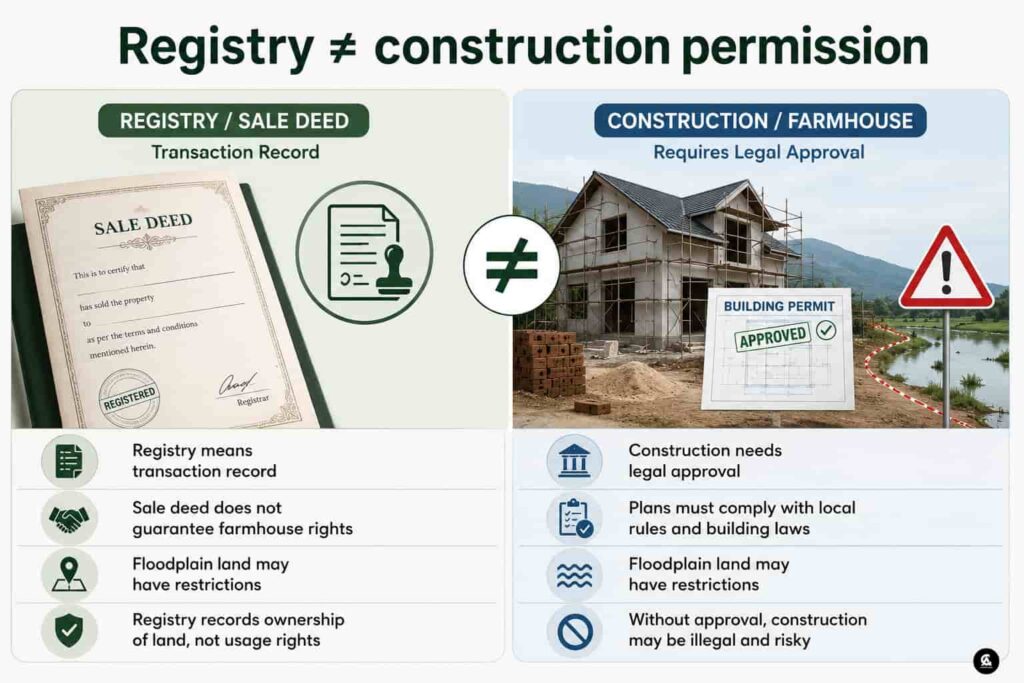
But registry does not automatically mean construction approval.
A registered sale deed only records a transaction. It does not guarantee that the buyer can legally build rooms, boundary walls, swimming pools or commercial farmhouse facilities on that land.
This is the core risk in Noida doob kshetra farmhouse land. A buyer may own the land on paper but still face action if the construction is unauthorised or violates floodplain restrictions.
Why buyers get trapped in farmhouse deals?
Buyers are often attracted by phrases like:
Noida farmhouse, river-side land, Yamuna belt plot, Hindon floodplain land, weekend home near Noida, cheap agricultural land, farmhouse plot with registry, land near expressway.
The problem starts when buyers focus only on price and registry. A cheap land parcel can become expensive if it later faces notice, demolition risk, flood damage, litigation or poor resale demand.
A good real estate deal is not only about low price. It must also be legally usable.
The NGT and compensation risk
The compensation angle makes this issue more serious.
In flood-related disputes, if a structure is considered unauthorised, the owner may not be treated like a normal legal property owner. This means compensation after flood damage can become difficult.
So the risk is not only demolition. The risk is that a buyer may lose money, face legal trouble and still not get compensation if the construction itself is treated as illegal.
Greater Noida and Hindon floodplain are also part of the issue
This is not only a Yamuna-side issue. Greater Noida and the Hindon floodplain have also come under discussion because of illegal farmhouse development and construction activity in sensitive floodplain areas.
For buyers, this means river-side land anywhere in the Noida, Greater Noida, Yamuna, Hindon or Jewar-side belt needs careful checking.
Do not assume a land parcel is safe only because nearby people have already built farmhouses.
Drone surveys and technology-based enforcement are changing the game
Earlier, many illegal structures could remain unnoticed for years. That assumption is now risky.
Reports have mentioned drone surveys, satellite monitoring, floodplain mapping, warning boards and stronger authority action. If authorities use technology to identify illegal construction, old arguments like “sabne bana rakha hai, kuch nahi hoga” may not protect buyers.
A farmhouse that looks safe today may become risky tomorrow if it falls inside a restricted floodplain zone.
Safety risk is also becoming visible
The issue is not only legal or environmental. It is also about public safety.
Some farmhouses are used for parties, pool activities or commercial gatherings. If the property itself is unauthorised and safety systems are weak, the risk becomes bigger for owners, users and buyers.
This is why डूब क्षेत्र farmhouse deals should not be treated casually.
What buyers must check before buying doob kshetra land?
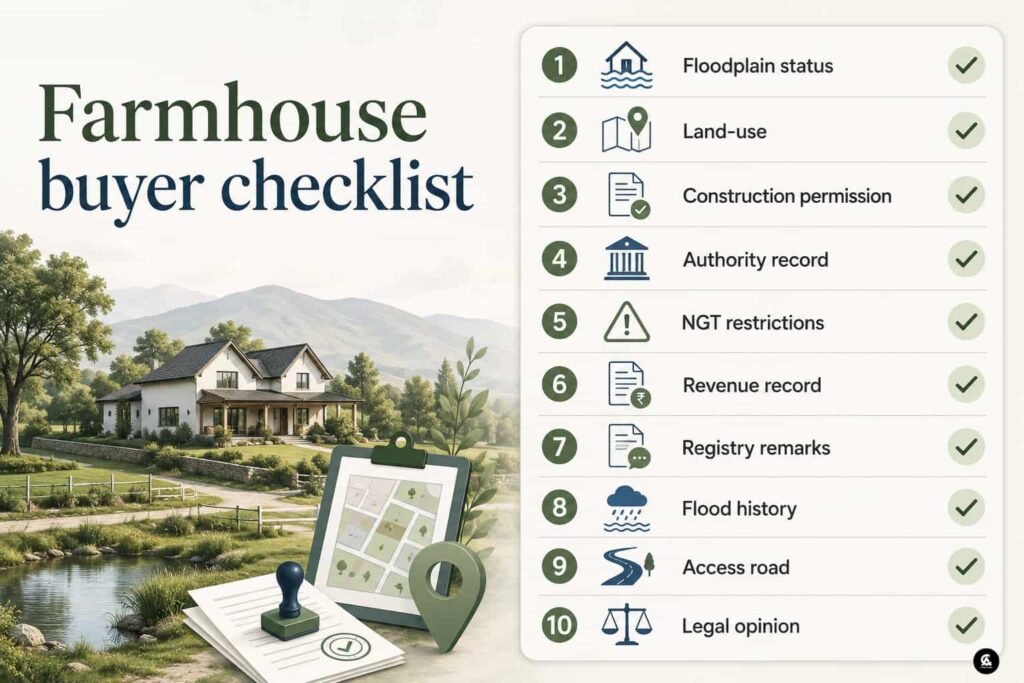
Before buying any farmhouse land in Noida, Greater Noida, Yamuna belt, Hindon belt or Jewar-side river-influenced areas, buyers should check these points carefully:
| Check | Why it matters |
|---|---|
| Floodplain status | Confirms whether the land falls in डूब क्षेत्र |
| Land-use | Shows whether the land is agricultural, residential, commercial or restricted |
| Construction permission | Registry does not mean building permission |
| Authority record | Noida / Greater Noida / relevant authority position must be verified |
| NGT or court restrictions | Environmental restrictions can affect future use |
| Revenue record | Ownership and land category must be clear |
| Registry remarks | Sale deed may carry restrictions or warnings |
| Flood history | Past flooding shows real physical risk |
| Access road | Illegal roads can also face action |
| Existing structure status | Existing building may still be unauthorised |
| Legal opinion | A property lawyer should check all documents before payment |
Who should avoid such farmhouse deals?
This type of land may not suit everyone.
First-time buyers, NRIs buying remotely, people planning immediate farmhouse construction, buyers depending only on broker promises, and investors expecting quick resale should be extra careful.
If the plan is to build rooms, boundary walls, swimming pool, party lawn or resort-style structure, then construction permission must be checked first. Do not assume permission only because similar structures exist nearby.
Final view
The Noida डूब क्षेत्र farmhouse issue is not just viral news. It is a serious buyer-awareness story.
River-side land near Noida, Yamuna or Hindon may look attractive because it is open, cheaper and close to a high-demand real estate market. But if the land falls in a floodplain or restricted zone, permanent construction can create legal, financial and safety risks.
The simple rule is:
डूब क्षेत्र में जमीन खरीदना और वहां legally farmhouse बनाना — दोनों अलग बातें हैं.
Before buying, check floodplain status, land-use, construction permission, authority records, NGT restrictions, registry remarks, flood history and resale demand.
A cheap land deal is not always a smart investment. Sometimes, it is a legal trap waiting to open.
Sources:-
- Noida Authority drone survey and crackdown on illegal farmhouses
Times of India – Noida plans drone survey of floodplains, crackdown on illegal farmhouses - Only farming, no construction: notices to 250 farmhouse owners
Times of India – Only farming, no construction: Noida to issue notices to 250 farmhouses - UP government submission before NGT: compensation applicants called encroachers
Times of India – UP to NGT: Applicants seeking Yamuna flood aid are encroachers - CAG criticism on Hindon floodplain farmhouses in Greater Noida
Economic Times – CAG finds Greater Noida authority failed to restrict farmhouses on protected Hindon floodplain - Hindon floodplain mapping delay after NGT order
Times of India – 2 years on, only 25% of Hindon floodplain mapping done




Leave a Reply