


GDA Ghaziabad auction: Why buyers should pay attention?
Ghaziabad Development Authority has listed Auction Details to be held on 17-07-2026 on its official website. The auction is important because it is not a normal housing scheme, draw or first-come-first-served allotment. It is an auction-based property opportunity where buyers need to study the notice, brochure, property list, reserve price, location and payment terms before participating.
The official GDA tender listing also shows Auction Notice 68/व्यव0अनु0/2026, with related documents such as residential and commercial plots brochure, educational and medical institutions plots brochure, community center brochure, property lists and drawings.
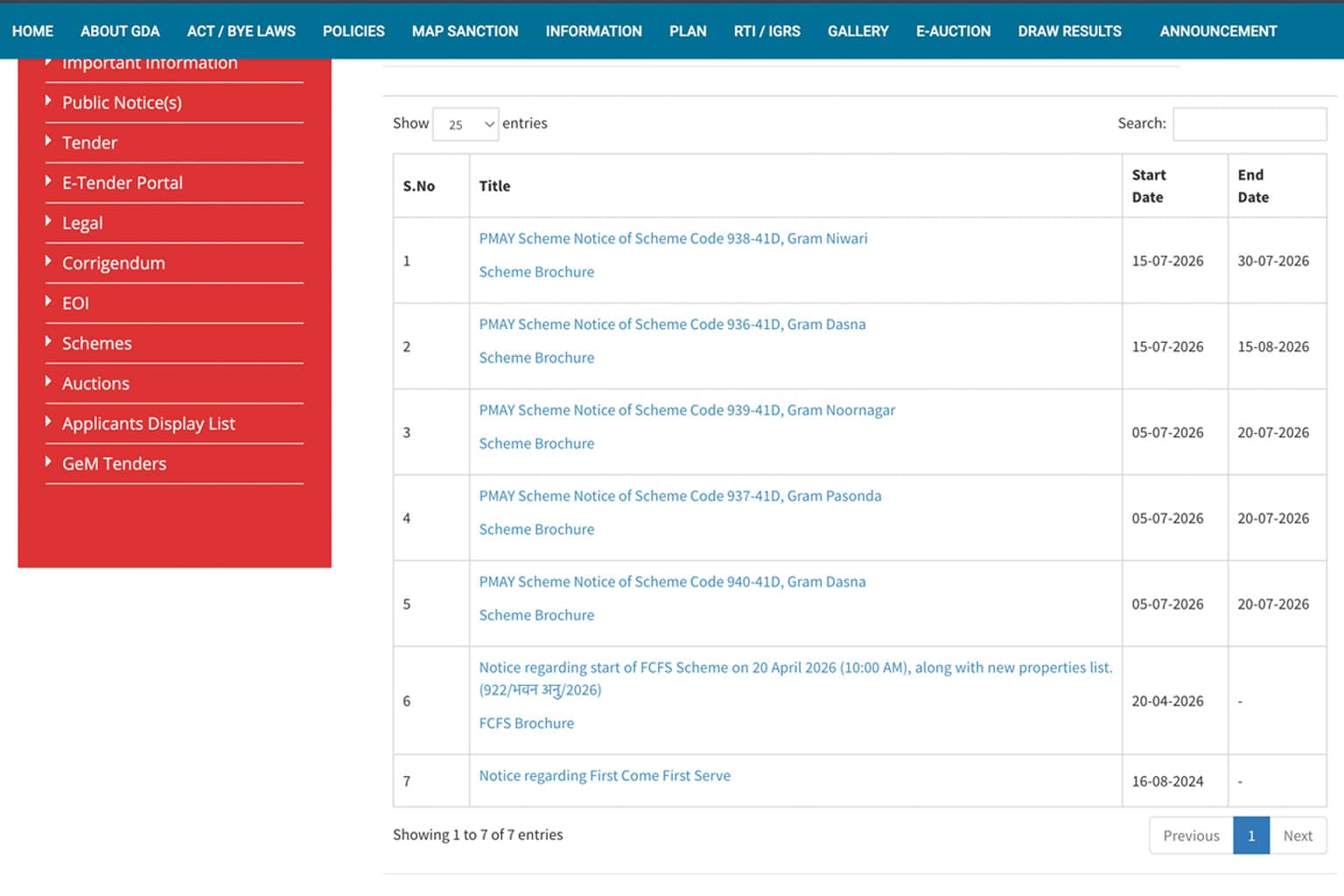
Important dates for GDA auction July 2026
The GDA auction notice mentions the auction date as 17 July 2026. The official listing also says the last date for online/offline registration, application and brochure sale/deposit is 13 July 2026.
| Detail | Information |
|---|---|
| Authority | Ghaziabad Development Authority |
| Notice | Auction Notice 68/व्यव0अनु0/2026 |
| Notice date | 25 June 2026 |
| Registration/application start | 27 June 2026 |
| Last date to apply | 13 July 2026 |
| Auction date | 17 July 2026 |
| Auction time | 11:00 AM onwards |
| Auction venue | Hindi Bhawan, Lohia Nagar, Ghaziabad |
This timeline is important because interested buyers should not wait till auction day. They need to complete registration, application and brochure-related formalities before the deadline.
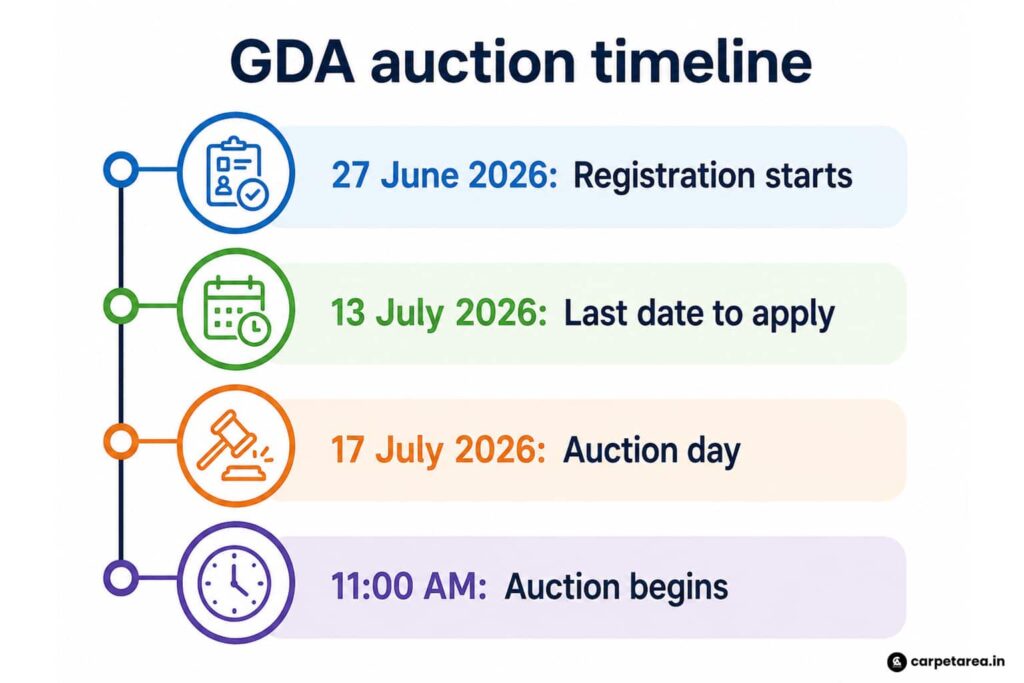
What type of properties are included?
This auction is not limited to one type of property. The official GDA tender listing includes documents for residential and commercial plots, educational and medical institutions plots, community center, property lists and drawings.
That means the auction may be relevant for different buyer groups:
Residential plot buyers
Commercial-property investors
Business owners
School or education-sector applicants
Medical or healthcare-related institutions
Community-centre operators
However, each category has a different purpose, risk and eligibility requirement. A residential buyer should not evaluate a commercial plot like a home, and a commercial buyer should not focus only on location name without checking footfall and land use.
Why this auction is different from a normal plot scheme?
In a normal plot scheme, the buyer may apply through a fixed process, lottery, draw or allotment system. In an auction, the final price depends on bidding.
That means the buyer must enter with discipline.
A property may look attractive at the reserve price, but the final bid can become expensive if competition increases. This is why the buyer should calculate the maximum affordable bid before participating.
The safest approach is simple:
Shortlist the property first, verify the location second, calculate the total cost third, and bid only within your limit.
What buyers should check before bidding?
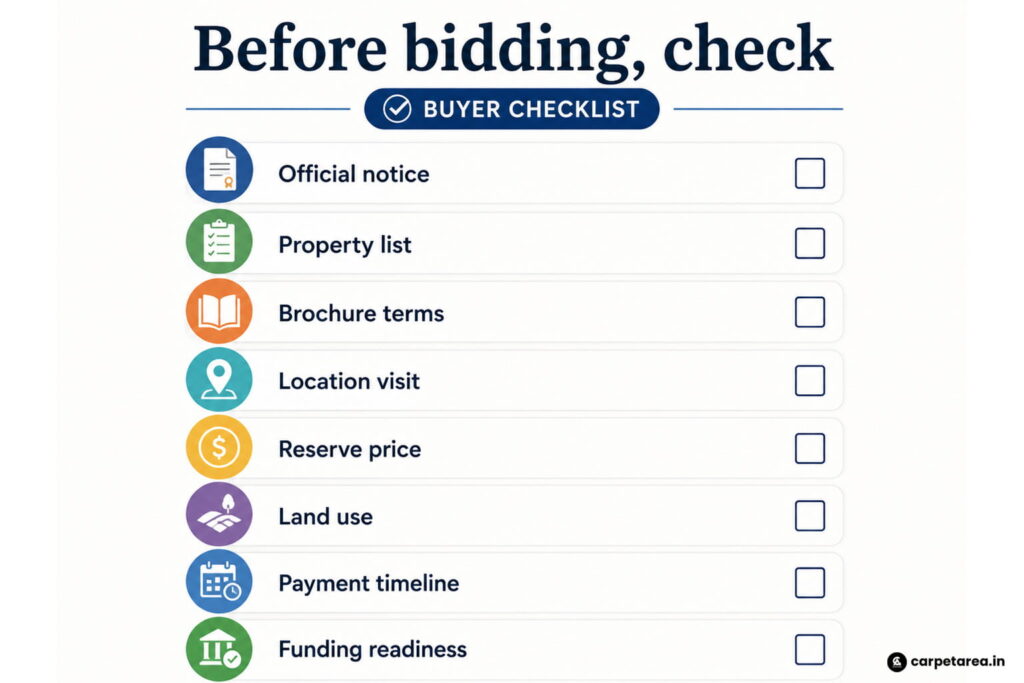
Before participating in the GDA auction, buyers should check the official documents carefully. The official GDA auction details page shows plot-level fields such as scheme name, property type, land area, plot/building number, reserve rate, reserve value, earnest money and other related details.
Buyers should verify:
Official auction notice
Property list
Brochure terms
Location visit
Reserve price
Land use
Payment timeline
Funding readiness
The important point is that the bid price is not the only cost. Buyers should also check other possible payments, document requirements, registration formalities, taxes, lease terms, stamp duty, development charges and post-auction payment deadlines wherever applicable.
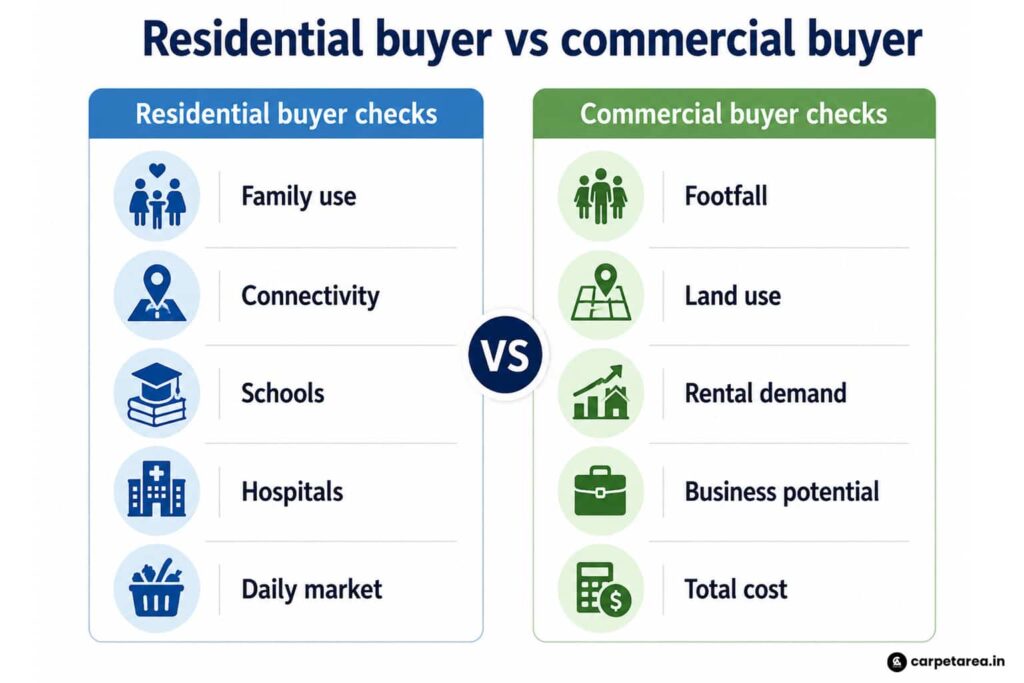
Residential buyer vs commercial buyer: Checks are different
A residential buyer should think from the family-use angle. The main questions are:
Can my family live here?
Is the location connected?
Are schools and hospitals accessible?
Is the daily market nearby?
Will the location work for self-use or long-term holding?
A commercial buyer should think from the business angle. The main questions are:
Is there enough footfall?
Is the land use suitable?
Is there rental demand?
Can the location support business activity?
Does the total cost make sense after bidding?
This difference matters because a good residential location may not always be a good commercial investment, and a strong commercial location may not suit a family’s daily life.
How to prepare before the auction day?
A serious buyer should not start preparation on auction day. Preparation should begin as soon as the official notice and brochure are available.
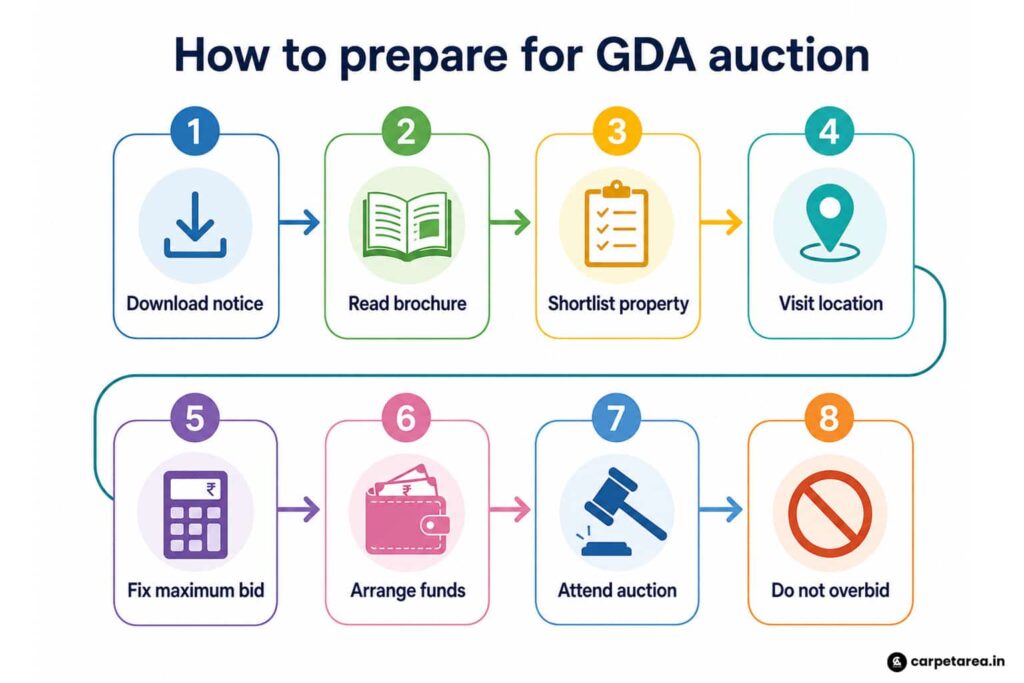
Use this step-by-step approach:
- Download the auction notice.
- Read the brochure carefully.
- Shortlist only suitable properties.
- Visit or verify the location.
- Fix your maximum bid.
- Arrange funds in advance.
- Attend the auction with a clear budget.
- Do not overbid under pressure.
This is especially important because auction pressure can make buyers take emotional decisions. A buyer should be ready to walk away if the final bid crosses the planned budget.
Biggest mistakes buyers should avoid
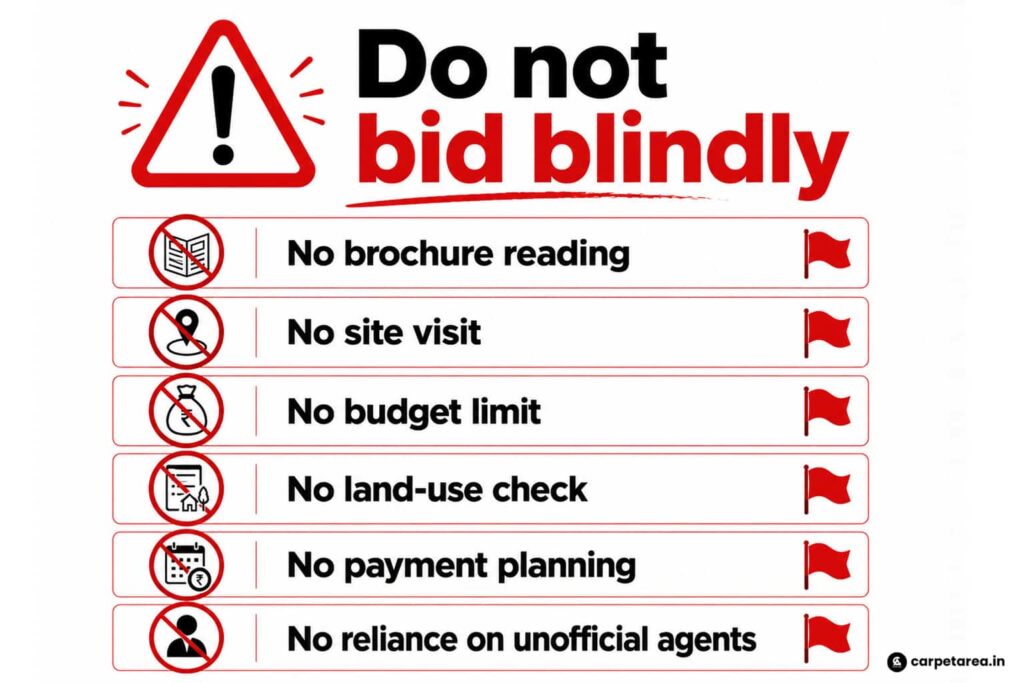
The biggest risk in any property auction is blind bidding. A buyer may enter the auction thinking that a government authority property is automatically safe or profitable. That is not the correct approach.
Avoid these mistakes:
No brochure reading
No site visit
No budget limit
No land-use check
No payment planning
No reliance only on unofficial agents
A government authority auction can be a useful opportunity, but only when the buyer understands the terms and enters with a fixed budget.
Official documents buyers should download
Before bidding, buyers should download and study the official documents listed with the auction entry. The GDA tender listing shows the auction notice along with brochures, property lists and drawings.
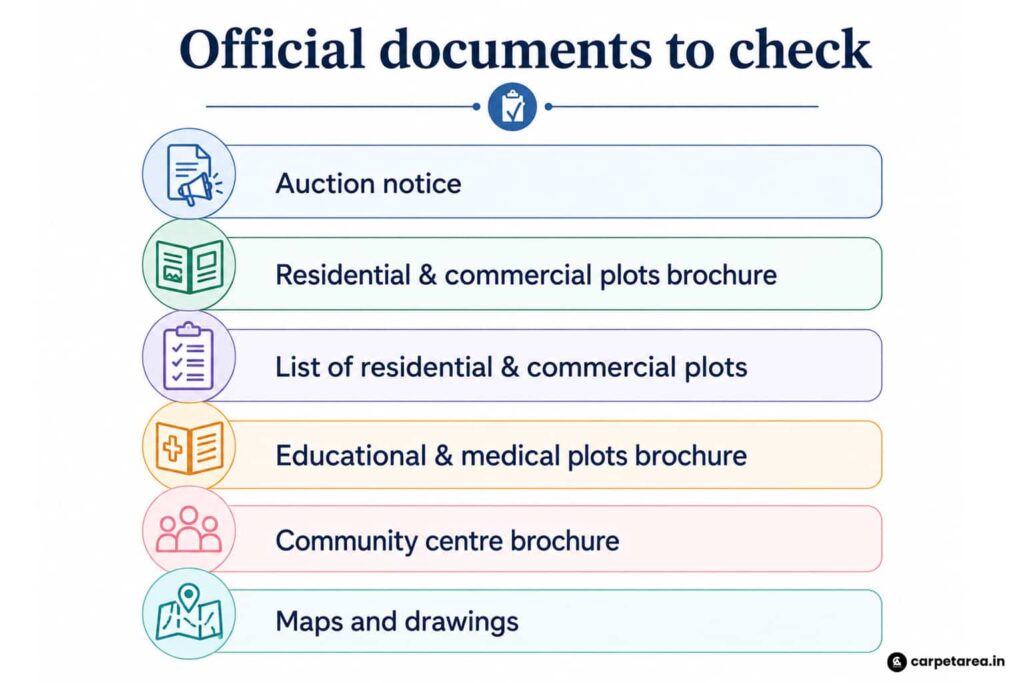
The most important documents are:
Auction notice
Residential and commercial plots brochure
List of residential and commercial plots
Educational and medical plots brochure
Community centre brochure
Maps and drawings
These documents help buyers understand property type, location, terms, reserve price, payment rules and suitability.
Who should consider this GDA auction?
This auction may suit:
Buyers looking for residential plots in Ghaziabad
Commercial investors with proper budget
Business owners looking for authority-listed property
Institutions looking for education or medical-use plots
Buyers who can arrange funds on time
Applicants who understand auction risk
This auction may not suit:
First-time buyers who have not read the brochure
Buyers with unclear budgets
People depending only on brokers
Buyers who cannot arrange payment quickly
Investors expecting guaranteed profit
Anyone bidding without checking the site and land use
Carpet Area buyer verdict
The GDA Ghaziabad auction scheduled for 17 July 2026 can be useful for prepared buyers because the official listing includes multiple property-related documents, including residential and commercial plot material. But it should not be treated like a simple application-based plot scheme.
The right buyer is not the one who bids highest. The right buyer is the one who studies the documents, visits the location, checks land use, calculates total cost and stops bidding when the price crosses the practical limit.
Final takeaway
The GDA auction is a time-sensitive opportunity, but buyers should not rush. Before applying or bidding, every buyer should ask:
Have I checked the official GDA notice?
Have I read the brochure?
Have I studied the property list?
Have I verified the location?
Have I fixed my maximum bid?
Can I manage the payment timeline?
A property auction can be useful only when the decision is based on documents, location and payment capacity — not pressure.
Disclaimer
This article is for public awareness and real-estate education only. Auction dates, property lists, reserve prices, eligibility conditions, payment terms, venue details and other rules may change based on official updates issued by Ghaziabad Development Authority. Buyers should verify the latest notice, brochure, property list, drawings and payment instructions from official GDA sources before applying, bidding or making any payment.



Leave a Reply