


India’s real estate market is no longer moving as a simple growth story. Some cities are seeing strong premium demand, some markets are becoming more selective, and buyers are now looking closely at developer credibility, delivery record and project quality. In this environment, DLF’s FY26 numbers become important because they show how a large listed developer is performing in the middle of this changing cycle.
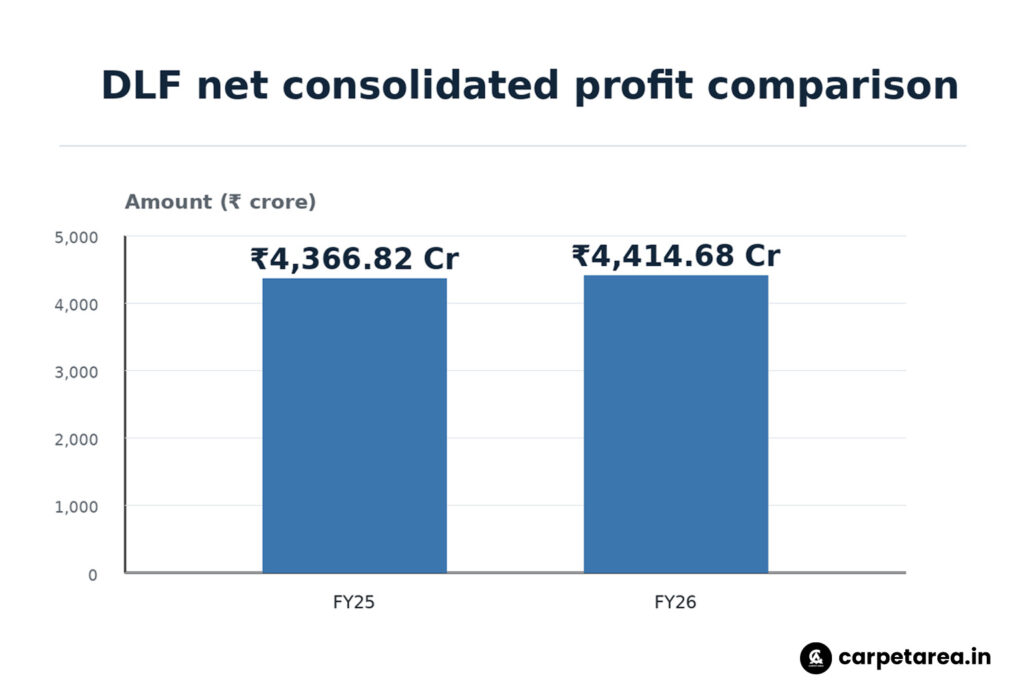
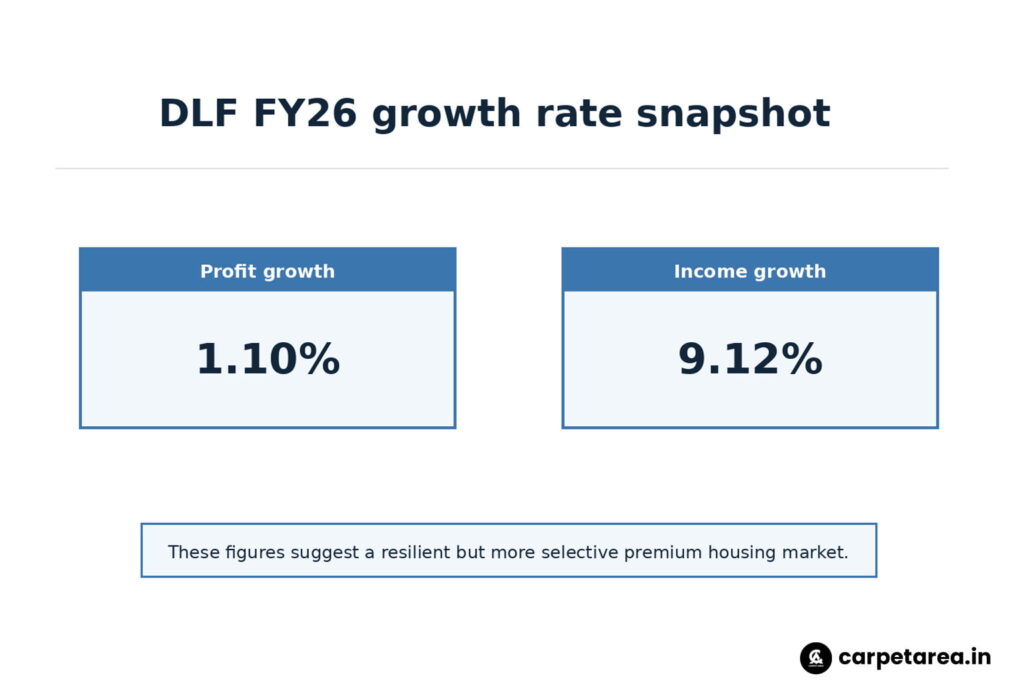
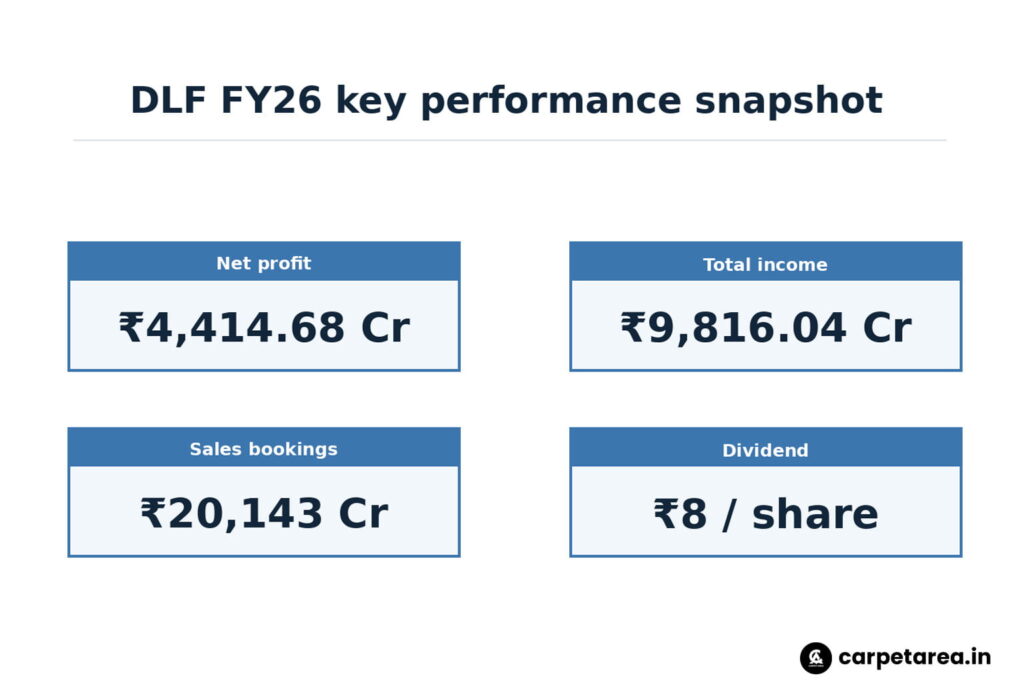
DLF reported a net consolidated profit of ₹4,414.68 crore for FY26, compared with ₹4,366.82 crore in the previous financial year. That is a modest 1.10% increase, but the figure is still significant because it shows that one of India’s largest real estate companies remained profitable at scale. Total income also increased 9.12% to ₹9,816.04 crore in FY26.
For homebuyers and investors, the message is clear. Large developers with strong brands, good land banks and premium projects are still holding their ground. The real estate market may be selective, but demand has not disappeared. Instead, buyers are becoming more careful about where they put their money.
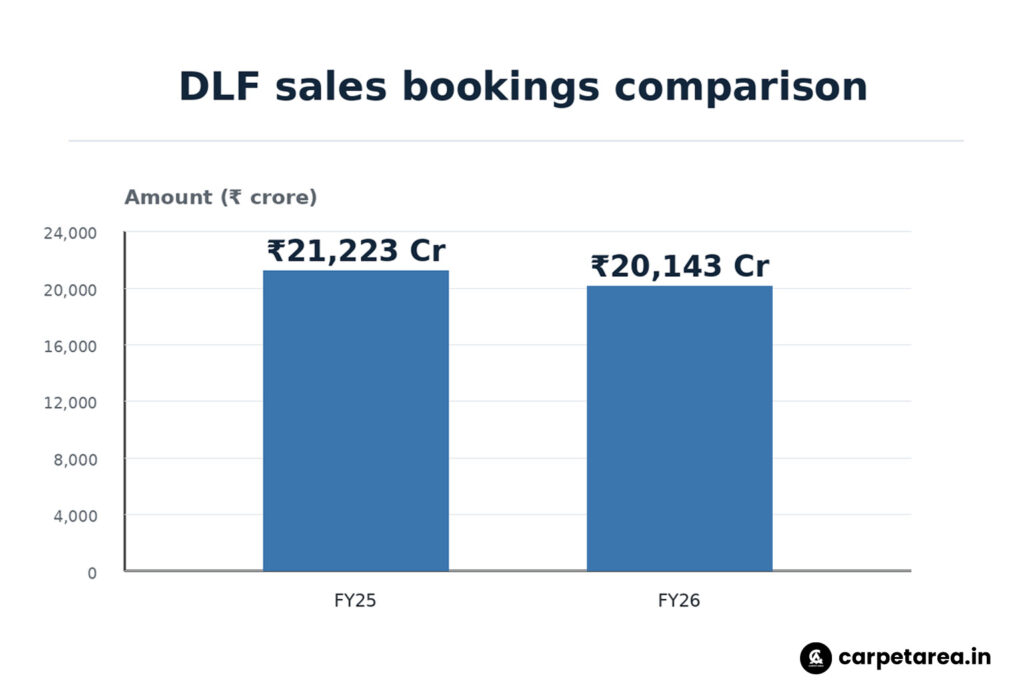
DLF’s sales bookings are another important part of the story. The company recorded ₹20,143 crore in new sales bookings during FY26. This was lower than ₹21,223 crore in FY25, but it still remained above the ₹20,000 crore mark. A small decline in bookings does not mean weak demand. It suggests that after a very strong previous year, the market is stabilising at a high level.
This is especially important for the premium housing segment. Over the past few years, luxury and premium homes have performed strongly in cities like Gurugram, Delhi-NCR, Mumbai, Bengaluru and Hyderabad. Buyers with higher income levels have been looking for larger homes, better amenities, branded developers, stronger communities and long-term value. DLF has benefited from this premiumisation trend.
But FY26 also shows a more mature phase. In FY25, DLF had reported record sales bookings of ₹21,223 crore, helped by premium housing demand and strong response to high-end projects. In FY26, bookings dipped slightly, but remained strong. This means the premium market is still active, but buyers may not be rushing blindly into every launch.
For investors, this is a useful signal. Premium real estate is not only about high prices. It is about the ability of a developer to sell, deliver, maintain brand trust and manage cash flows. DLF’s numbers show that large developers can continue to attract demand when they have credibility and strong project positioning.
The company’s fourth quarter numbers also need to be read carefully. In Q4 FY26, DLF reported net profit of around ₹1,269 crore, slightly lower than the year-ago period. Total income in the quarter also fell compared with the previous year’s same quarter. This shows that even leading developers can see quarter-to-quarter variations. Real estate revenue recognition depends on project stages, deliveries, sales timing and accounting treatment.
That is why annual performance gives a better picture than one quarter alone. On a full-year basis, DLF’s profit and income remained strong. The company also recommended a dividend of ₹8 per equity share, according to ET Realty. This adds another investor-facing angle because it shows that large listed real estate companies are being watched not only for sales, but also for shareholder returns.
For homebuyers, the takeaway is practical. When buying in premium projects, the developer’s balance sheet matters. A financially stronger developer may be better placed to execute projects, maintain quality and handle market cycles. This does not mean buyers should skip due diligence, but it does mean that developer strength should be a serious part of the decision.
For the broader market, DLF’s FY26 numbers show that premium housing is still one of the strongest themes in Indian real estate. However, the market is not unlimited. Developers cannot depend only on brand and high pricing. They must continue to offer location strength, design quality, amenities, timely delivery and transparent communication.
This also explains why listed developers are gaining more attention. In a selective market, buyers may prefer companies with stronger governance, public disclosures and established delivery records. Investors may also prefer companies that can manage land, capital, sales and execution in a disciplined way.
The most important conclusion is that India’s premium real estate market is still resilient, but it is becoming more disciplined. DLF’s ₹4,414.68 crore FY26 profit and ₹20,143 crore sales bookings show strength, while the slight dip in bookings shows that even premium demand is becoming more measured.
In simple words, DLF’s FY26 numbers do not show a weak market. They show a market that is strong but selective. Buyers are still willing to pay for premium homes, but they want trusted developers, better locations and stronger value. For India’s premium real estate segment, that may actually be a healthier phase than unchecked growth.




Leave a Reply