


Every property buyer has one silent fear: what if this one decision puts years of savings at risk?
For most Indian families, buying a home or plot is not a casual purchase. It is a family decision, a loan decision, a future-security decision and sometimes the biggest investment of their life. That is why a good property should never be judged only by a brochure, discount, builder name or location hype.
A good property is the one where location, legal safety, fair price, builder credibility and future demand come together.
In simple words, do not buy the story first. Verify the property first.
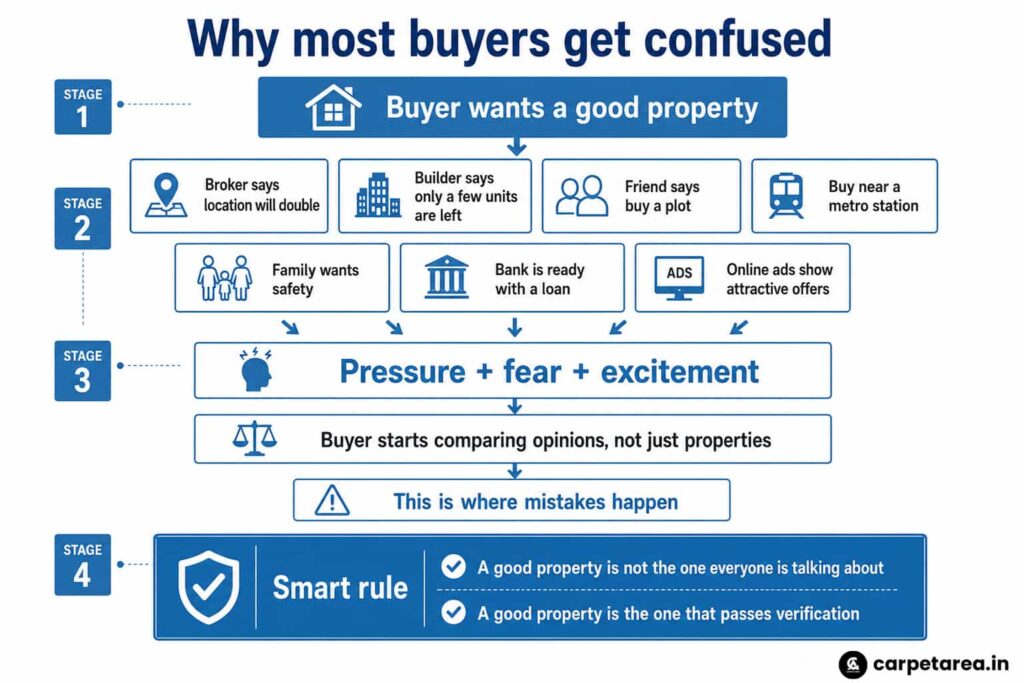
Why most buyers get confused?
A buyer usually enters the market with one simple thought: “I want a good property.” But very quickly, the confusion begins.
One broker says the location will double in value. One builder says only a few units are left. One friend says buy a plot. Someone else says buy near a metro station. The family wants safety. The bank is ready with a loan. Online ads show attractive offers. Suddenly, the buyer is not only comparing properties, but also handling pressure, fear and excitement.
This is where mistakes happen.
A smart buyer needs one simple rule: a good property is not the one everyone is talking about. A good property is the one that passes verification.
Where should you buy property in India?
The first mistake many buyers make is buying a city name instead of a usable location.
A property in a famous city can still be weak if the project is poorly connected, legally unclear or far from real demand. On the other hand, a good micro-market in a growing corridor can become a strong choice if it has jobs, roads, schools, hospitals, transport and future infrastructure.
For end-use, the location should support daily life. Ask simple questions: Can your family live there comfortably? Is the commute practical? Are schools, hospitals, markets and public transport nearby? Is the area safe? Is water, electricity and road access reliable?
For investment, the location should have future demand. Check whether people will want to rent or buy there later. A location becomes stronger when it is connected to employment corridors, metro lines, expressways, airports, industrial zones, universities, hospitals or commercial activity.
The real rule is simple: do not buy a city name. Buy a usable location inside that city.
Which property should you buy?
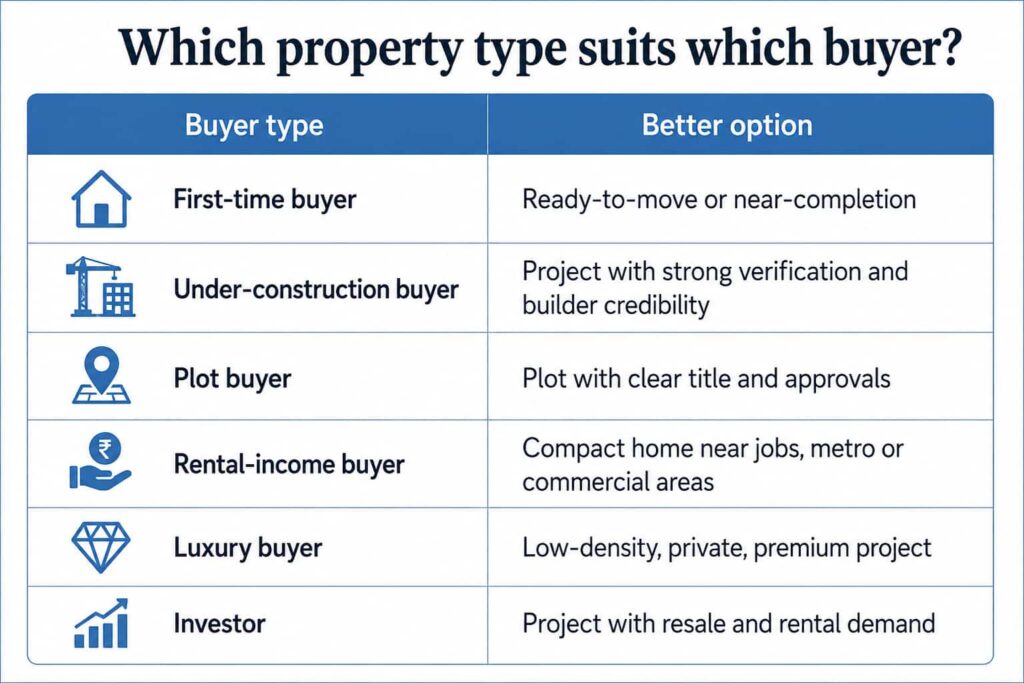
There is no single best property type for everyone. The right property depends on why you are buying.
If you are a first-time homebuyer, a ready-to-move or near-completion apartment may be safer. You can see the actual building, road, society, construction quality, neighbourhood and daily convenience.
If you are buying an under-construction home, you may get payment flexibility or better entry pricing, but the checks must be stronger. Buyers should verify the builder’s track record, RERA registration, land title, approvals, payment plan, possession timeline, agreement for sale, location, construction quality and loan approvals before committing.
If you are buying a plot, the legal checks become even more important. You must verify land title, zoning, layout approval, development authority approval, road access, possession clarity and whether the plot is free from disputes or encumbrances.
If you are buying for rental income, a smaller apartment near offices, metro stations, hospitals, colleges or commercial areas may work better than a large apartment in a weak rental market.
If you are buying luxury property, do not judge only by brand. Check carpet area, density, privacy, maintenance cost, community profile, resale liquidity and whether the premium price is justified.
RERA is important, but not the final guarantee
RERA is one of the first things every buyer should check. It improves transparency because registered projects must disclose key project details, timelines, approvals and layouts.
But this is the important part: RERA registration is the first filter, not the final guarantee.
RERA helps buyers access information, but it does not replace legal due diligence. Buyers should still check land title, approvals, litigation status, possession timeline, builder-buyer agreement and payment terms.
So the correct process is:
RERA check first, legal due diligence next, site visit after that, and payment only after clarity.
Documents are not paperwork, they are your safety belt
Many buyers feel legal documents are boring. But in property buying, documents are not paperwork. They are your safety belt.
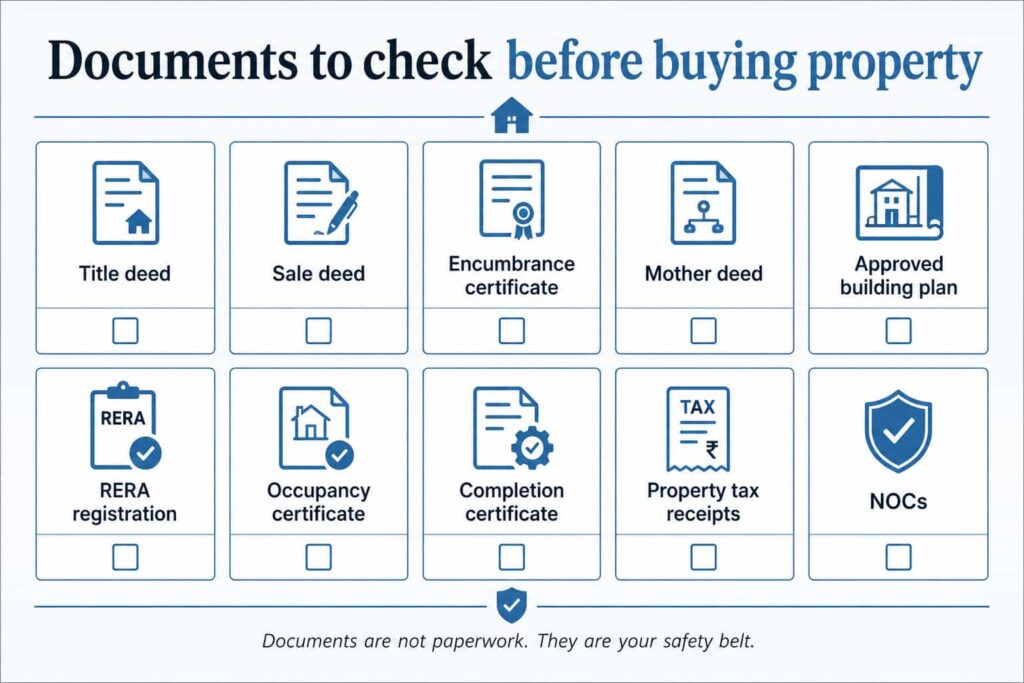
Before paying token money or signing an agreement, buyers should check documents such as title deed, sale deed, encumbrance certificate, mother deed, approved building plan, occupancy certificate, completion certificate, RERA registration certificate, property tax receipts and NOCs.
This is where buyers should be very careful. Do not depend only on the broker, sales team or online listing. A property may look beautiful, but if the title is weak, approvals are missing or the land has legal disputes, the risk becomes serious.
A legally clear property may not always look the most exciting, but it gives peace of mind.
How to judge whether the price is right?
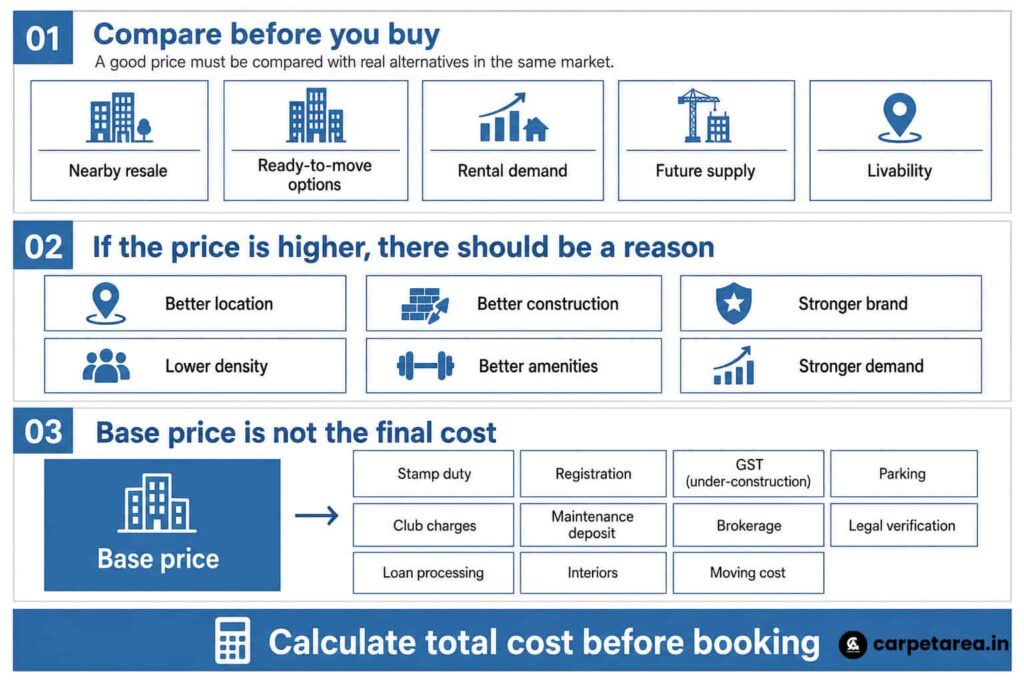
A property is not good only because it is cheap. It is also not good only because prices in that area are rising. A buyer should compare the project price with nearby resale properties, ready-to-move options, rental demand, future supply and actual livability.
If the project is priced much higher than nearby options, there should be a clear reason: better location, better construction, stronger brand, lower density, better amenities or stronger demand.
Also remember one thing: the property price is not the final cost. The real cost may include stamp duty, registration charges, GST for under-construction property, parking, club charges, maintenance deposit, brokerage, legal verification, loan processing, interiors and moving cost.
Many buyers calculate only the base price and later realise the final budget is much higher. A smart buyer calculates the total cost before booking.
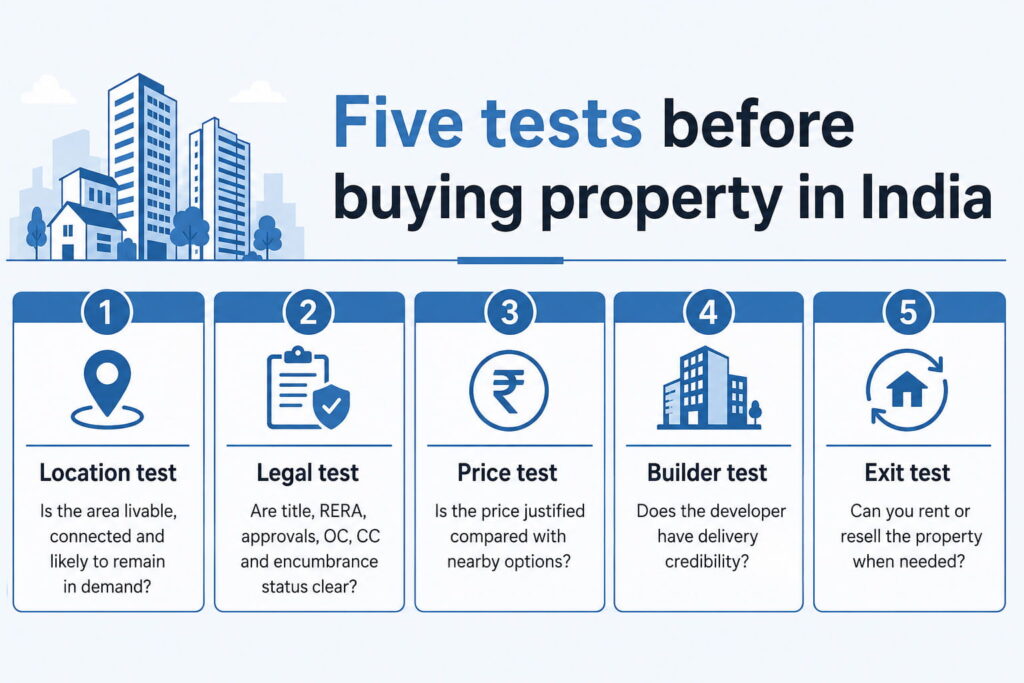
Final view
A good property in India is not the one that looks attractive in an advertisement. A good property is the one that is legally clear, fairly priced, livable, financeable and useful for your future.
The safest rule is simple:
Buy where people will want to live, work, rent or build in the future, but verify everything before paying.
For Carpet Area readers, the message is clear. Do not chase hype. Do not trust only brochures. Do not rush because of discounts or deadlines.
A smart property decision begins with location, continues with legal verification, and ends only when the price, builder and future demand make sense.

Leave a Reply