

Rajasthan Housing Board has given homebuyers in Baran another opportunity to enter its Gopalpura Housing Scheme 2026.
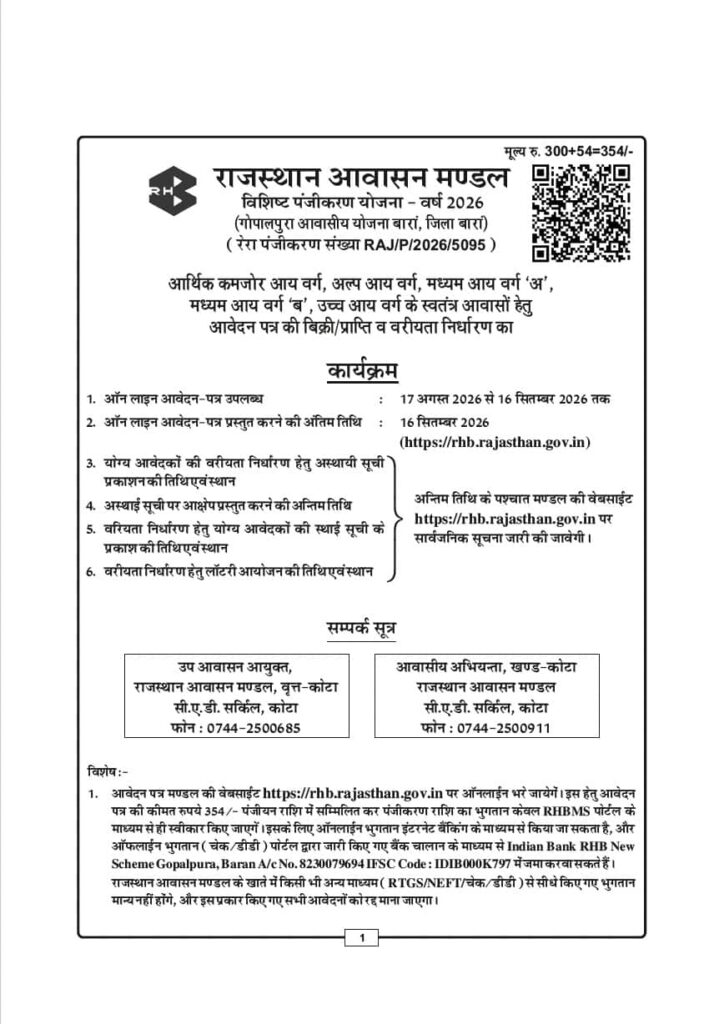
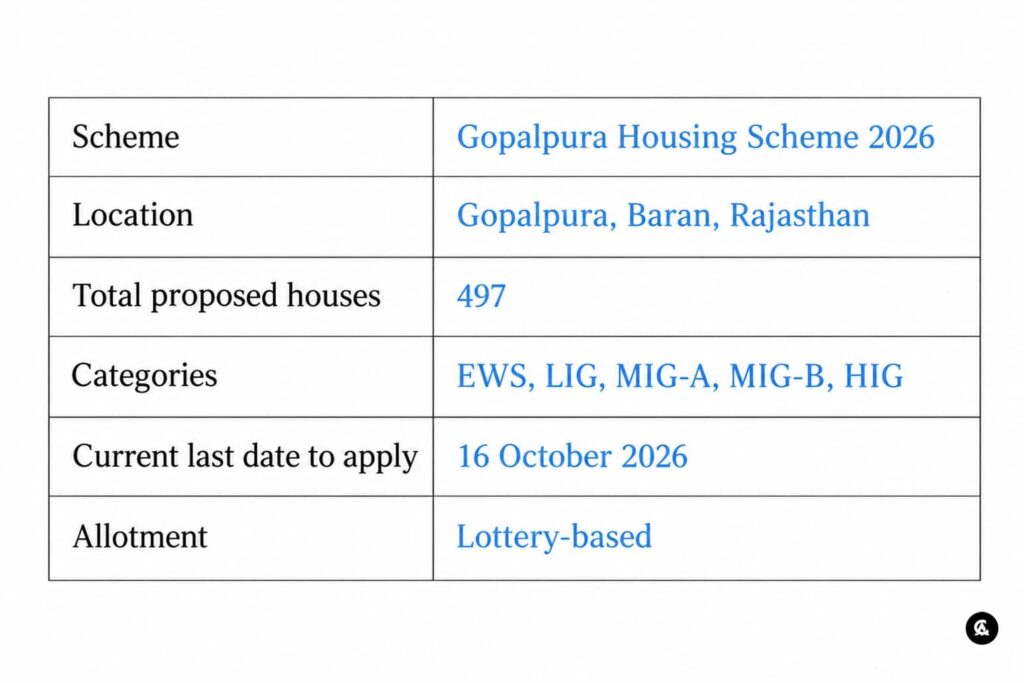
The scheme is currently shown as ACTIVE on the Rajasthan Housing Board website, and the application deadline has been extended to 16 October 2026. A total of 497 houses are proposed across EWS, LIG, MIG-A, MIG-B and HIG categories, with estimated prices ranging from ₹16.50 lakh to ₹61 lakh.
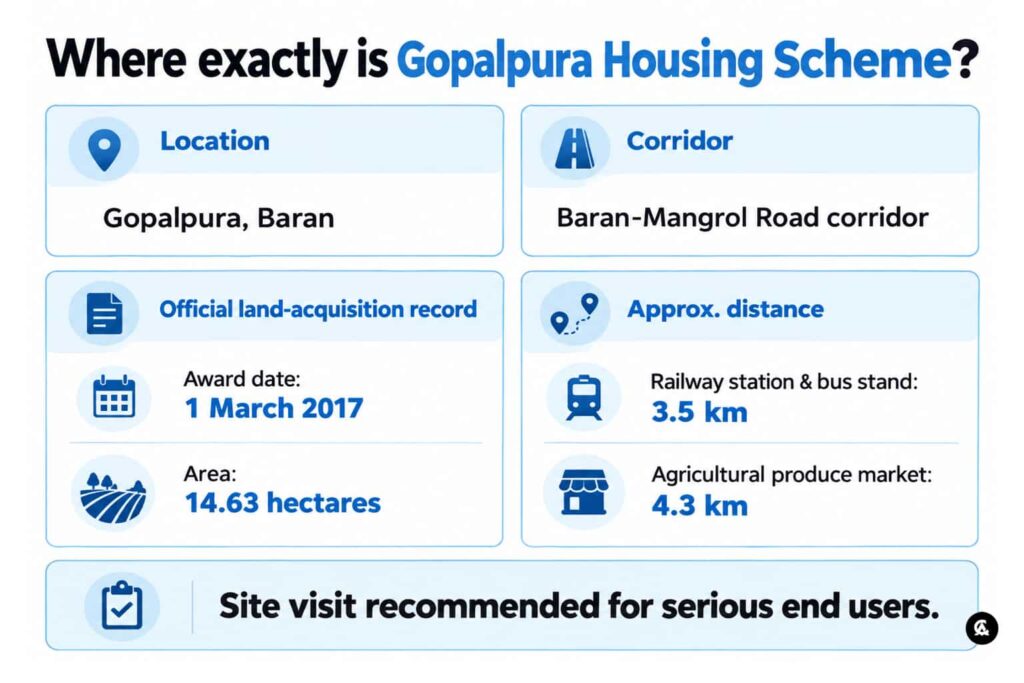
Where exactly is Gopalpura Housing Scheme?
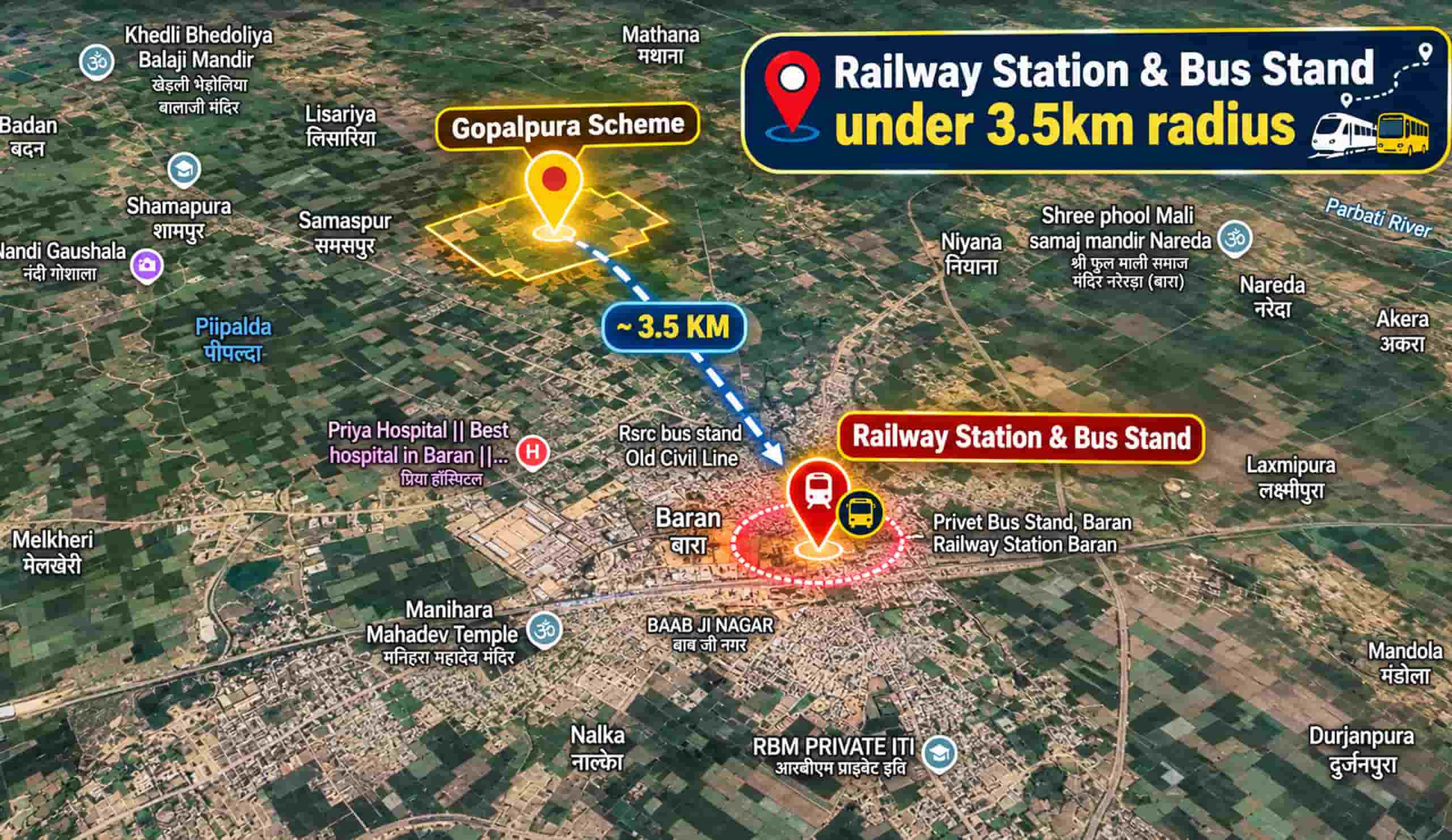
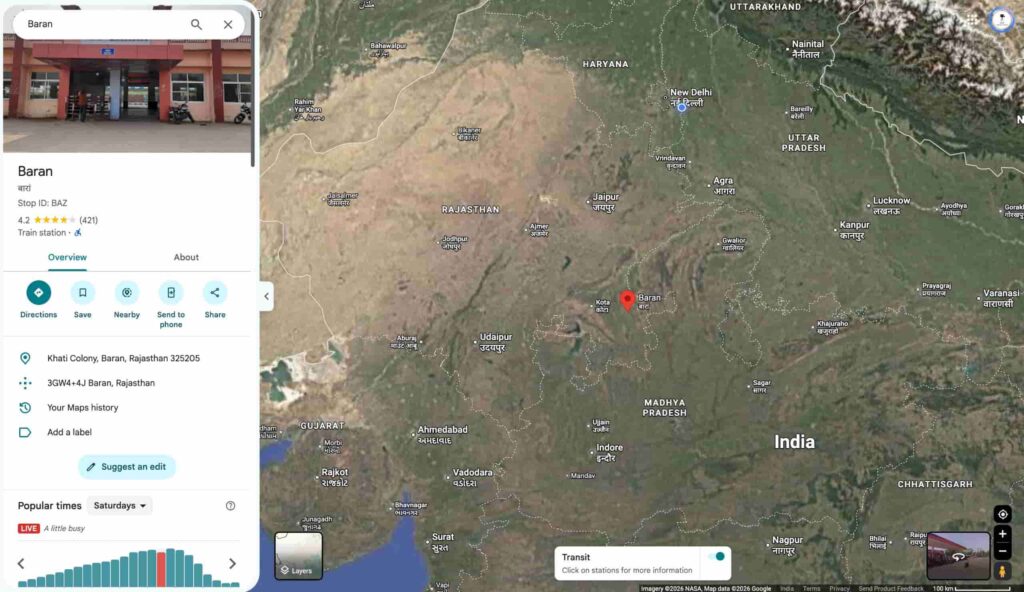
The project is in Gopalpura, Baran, around the Baran-Mangrol Road corridor.
Rajasthan Housing Board’s official land-acquisition records show Gopalpura Baran with an award dated 1 March 2017 and an area of 14.63 hectares.
Available scheme information places the railway station and bus stand at roughly 3.5 km, with the agricultural produce market around 4.3 km away.
These distances are useful on paper, but serious end users should still visit the location.
A five-minute site visit can sometimes tell a buyer more about approach roads, surrounding habitation and present-day infrastructure than several pages of brochure material.
497 houses are proposed — but they are not all the same
The scheme covers five income categories rather than offering one standard house type.
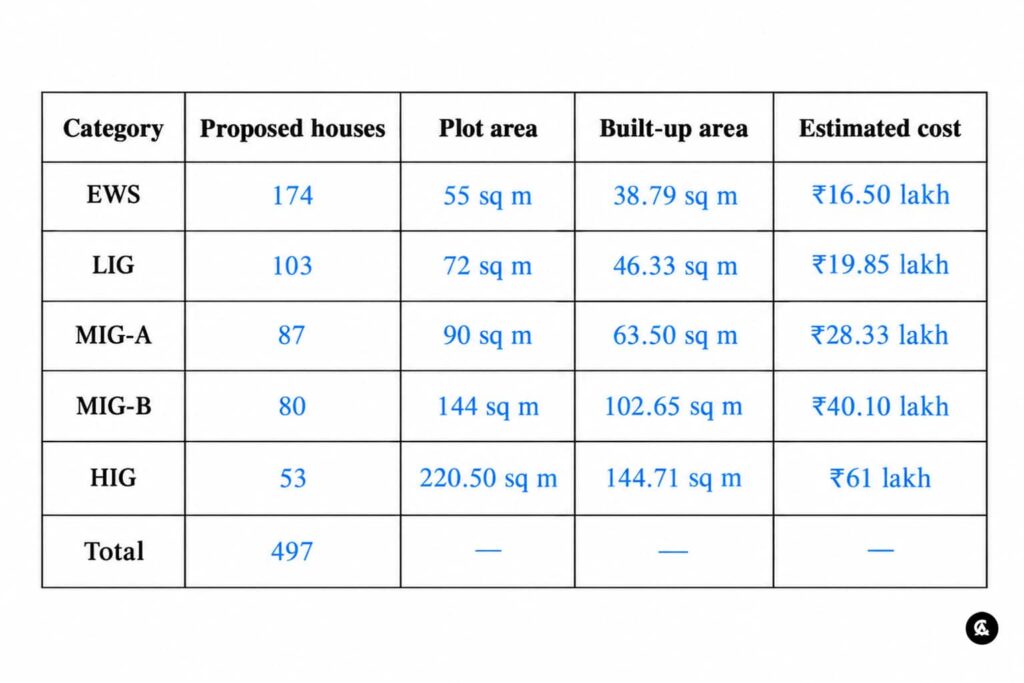
The biggest share is in the EWS category with 174 houses, followed by 103 LIG homes. At the other end, HIG buyers get substantially larger plot and built-up areas.
This spread makes the scheme relevant to very different buyer profiles rather than only one income segment.
Do not treat ₹16.50 lakh as the final amount
The ₹16.50 lakh starting price is undoubtedly the headline attraction.
But buyers need to understand the word estimated.
The available scheme information states that the eventual price can be affected by land cost, development expenditure and construction costs. The amount finally determined by Rajasthan Housing Board at the allotment stage is therefore more important than the current estimate.
This means an EWS applicant should not create a financial plan assuming that ₹16.50 lakh will necessarily be the complete acquisition cost.
The same principle applies to every other category.
Who falls under EWS, LIG, MIG and HIG?
Income classification is an important part of this scheme.
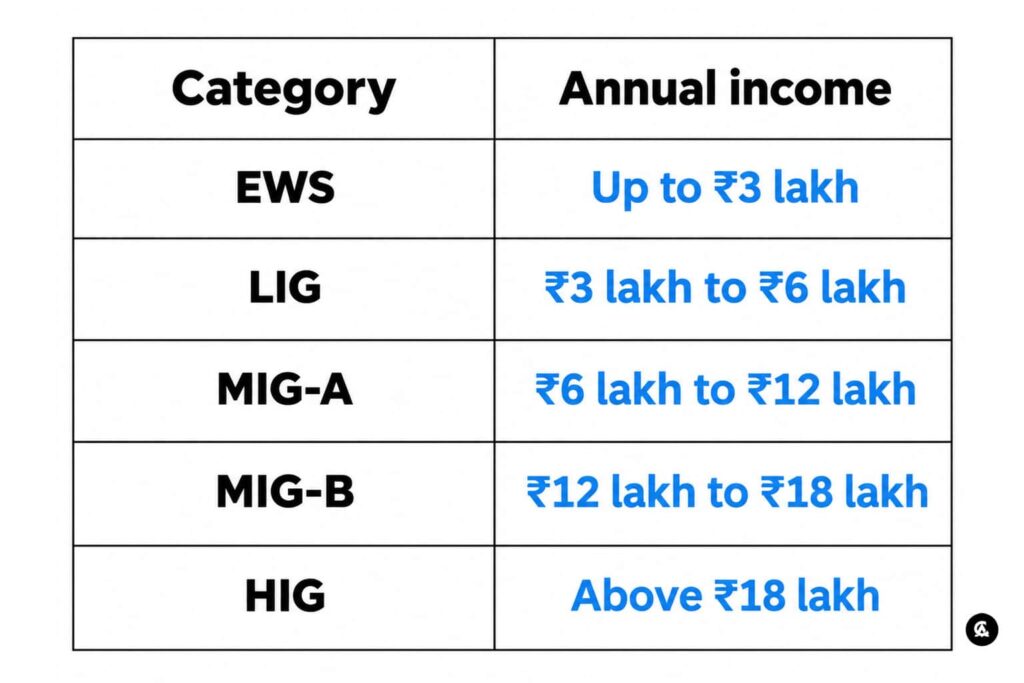
Applicants should therefore identify the appropriate income bracket before choosing a house simply because its size or price looks attractive.
The scheme information also provides some flexibility for applicants seeking consideration in nearby income categories, but priority remains linked to the applicant’s own prescribed income group.
How much money do you need at the application stage?
This is where the scheme becomes particularly useful to compare.
The initial amount is very different across categories.
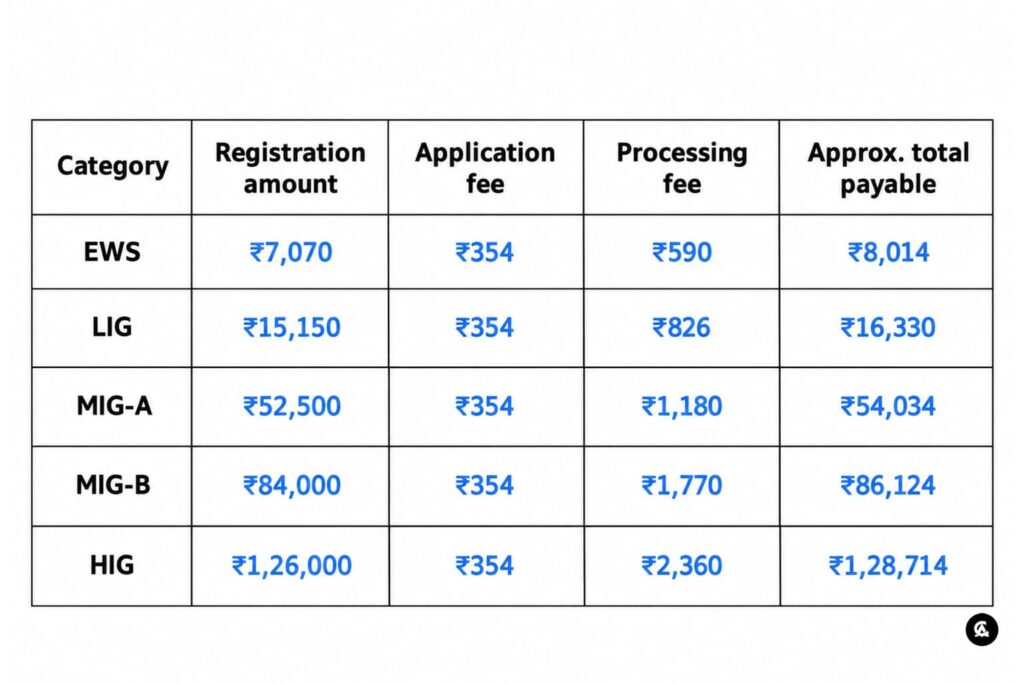
Applicants should distinguish between the registration amount and charges that may not be refundable or adjustable.
This is especially important for someone who is applying primarily because the scheme operates through a lottery.
Cash payment or hire-purchase: the scheme offers both
One of the more interesting parts of the Gopalpura scheme is the payment structure.
Approximately:
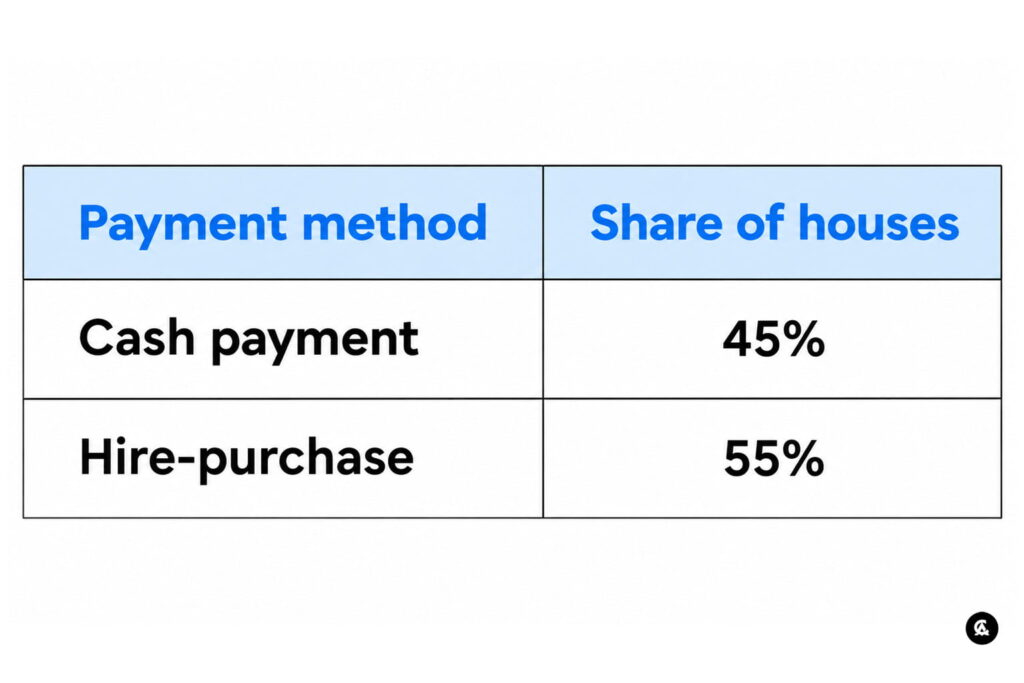
Under the available terms, a house allotted through the cash-payment route cannot simply be changed later into hire-purchase. A separate provision exists for certain hire-purchase allottees to seek conversion to cash payment within the prescribed period and subject to conditions.
That means the payment method should not be treated as a minor box to tick on the application form.
Applicants should decide beforehand how much liquidity they actually have and how comfortably they can handle future instalments.
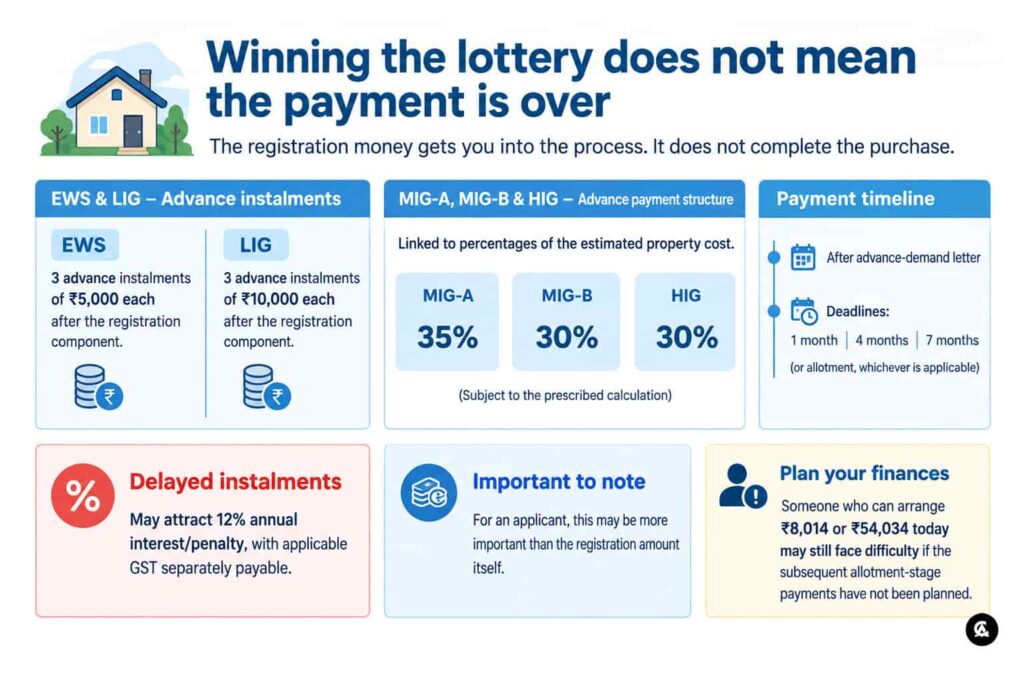
Winning the lottery does not mean the payment is over
The registration money gets you into the process. It does not complete the purchase.
For EWS, the reported structure includes a registration component followed by three advance instalments of ₹5,000 each. For LIG, three ₹10,000 advance instalments are mentioned after the registration component.
For MIG-A, MIG-B and HIG, the advance-payment structure is linked to percentages of the estimated property cost. The available scheme information describes instalments of 35%, 30% and 30%, subject to the prescribed calculation.
The reported timeline calls for payments after the advance-demand letter, including deadlines around one month, four months and seven months, or allotment, whichever becomes applicable under the scheme terms. Delayed instalments may attract 12% annual interest/penalty, with applicable GST separately payable.
For an applicant, this may be more important than the registration amount itself.
Someone who can arrange ₹8,014 or ₹54,034 today may still face difficulty if the subsequent allotment-stage payments have not been planned.
Important benefits for SC, ST and defence applicants
The scheme contains specific concessions at the registration stage.
Eligible SC and ST applicants can initially deposit 50% of the prescribed registration amount, with the balance handled through the subsequent allotment process.
Eligible serving or former defence personnel and specified war widows are required to deposit only 10% of the applicable registration amount initially, subject to documentation and scheme conditions.
Applicants claiming these concessions need valid supporting certificates and affidavits.
This is an area where documentation should be prepared before starting the application rather than at the last moment.
Reservation is broader than many applicants may expect
The scheme provides reservation across several categories.
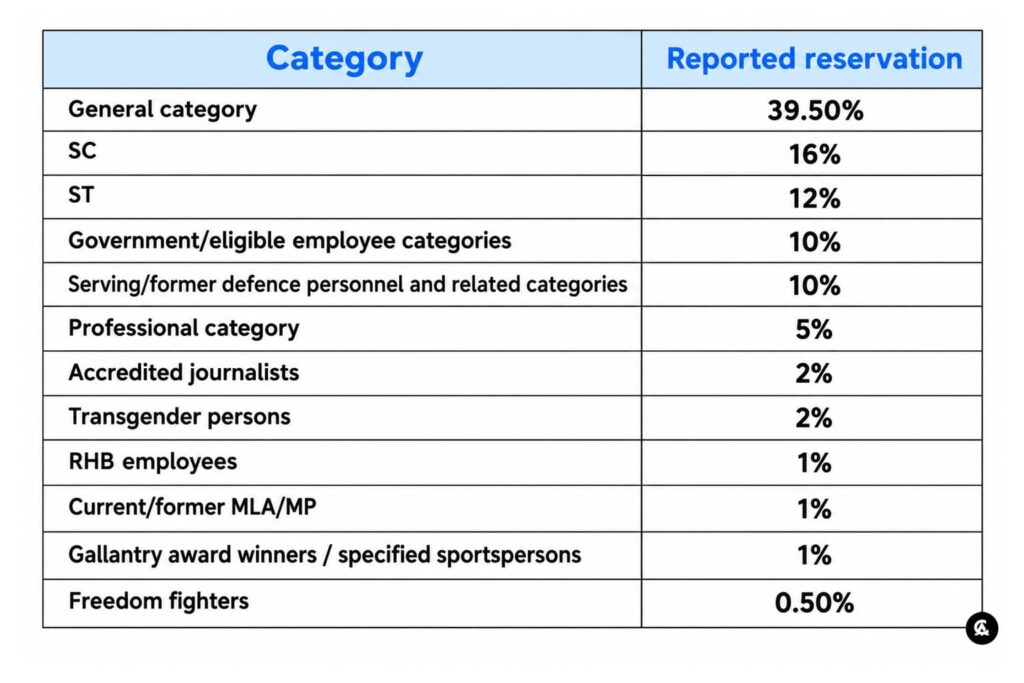
The detailed conditions also contain provisions affecting persons with disabilities and specified single-women categories. Applicants should use the exact scheme rules when determining their reservation claim rather than relying only on a summary table.
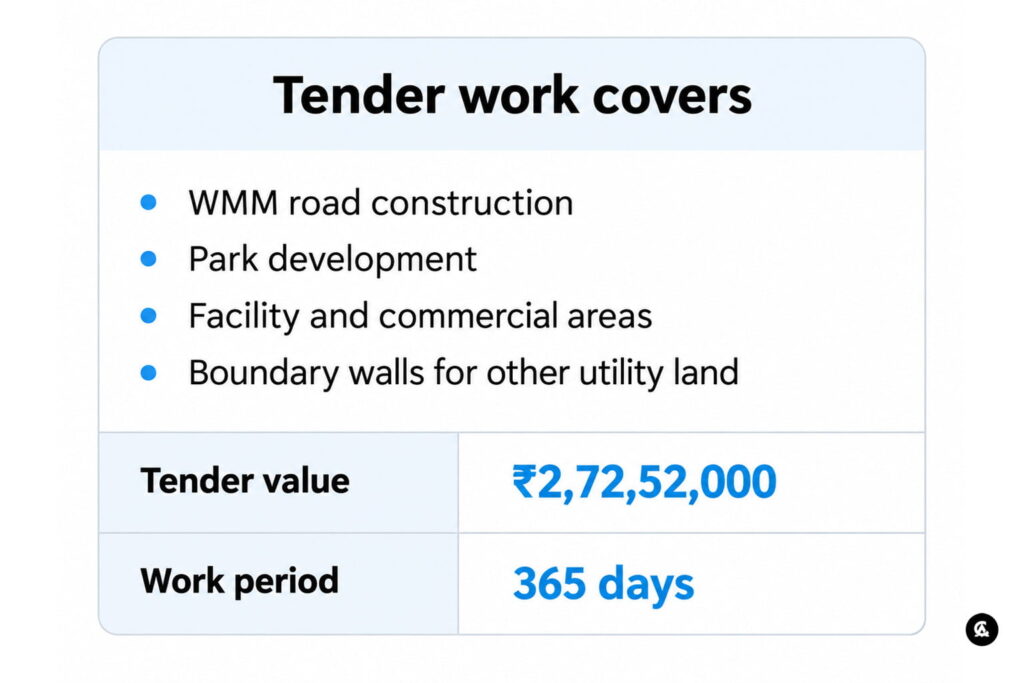
Is infrastructure development actually planned?
There is an important government record supporting development activity around the project.
The Rajasthan government e-procurement system shows a Rajasthan Housing Board civil-works tender for CHS Gopalpura, Baran.
Conclusion
The Gopalpura Housing Scheme is more substantial than many authority schemes that come to market with only a handful of leftover units.
Here, Rajasthan Housing Board is proposing 497 houses across five income groups, with both affordable and higher-value options. The extended application deadline until 16 October 2026 also gives buyers some breathing room to study the conditions rather than applying in a hurry.
The scheme’s biggest attraction is clearly the combination of authority-backed housing, a ₹16.50 lakh starting estimate and a fairly large inventory.
Its biggest caution is equally clear: the quoted prices are estimates, allotment is lottery-based and registration is only the first stage of the financial commitment.
So this should not be treated as a cheap-house lottery.
It should be treated like any other property purchase: understand the location, calculate the complete payment requirement, check your category and documents, and then decide whether the property actually fits your long-term needs.
Sources
Rajasthan Housing Board – Official New Housing Schemes 2026: current status and 16 October 2026 deadline.
Rajasthan Housing Board official scheme page
Rajasthan Housing Board – Land Acquisition and Awards: Gopalpura land record and 14.63-hectare area.
RHB land acquisition records
Rajasthan Government e-Procurement: civil-development tender for CHS Gopalpura, Baran.
Official Rajasthan e-Procurement tender
eAuctionsIndia: detailed scheme figures including category-wise inventory, estimated prices, application amounts, payment structure, reservation and lottery-related conditions.
Gopalpura Housing Scheme detailed information


Leave a Reply