

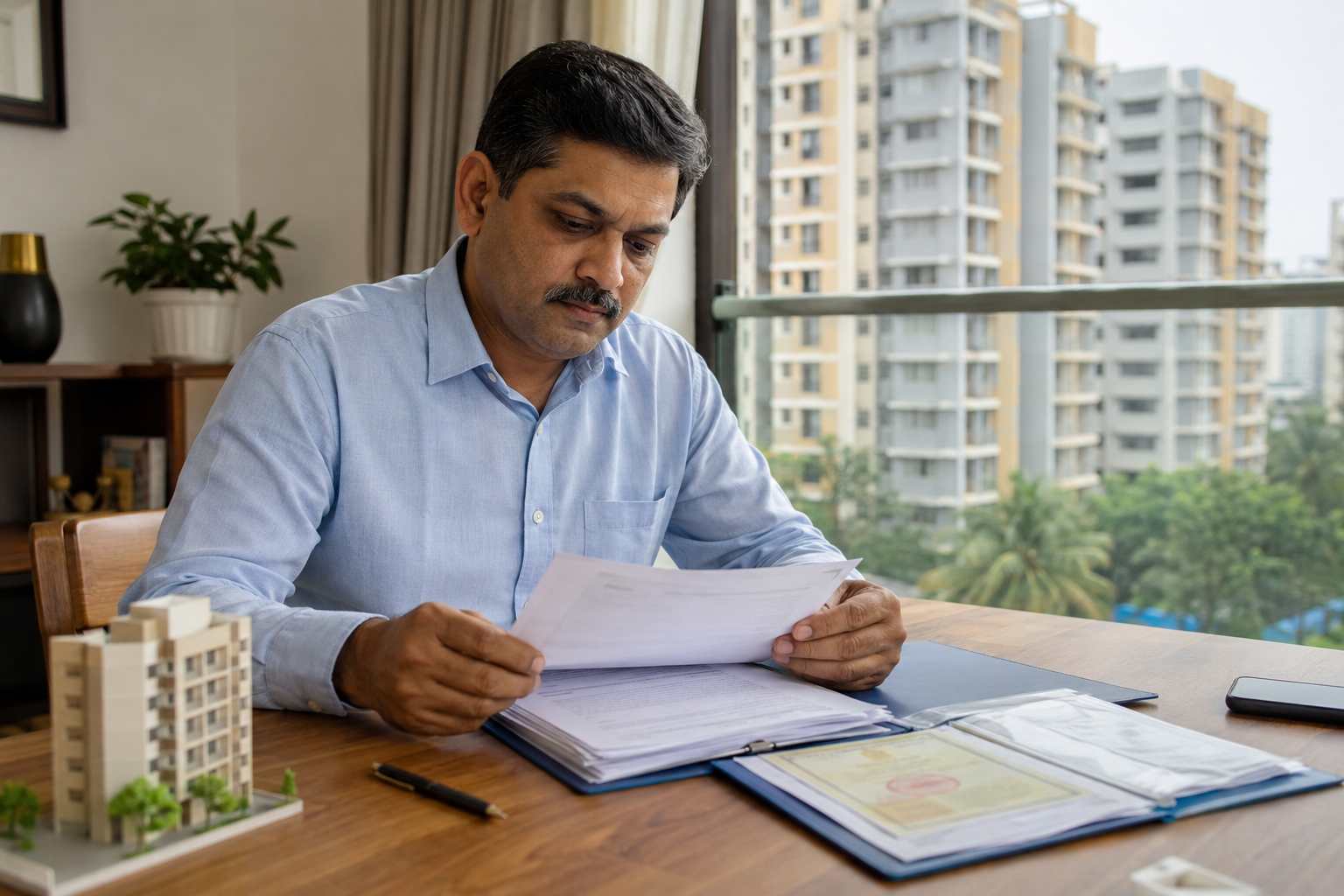
For most flat owners, buying a home feels complete when the agreement is signed, the loan is sanctioned and possession is received. But there is one important question many buyers still do not fully understand: what exactly is their share in the land under the building?
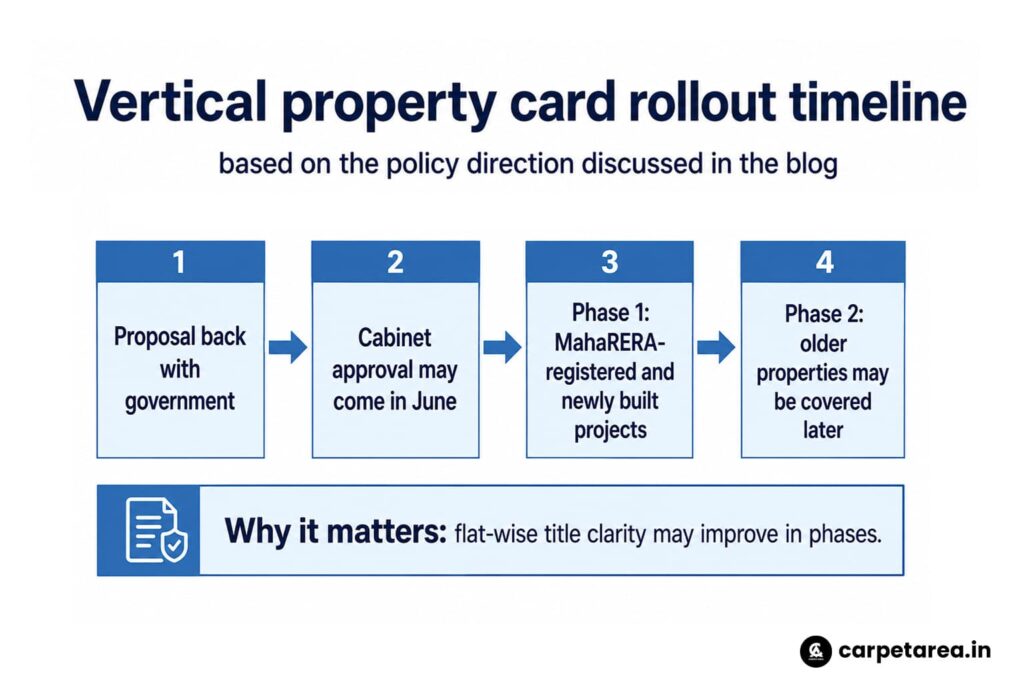
This is where Maharashtra’s proposed vertical property card can become an important reform. Reports say the state’s proposal to introduce vertical property cards for individual flat owners has been resubmitted to the government, and cabinet approval may come in June. If approved, the system would begin with MahaRERA-registered and newly built projects before being extended to older properties.
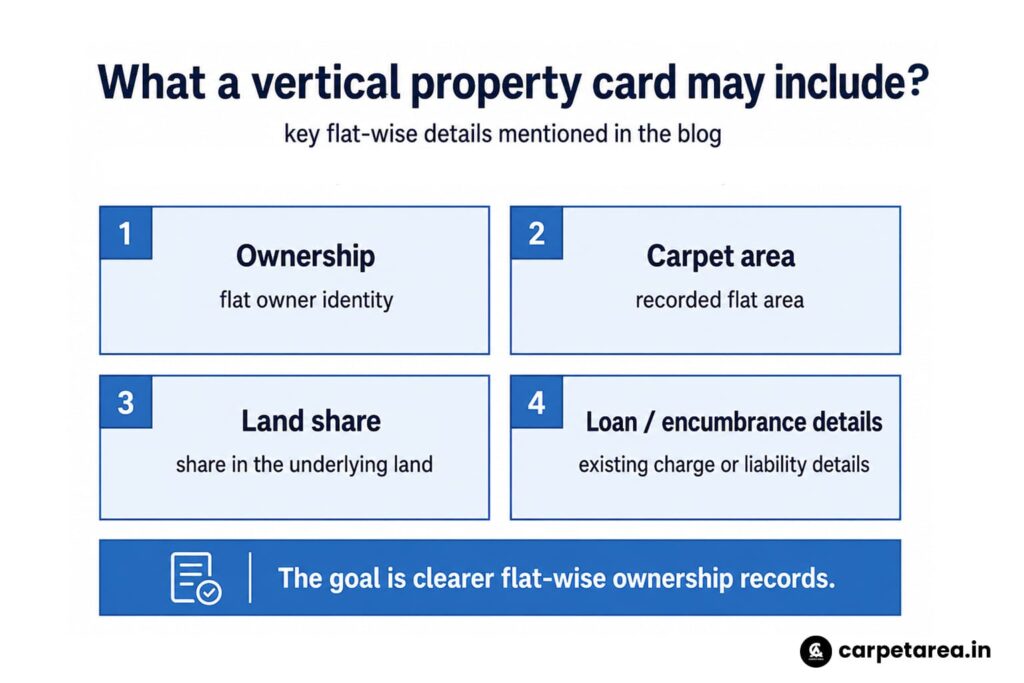
At first, this may sound like another government document. But for flat owners, it could be much more than that. A vertical property card is expected to act as an official record for individual flats, showing details such as ownership, carpet area, share in land and outstanding loans or encumbrances. In simple language, it can give a flat owner a clearer legal identity within a multi-storey building.
This matters because India’s traditional land record system was built mainly for horizontal ownership. In urban areas, property cards record land parcels. In rural areas, 7/12 extracts are used as land records. But apartment ownership is vertical. Hundreds of families may live on the same land parcel across different floors. The land may be recorded in the name of the original owner, builder, society or another legal entity, while individual flat owners may not have a clear land-share entry in government records.
That gap creates confusion. A flat buyer may own a registered apartment, but the connection between that flat and the underlying land may not always be simple for ordinary owners to understand. During resale, inheritance, redevelopment, mortgage processing or legal disputes, this lack of clarity can become a problem.
The proposed vertical property card tries to solve this missing link. Business Standard explained that the idea is to give every flat a separate government-recognised identity and record the owner’s exact share in the land beneath the building. In effect, it moves the flat owner from being seen only as a unit owner to someone whose land share is also formally recorded.
For homebuyers, this could improve transparency. A buyer checking a resale flat may be able to verify more than just the sale deed and society documents. If the vertical property card system becomes properly implemented, buyers could see official flat-wise details, including carpet area and land share. This can reduce dependence on unclear paperwork or verbal explanations from brokers and sellers.
For existing flat owners, the benefit could be long-term security. Many owners live in buildings where conveyance, land records or society-level documentation may not be fully clean. A flat-wise property card can help create a clearer ownership trail. It may not automatically solve every title issue, but it can make records more transparent and easier to verify.
The reform could also help in redevelopment. Maharashtra has many old housing societies, especially in Mumbai, Pune, Thane and other urban centres. During redevelopment, land share, member entitlement, carpet area, consent and legal clarity become very important. If individual flat ownership and land share are recorded more clearly, societies may find it easier to negotiate with developers and reduce internal disputes.
Another major area is inheritance. When a flat is passed from one generation to another, families often depend on wills, nominations, society records, legal heir certificates and registration documents. A vertical property card could make ownership details easier to trace, especially when there are multiple legal heirs or family disputes.
Banks and housing finance companies may also benefit. If the card records encumbrances and loan details, lenders may get a clearer view of whether the property is already mortgaged or legally burdened. This can help reduce fraud and improve loan processing. For buyers, it may also make mortgage due diligence smoother.
But buyers should understand one important point: a vertical property card should not be treated as a magic solution. It will not replace careful due diligence. Buyers will still need to check sale agreements, occupation certificate, RERA registration, society records, conveyance status, municipal tax records, loan dues and title history. The vertical property card can become an additional layer of clarity, not a substitute for legal checking.
Implementation will also matter. Reports suggest that existing housing societies may need to apply after the policy is implemented, and detailed guidelines will be issued. This means the benefit may come in phases. Newer MahaRERA-registered projects may be covered first, while older buildings may take longer depending on records, applications and administrative capacity.
For the government, the challenge will be accuracy. Carpet area, land share, building details, encumbrances and ownership records must be mapped carefully. If the records are wrong, the card can create fresh disputes instead of reducing them. So the success of the reform will depend on clean data, digital verification, coordination between departments and a simple process for citizens.
For flat owners, the practical takeaway is clear. Start keeping your documents ready. Sale deed, registered agreement, index II, share certificate, society documents, property tax receipts, loan closure letters, occupancy certificate and conveyance-related papers may become important when the system is rolled out. Societies should also keep building-level records organised.
For new buyers, this proposal is a reminder that title clarity is as important as carpet area, amenities and price. A beautiful flat with weak documentation can become a stressful asset. A properly recorded property, on the other hand, gives confidence not only today but also during resale, inheritance and redevelopment.
In simple words, Maharashtra’s vertical property card proposal could become a major reform because it tries to bring apartment ownership into the land-record system more clearly. If approved and implemented well, it can make flat ownership more transparent, reduce transaction risk and give buyers better confidence.
The bigger message is this: real estate trust is no longer only about buildings. It is also about records. And for Maharashtra’s flat owners, vertical property cards could become an important step toward cleaner, safer and more transparent ownership.

Leave a Reply