

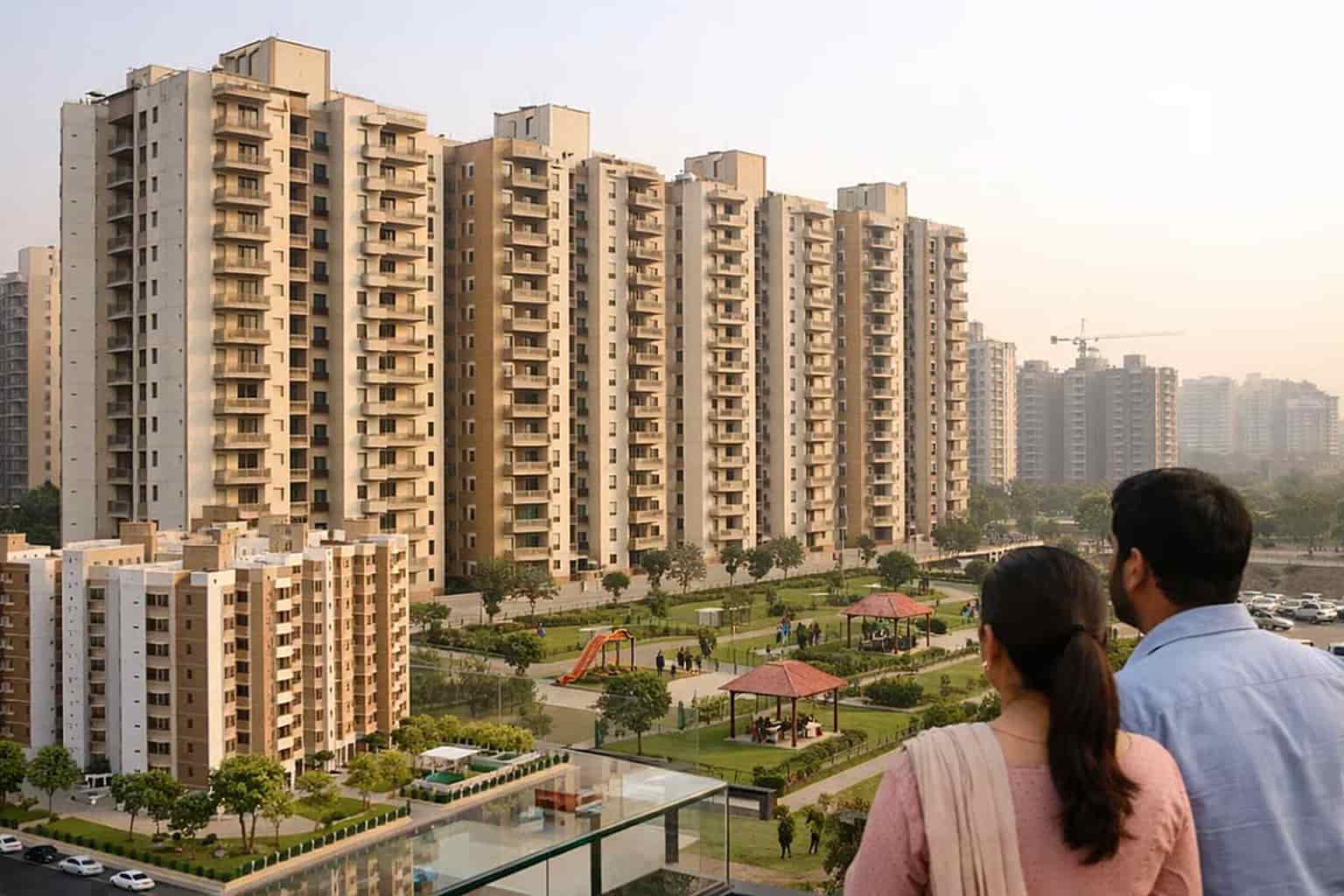
Delhi Development Authority’s Karmajeevi Awaas Yojana 2026 offers newly constructed, ready-to-move homes at Pocket 11, Sector A1-A4, Narela, Delhi, specifically for eligible government personnel and professionally qualified salaried or self-employed applicants.
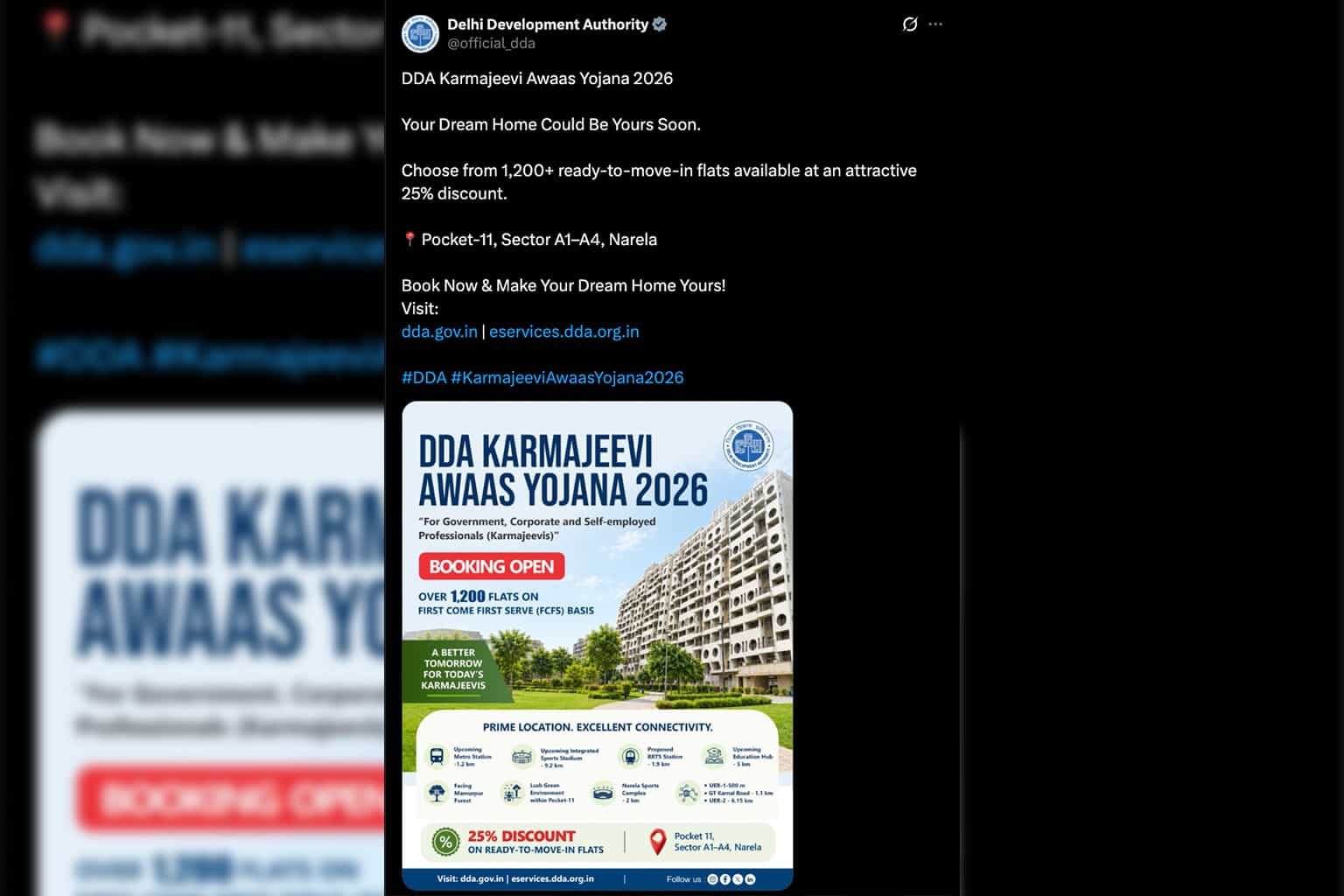
DDA originally placed 1,224 flats under the scheme across 1BHK, 2BHK and 3BHK categories, with a 25% concession on the applicable disposal price. Registration began on 24 July 2026 and FCFS booking opened on 15 August 2026. The original scheme period runs until 30 October 2026, subject to availability because flats are being allotted on a First Come, First Serve basis.
The important point for anyone considering the scheme now is that 1,224 is the originally offered inventory, not necessarily the number of flats still available today. Buyers should use DDA’s live scheme portal to check the specific units remaining before making a decision.
DDA’s official Housing section continues to list the Karmajeevi brochure, launch circular, clarification circular, FAQs and the property-level inventory among the scheme documents.
How is the original flat inventory divided?
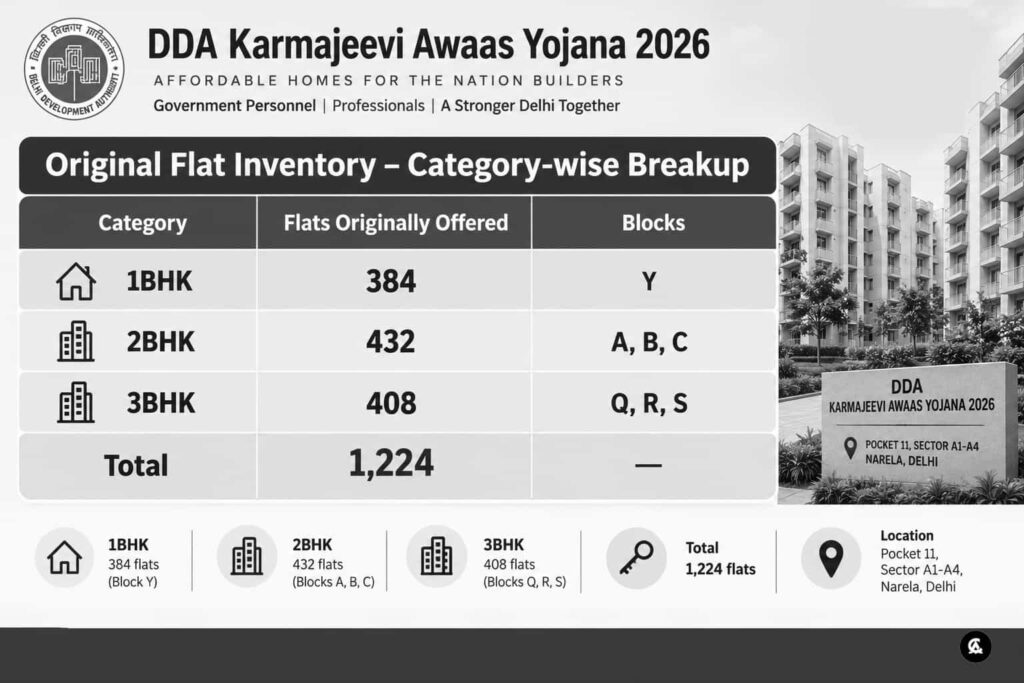
This inventory is more useful than a simple category count because DDA’s property list provides flat number, floor, plinth area, balcony area, common area and parking area for individual units.
The practical implication is that buyers should not assume every flat within the same category is identical. Floor, size and total area can vary, and that variation also affects the disposal price.
How much do the flats cost after the 25% discount?
DDA’s scheme gives a flat 25% concession on the applicable disposal price. The approximate discounted ranges published for the scheme are:
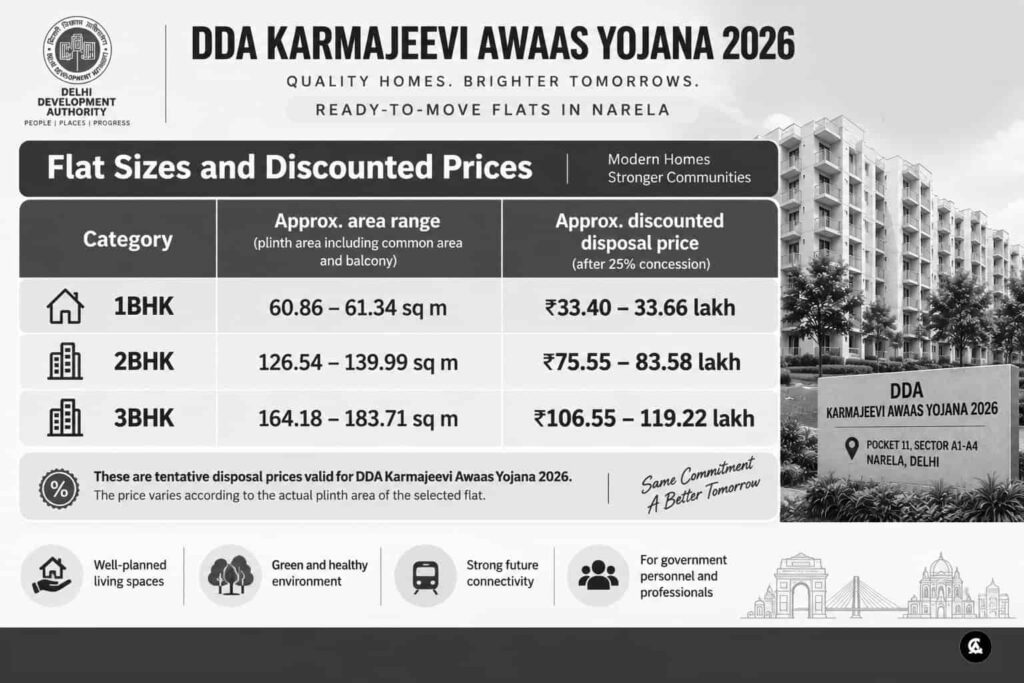
The price range exists because individual flats can have different plinth areas. The 25% concession therefore does not mean every 2BHK or every 3BHK has one fixed price.
It is also important to understand what the discount represents. It is a concession on DDA’s applicable disposal price under this particular scheme; it should not automatically be interpreted as a 25% discount to the prevailing resale or private-market value of comparable Narela properties.
What will the flat actually cost after additional charges?
The discounted disposal price should not be treated as the complete acquisition cost.
DDA’s scheme documents specify a corpus contribution and upfront maintenance collection in addition to the flat price:
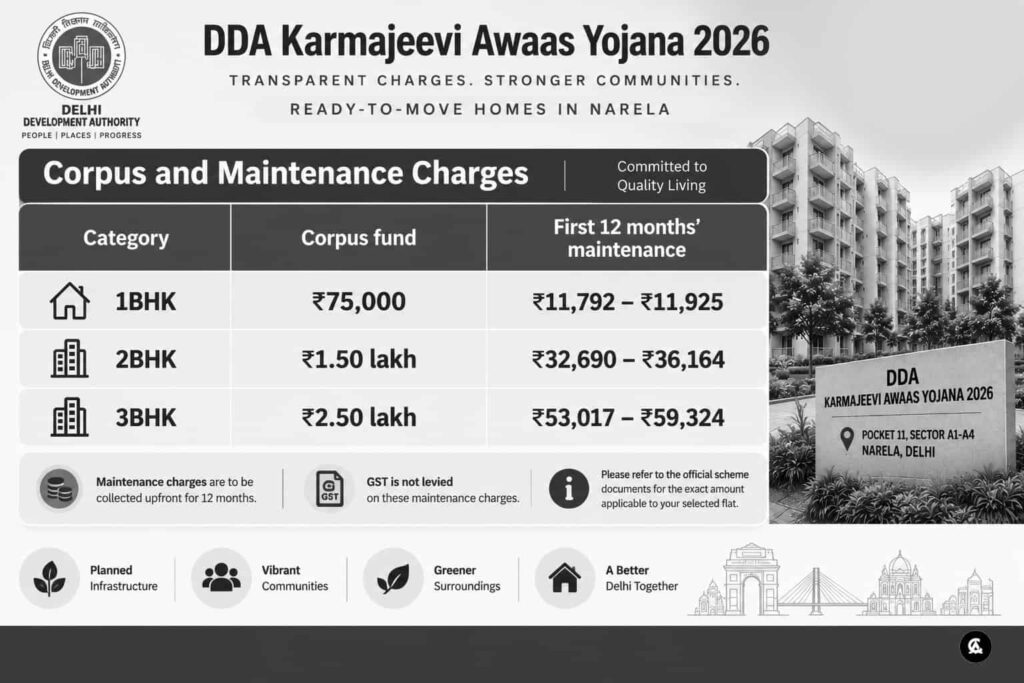
The broader buyer calculation should therefore be understood as:
discounted disposal price + corpus fund + upfront maintenance + applicable conveyance/stamp duty/registration and other statutory charges = closer to the actual acquisition cost.
DDA’s terms should be checked for the exact selected flat before payment because individual property values differ.
Who is eligible for DDA Karmajeevi Awaas Yojana?
DDA issued a separate clarification on 24 July 2026 because the term “Karmajeevi” covers more than conventional government employees.
One eligible group covers serving and retired regular and permanent personnel of Central and State Governments, public-sector undertakings, autonomous bodies, public-sector banks, local bodies, government universities, government hospitals and other government institutions.
The second group covers professionally qualified salaried or self-employed persons, including categories such as doctors, lawyers, chartered accountants, architects, planners, engineers, scientists, professors/teachers and corporate professionals.
This distinction matters: the scheme should not be interpreted as automatically open to every private-sector employee simply because they work for a company. The applicant must meet DDA’s eligibility framework and provide the prescribed documentary evidence.
Which documents are needed to establish eligibility?
Government-side applicants are required to establish employment or pensioner status through the prescribed identity/employer documentation together with financial/employment evidence such as salary slip or Form 16.
For professionally qualified applicants, DDA’s clarification provides routes involving the professional degree and relevant professional registration certificate, latest ITR or employment-related proof, depending on the applicant’s category.
Eligibility should be checked before proceeding to the final booking stage because securing a unit online does not eliminate DDA’s right to verify whether the applicant actually satisfies the scheme conditions.
How does FCFS booking work?
Karmajeevi is not a lottery-based housing scheme. Flats are allotted through the First Come, First Serve mechanism.
The practical sequence is:
check eligibility → create/login to DDA Awaas Portal → examine live flat inventory → inspect the relevant category if required → select an available unit → upload documents → pay the prescribed booking amount → complete the subsequent DDA allotment/payment process.
Because a particular unit can be taken by another eligible applicant, buyers should preferably identify more than one acceptable flat before attempting the final booking.
DDA’s scheme portal provides Flat Details, Layout Plans, registration/login and FAQs, making it possible to research the available units before committing funds.
How much must be paid at the booking stage?
The one-time Awaas Portal registration fee is ₹2,500. Applicants already registered on the portal do not need to pay the registration fee again under the stated scheme conditions.
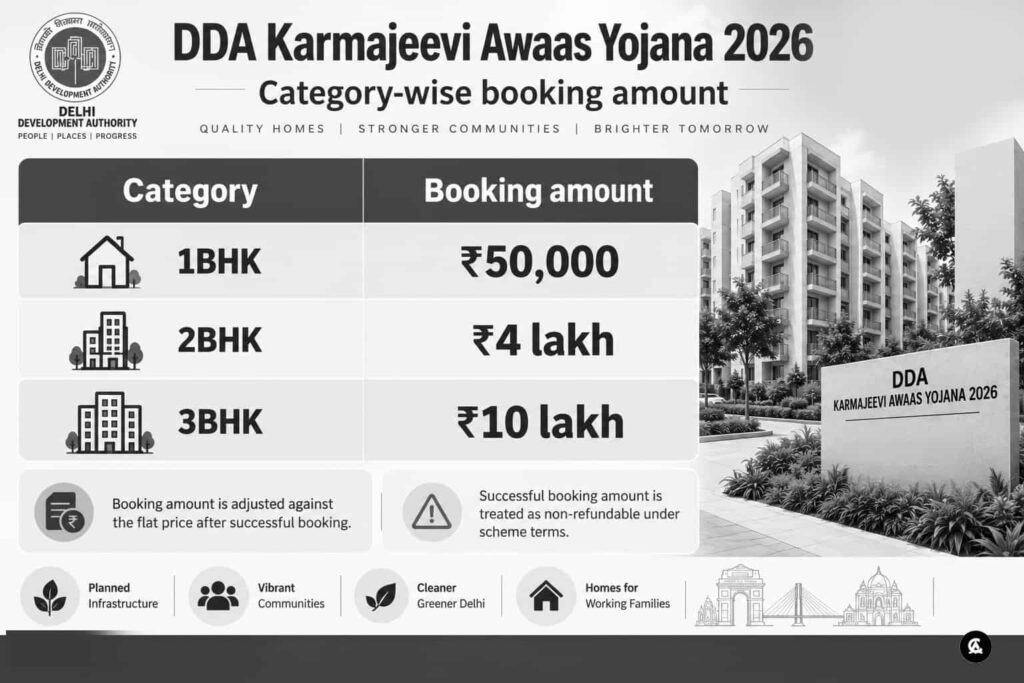
The amount is adjusted against the property’s price after successful booking, but the scheme treats the successful booking amount as non-refundable on cancellation. This is particularly significant for a 3BHK applicant because ₹10 lakh is a substantial commitment.
DDA also permits an applicant to book more than one flat under the stated scheme rules, subject to satisfying eligibility and financial requirements.
How quickly does the balance price have to be paid?
This is one of the most important financial conditions for a buyer.
Scheme coverage based on DDA’s brochure states that the balance price is payable within 60 days from the Demand-cum-Allotment Letter. A further 30-day grace period is available with 10% simple interest.
This means Karmajeevi should not be approached like a developer scheme offering a long construction-linked payment schedule. The flats are already built, so applicants need to assess financing readiness before paying the booking amount.
Anyone depending on a home loan should obtain clarity on sanction eligibility and likely disbursement timing in advance rather than starting the loan process only after securing a unit.
Are these flats actually ready to move?
DDA describes the homes as newly constructed and ready-to-move, with construction stated as having been completed in June 2025.
That removes the construction-delay risk associated with an under-development project, but it does not remove the need for physical inspection.
A buyer should still assess the quality and suitability of the category being considered, especially room proportions, sunlight, ventilation, floor level, views, common areas, lifts, access and surrounding development.
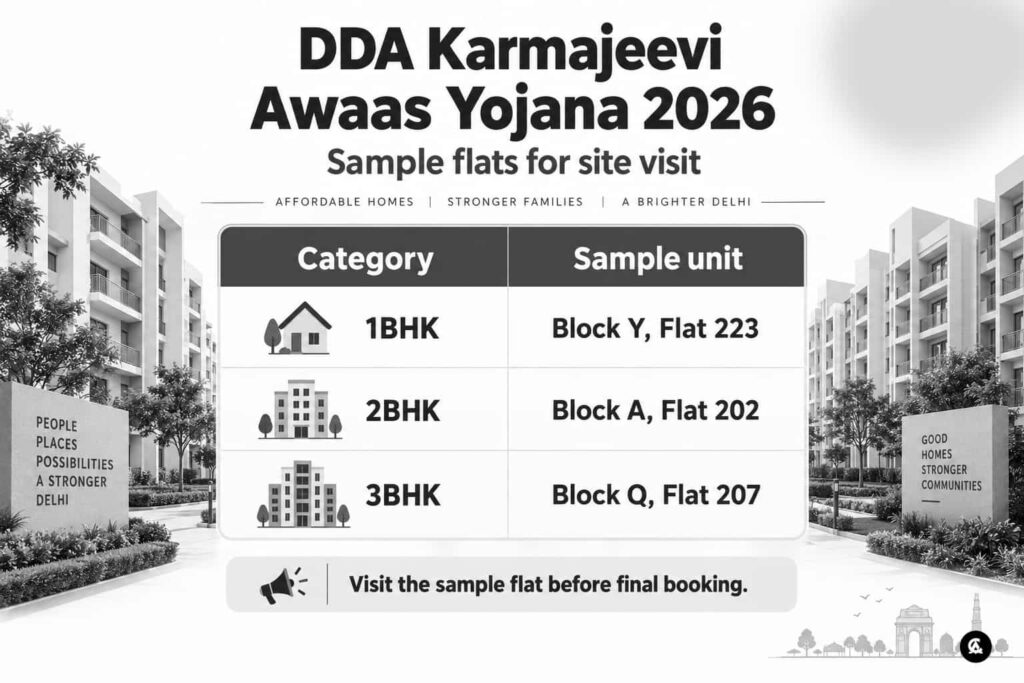
physical visit is especially valuable in this scheme because buyers are choosing an existing flat rather than purchasing from a future architectural promise.
The sample unit should nevertheless be treated as representative of the category; the exact flat being booked may differ in floor, orientation, view and area.
How much parking area is shown in DDA’s property data?
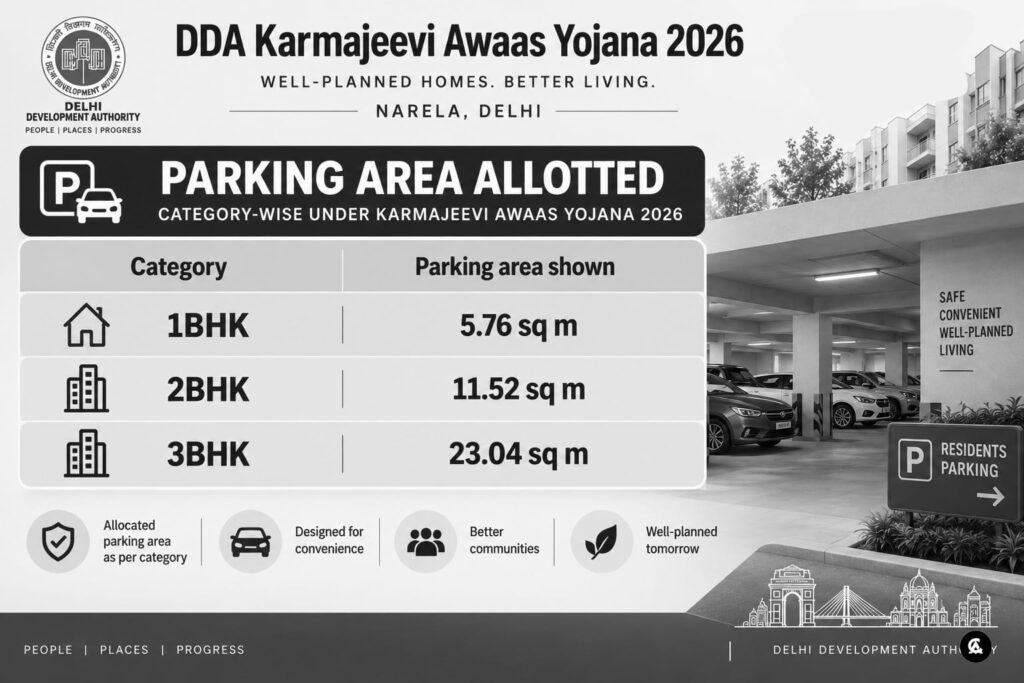
For example, the official unit list clearly shows 23.04 sq m against 3BHK units and 11.52 sq m against 2BHK inventory.
Buyers should still read the brochure for the exact legal nature of the parking entitlement rather than assuming that a numerical parking-area entry automatically means one particular form of exclusive covered parking.
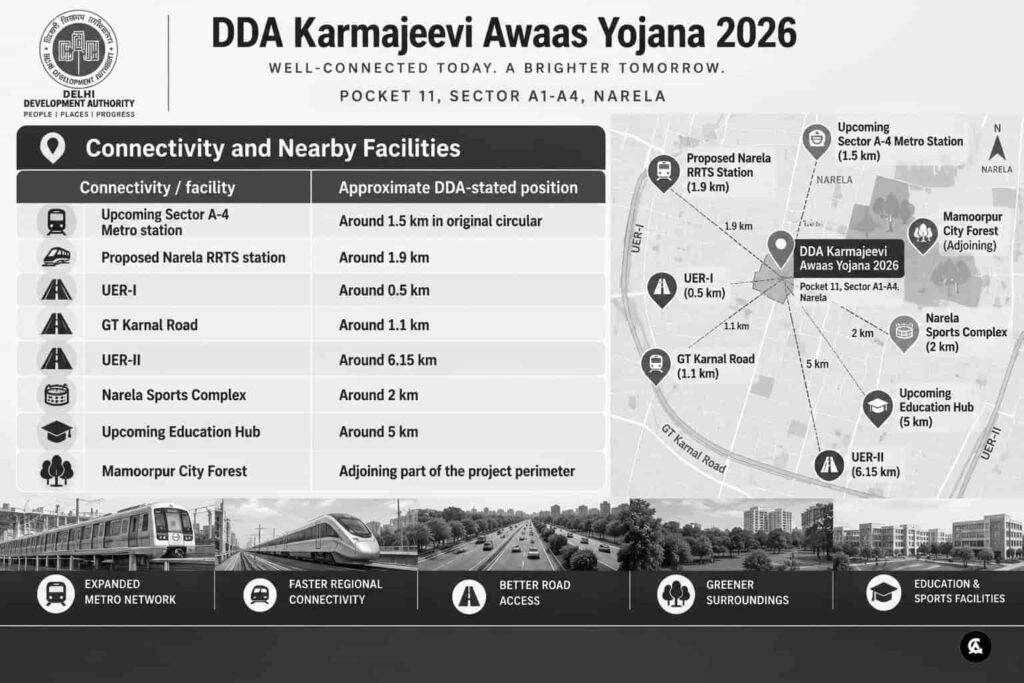
What connectivity does DDA highlight around the Narela flats?
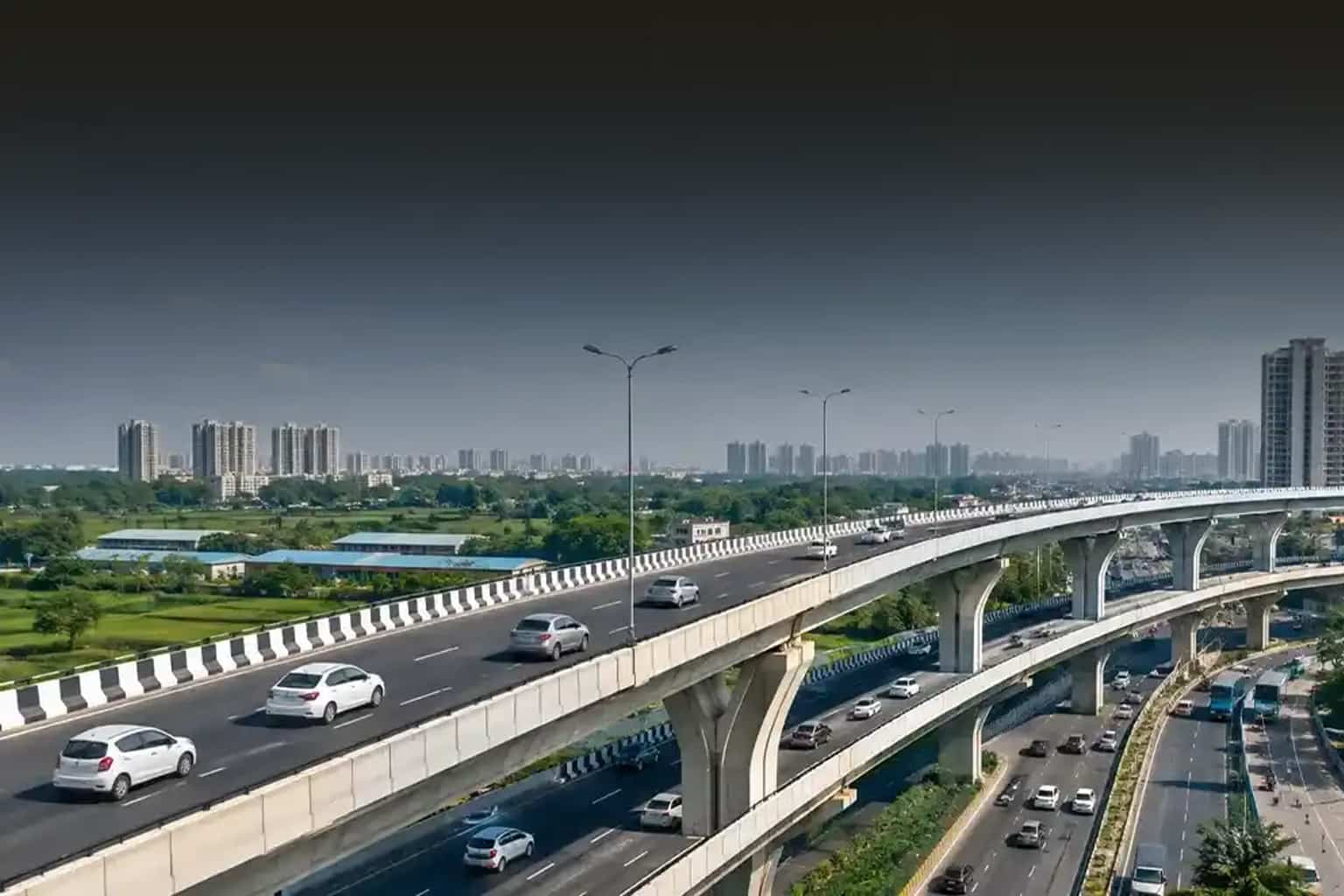
DDA’s launch material highlights both existing roads and future transport infrastructure around Pocket 11.
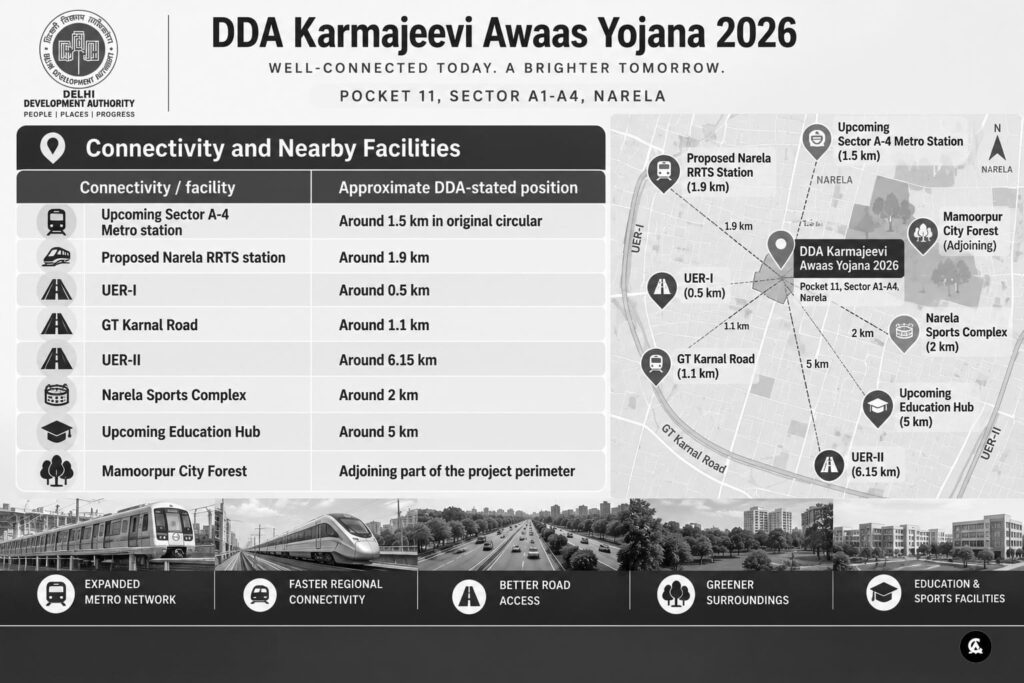
The words “upcoming” and “proposed” are important. Future Metro or RRTS infrastructure should not be evaluated as though it is already an operating public-transport connection.
A later DDA promotional graphic cites the upcoming Metro station at roughly 1.2 km, whereas the original launch circular states about 1.5 km. For buyer analysis, the difference can reasonably be treated as a variation in measurement point unless DDA formally issues a revised project-distance statement.
The more important question for an end-user is the actual commute from Narela to work, school and frequently used parts of Delhi.
Are all the originally offered flats still available?
No such assumption should be made.
DDA’s official site still lists the 1,224-flat offer document, but under FCFS the live stock changes as successful bookings take place. The Authority’s current portal continues to provide scheme access and flat details.
Therefore, the correct way to describe the position is:
1,224 flats were originally placed on offer; the exact current availability must be checked on DDA’s live portal.
This also avoids mixing Karmajeevi with other DDA Narela schemes. DDA’s current circular page separately shows additional inventory under Nagrik Awaas Yojana 2026, which should not be added to the Karmajeevi stock merely because both schemes include Narela properties.
What should a buyer check before paying the non-refundable booking amount?
A prospective allottee should compare the specific property’s block, floor, area, balcony, parking entry and discounted disposal price, confirm that the eligibility documents are acceptable, inspect the relevant category where possible, calculate corpus and maintenance costs, and make sure the balance-payment funding can be arranged within the applicable timeline.
The location decision should also be made on today’s commute and services, not solely on future Metro or RRTS promises.
This is particularly important in an FCFS scheme because speed matters, but buying quickly should not mean buying without due diligence.
Should you consider DDA Karmajeevi Awaas Yojana 2026?
The scheme offers a combination that is relatively straightforward to evaluate: completed DDA housing, a defined 25% concession, specific units that can be selected through FCFS and 1BHK, 2BHK and 3BHK options in the same Narela pocket.
Its suitability depends less on the headline discount and more on three buyer-specific questions: whether Narela works for your daily commute, whether the exact flat and its usable space justify the all-inclusive price, and whether you can comfortably meet the post-allotment payment timeline.
For buyers who satisfy the eligibility criteria and genuinely want to live in or hold property in this part of Delhi, Karmajeevi deserves examination. For someone considering the purchase only because “DDA is giving 25% off”, the right approach is to first inspect the flat, calculate the complete cost and evaluate the location before making the booking amount non-refundable.
Official sources
DDA Karmajeevi Awaas Yojana 2026 — Official Portal
DDA — Official Launch Circular, 22 July 2026
DDA — Official Eligibility Clarification, 24 July 2026

Leave a Reply