

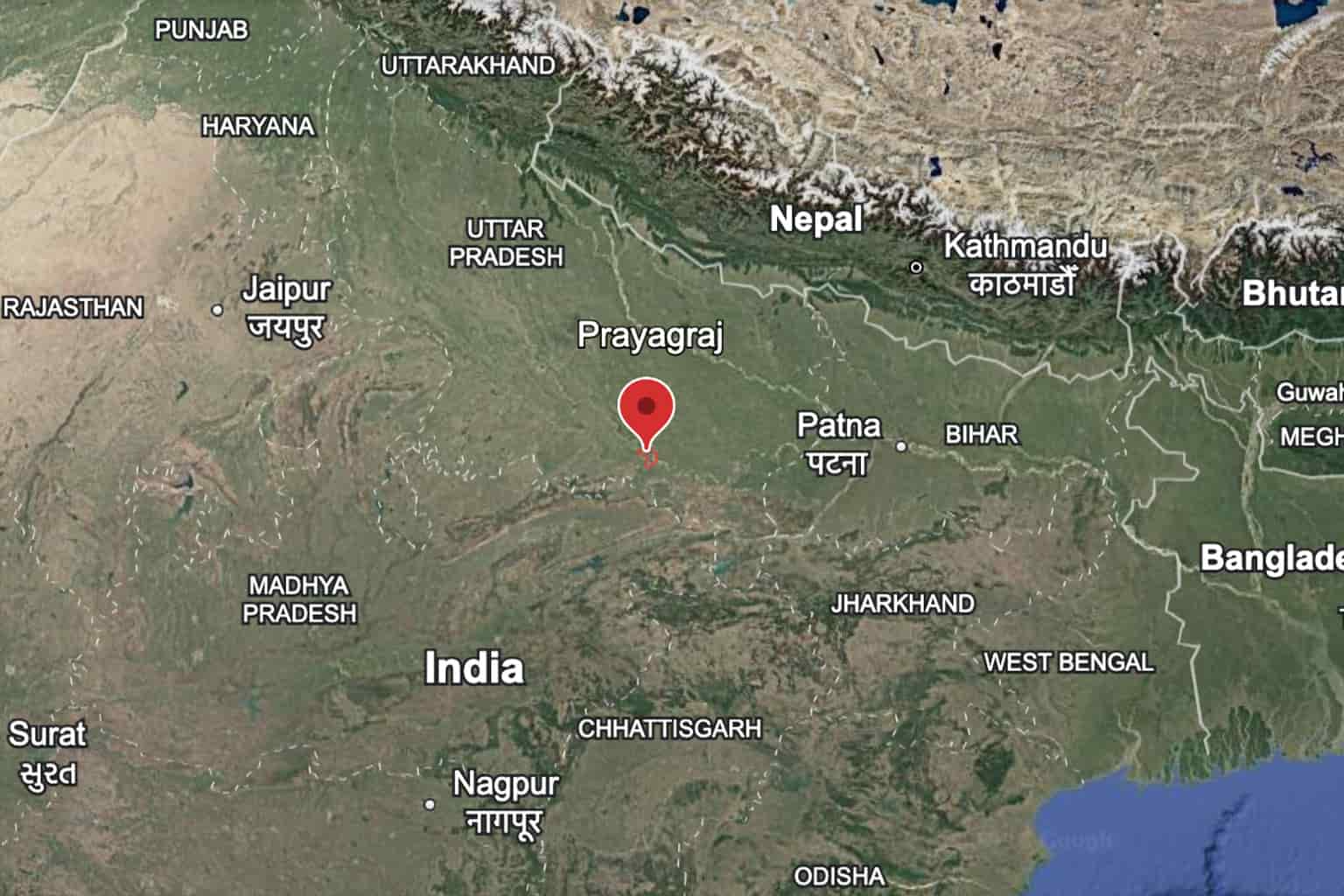
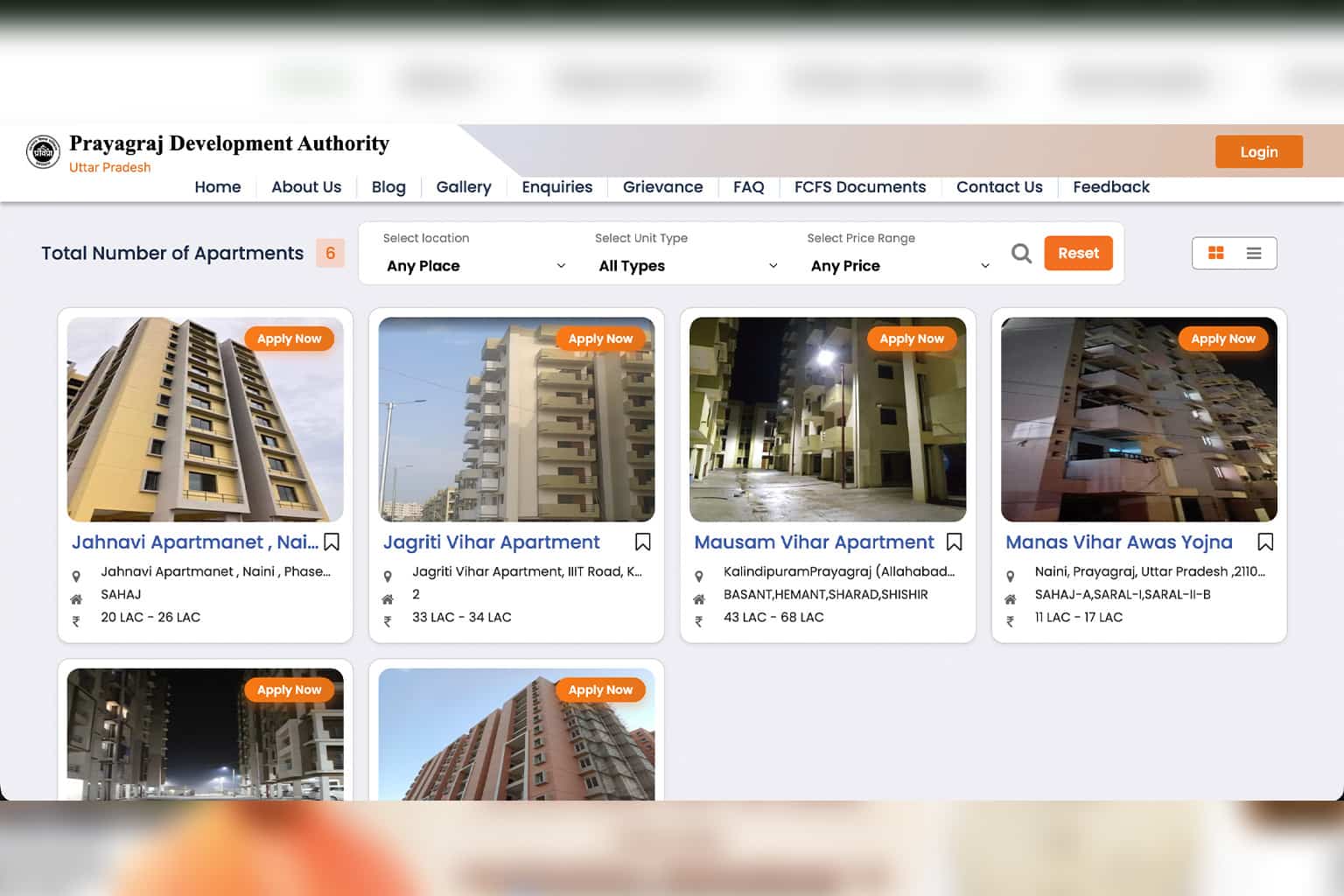
Prayagraj Development Authority (PDA) is preparing to place more than 500 flats and over 200 plots across eight residential schemes on an online booking platform from October 2026, according to a report published on 7 September.
The proposed system is expected to let buyers check the available property’s location, size and price online before applying. PDA is also reported to be preparing a support mechanism for prospective buyers.
There is, however, an important distinction: this is currently an upcoming online-sale plan, not a formally launched 700-property housing scheme. A detailed PDA brochure containing the exact eight schemes, property-wise inventory, prices, registration dates and allotment method was not available in the official material reviewed.
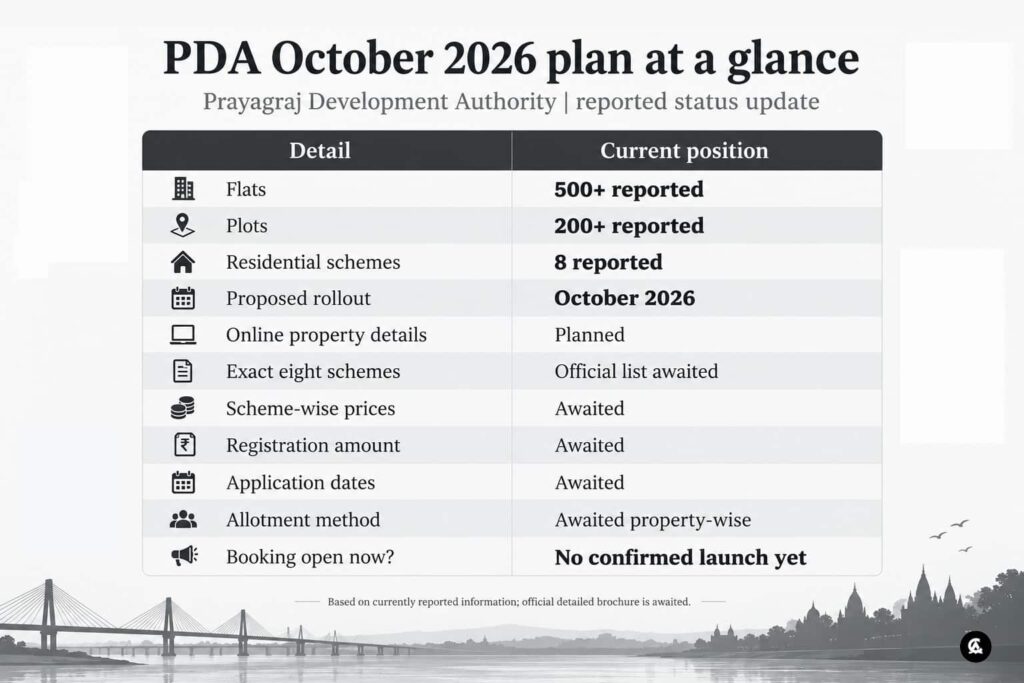
The distinction matters because an online property listing does not automatically mean the units will be sold on a first-come-first-served basis. PDA has previously used different allotment mechanisms for different types of property.
Are these 500+ flats and 200+ plots completely new?
Probably not all of them.
PDA has been trying to dispose of a sizeable stock of older vacant flats and plots. Earlier reporting identified unsold inventory in schemes including Jagriti Vihar Kalindipuram, Yamuna Vihar Naini-1, Alaknanda Apartments Govindpur, Mausam Vihar, Manas Vihar Naini, Azad Apartments Naini, Saram Vihar and Sugam Vihar.
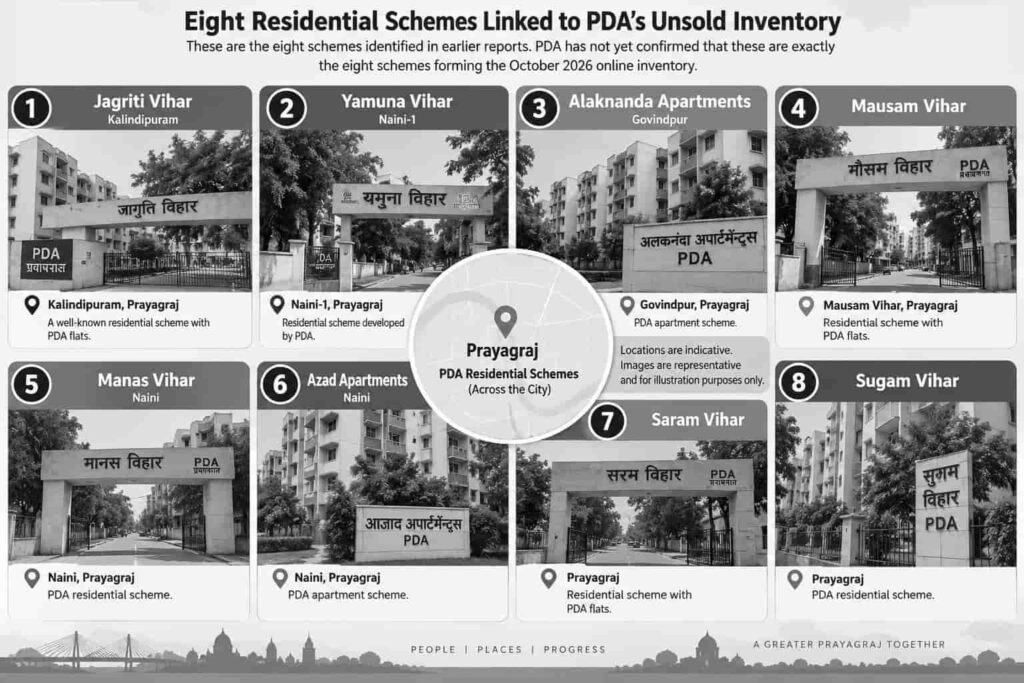
The fresh October report also refers to eight schemes, but PDA has not yet officially established that these are exactly the same eight schemes forming the October inventory.
The correct interpretation is therefore:
A substantial portion of the October offering may consist of existing vacant PDA inventory, but the exact property-wise list must be confirmed through the forthcoming authority notice.
That makes the scheme different from a conventional launch of hundreds of newly built homes.
Why is PDA bringing this inventory online now?
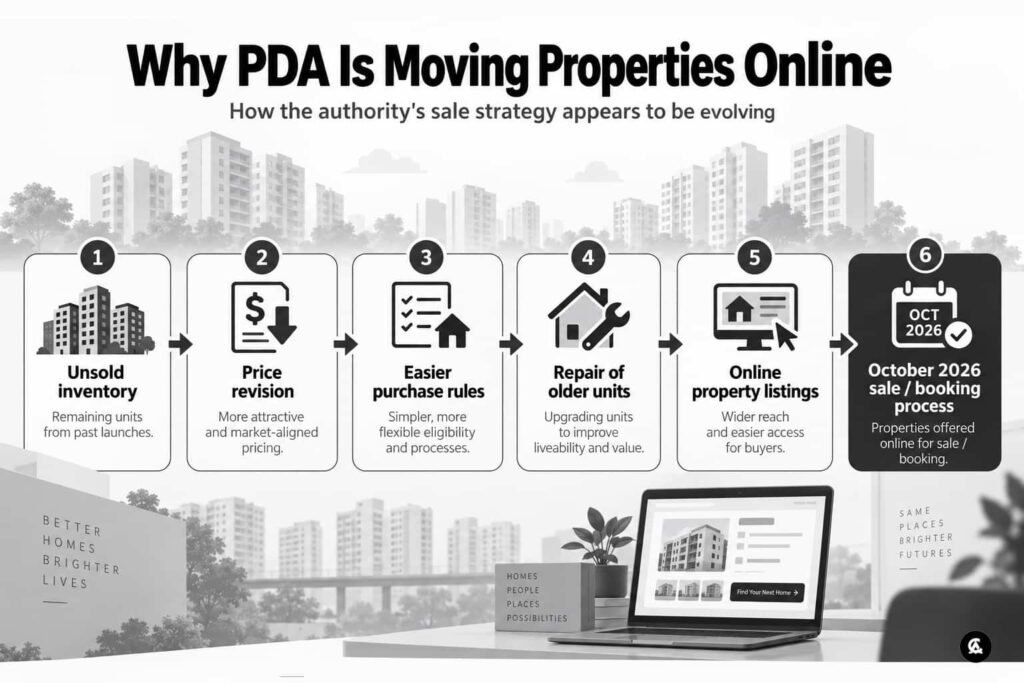
The October initiative fits into a wider effort to improve sales of properties that have remained vacant.
In March 2026, PDA decided to reassess prices of unsold residential units under government Model Costing Guidelines, after earlier frozen prices failed to generate sufficient buyer interest.
The Authority subsequently relaxed another major restriction: multiple members of the same family can now purchase separate flats or houses under PDA schemes, replacing the older one-family-one-allotment approach.
Old vacant flats need physical inspection before purchase
This is one of the most important buyer issues in the entire story.
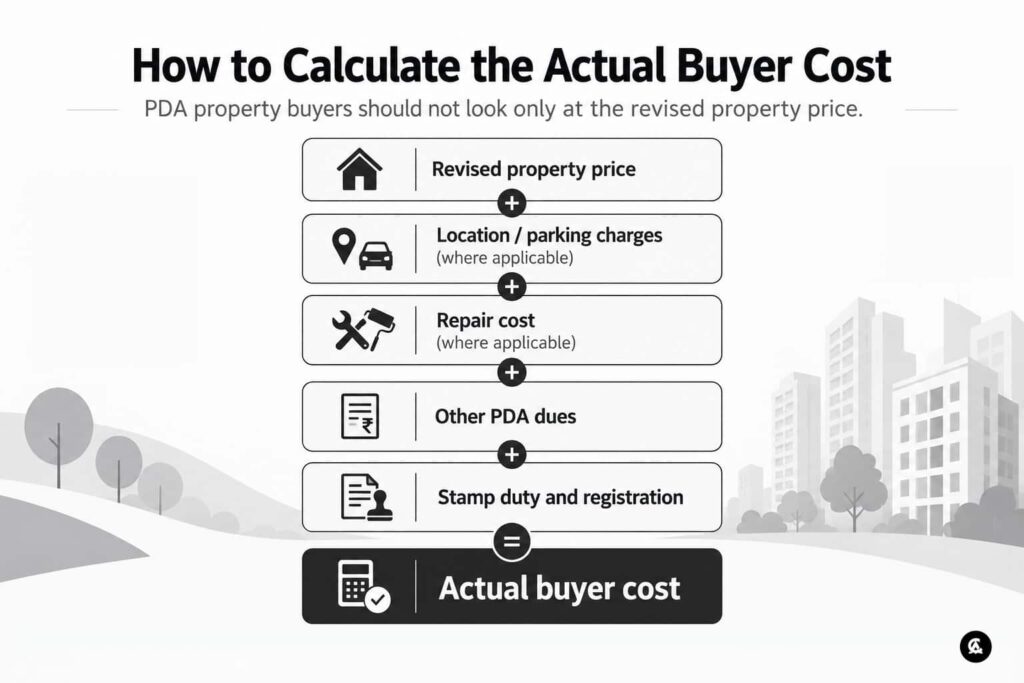
PDA officials have acknowledged that some older units remained unsold partly because of their physical condition. The Authority proposed involving brokers who could carry out necessary repairs and painting, with renovation expenditure ultimately recovered along with the property’s price.
A buyer considering an older unit should therefore verify the condition of the exact flat rather than relying only on photographs or a scheme-level description.
Important issues include seepage, plumbing, electrical condition, lifts, common areas, doors/windows and whether repairs have already been completed.
The buyer must also establish whether any renovation expense is:
already included in the advertised price
or
payable separately.
This could materially change the actual cost of an apparently inexpensive PDA flat.
Will prices be lower in the October offering?
PDA has approved a policy to revise the prices of older unsold units, but the property-wise October price list is still awaited.
The Authority’s September board meeting again dealt with the sale of vacant flats at revised rates under the Model Costing Guidelines.
Buyers therefore should not assume that every unit will receive the same discount.
Will properties be allotted by lottery, FCFS or auction?
This detail is not yet clear for the entire October inventory.
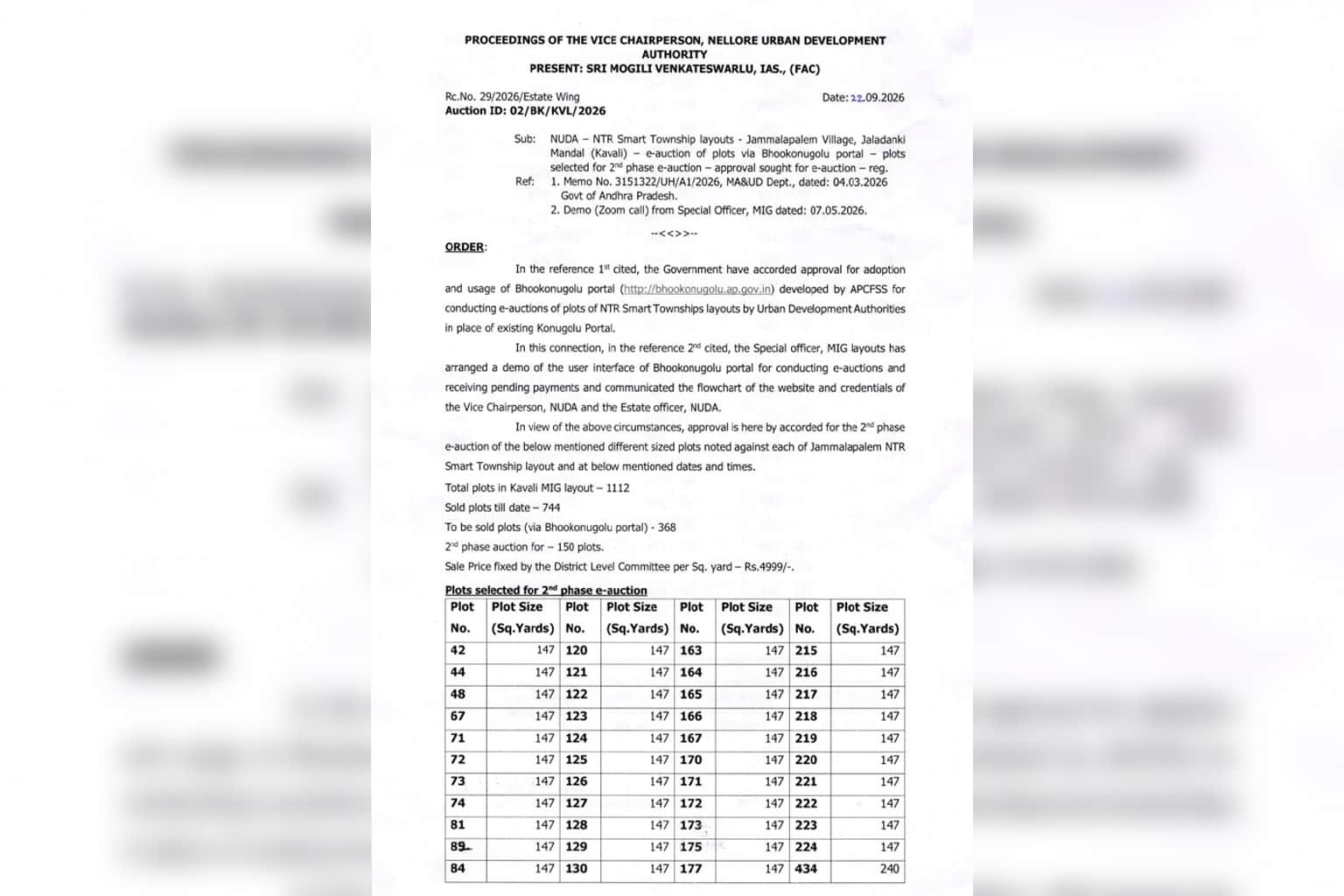
PDA has historically used different disposal mechanisms. Older vacant flats have been offered through online registration followed by allotment processes, while land and plots have also been handled through online auction systems.
Therefore, “online booking” should not automatically be interpreted as FCFS.
The final notification needs to specify whether individual assets will be allotted through:
lottery / direct booking / first-come-first-served / e-auction.
This is particularly important because the method for flats may differ from the method used for plots.
What happens next?
The next meaningful event will be the publication of PDA’s official property-wise October inventory.
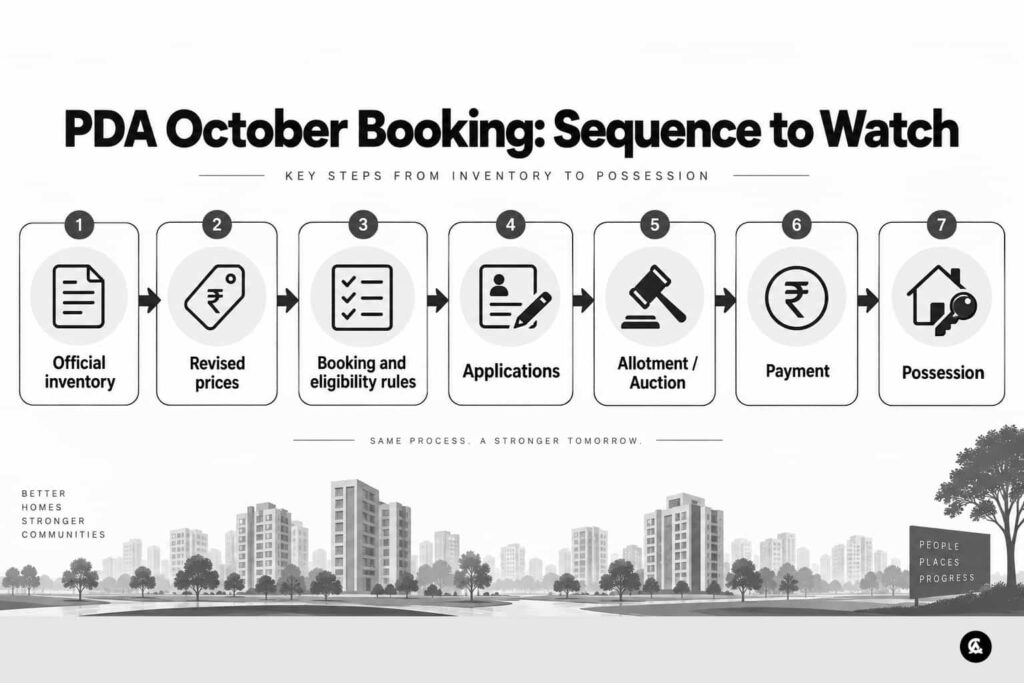
For a buyer, that official property list will matter far more than the headline figure of 500+ flats and 200+ plots.
The current position is straightforward:
PDA is reported to be preparing online availability of more than 500 flats and 200 plots across eight residential schemes from October 2026. A significant part may relate to existing vacant inventory, while the exact scheme list, final prices, application dates and property-wise allotment rules are still awaited.
Sources
Prayagraj Development Authority — Official Website
Official portal for PDA property, allotment and citizen services.
Visit Prayagraj Development Authority
Grihik — 7 September 2026
Direct report on the planned 500+ flats, 200+ plots, eight schemes and October online-booking system.
Read the October online-booking report
Times of India — 1 May 2026
Details PDA’s vacant inventory, revised family-allotment rules and repair plan for older flats.
Read the PDA housing-rule report
Times of India — 20 March 2026
Reports PDA’s decision to revise prices of unsold flats under Model Costing Guidelines.
Read the unsold-flat pricing report
Hindustan — 5 September 2026
Covers the 143rd PDA Board Meeting, the 602-unit 2BHK project and revised pricing of vacant flats.
Read the PDA Board Meeting report



Leave a Reply