

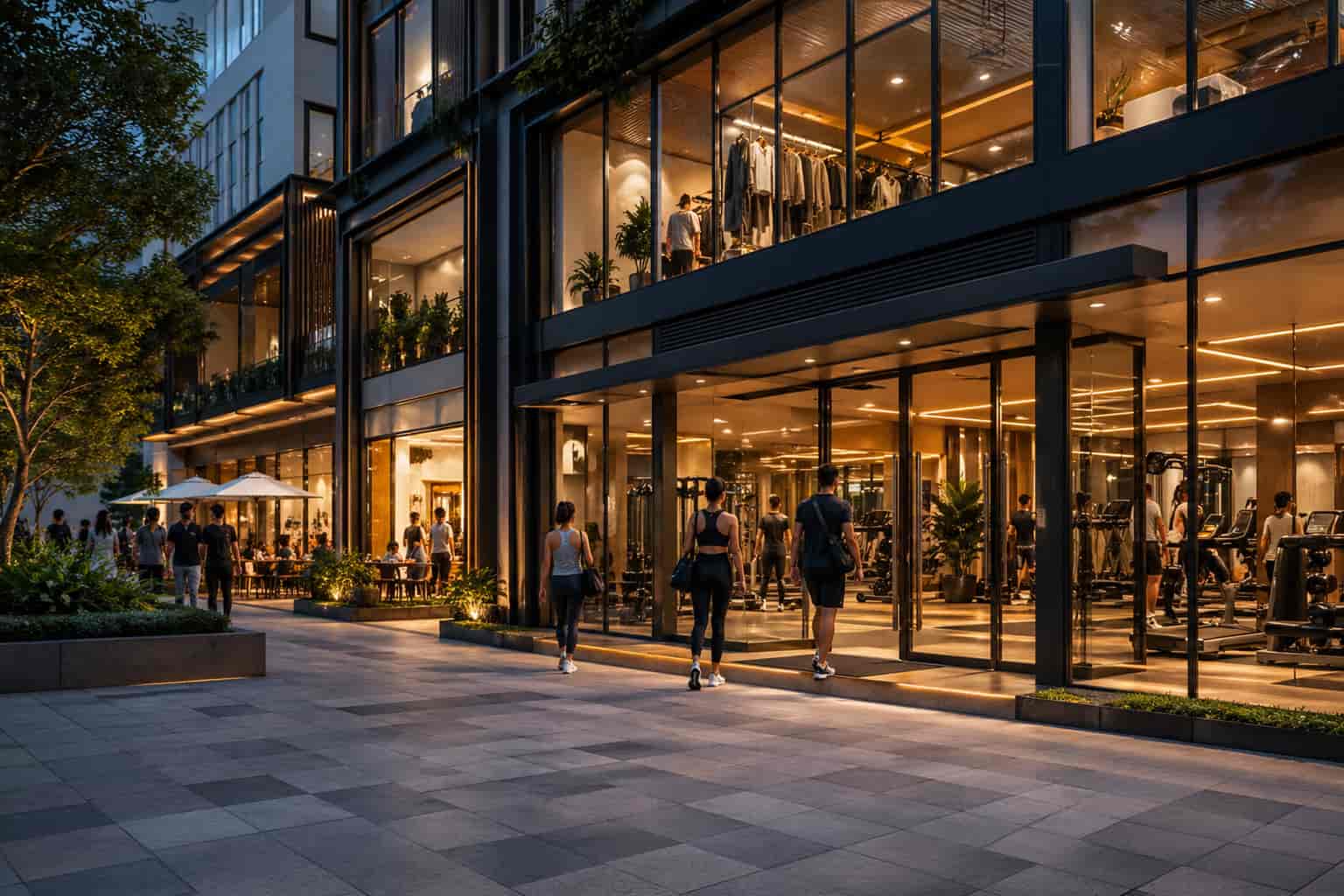
For many years, the word “anchor” in commercial real estate usually meant a department store, a supermarket, a cinema or a large fashion outlet. These were the tenants that pulled people into a mall or shopping complex. Smaller stores benefited from the same visitor movement, and landlords planned their tenant mix around these big attractions. But the retail market is now changing, and one category is quietly becoming more important: fitness clubs.
A modern fitness club is no longer just a place where people come to exercise. It is becoming a daily-use destination. This is why gyms, pilates studios, yoga centres and wellness clubs are now being seen as serious commercial real estate assets. They may not always occupy the largest space in a mall or high street, but they can create something extremely valuable for landlords: regular repeat footfall.
This shift is important because fitness clubs bring something many traditional retailers struggle to deliver today: repeat visits. A person may visit a fashion store once a month, a cinema once in a while, or a supermarket when needed. But a serious gym member may visit three to five times a week. That frequency gives commercial real estate owners a new kind of footfall pattern. It is not only weekend traffic. It is daily movement.
That daily movement is becoming more valuable in a market where physical retail has to compete with online shopping. E-commerce can deliver clothes, gadgets and groceries, but it cannot replace a workout floor, a personal trainer, a group fitness class, a recovery session, a swimming pool or a community wellness experience. This makes fitness one of the stronger experience-led categories for malls and high streets.
India’s retail leasing market is already moving towards experience-led formats. CBRE said India’s retail leasing activity reached a historic high of around 8.9 million sq ft in 2025, supported by fresh supply and sustained expansion by retailers. This matters because when leasing demand is strong, landlords become more careful about the kind of tenants they want. They are not looking only for stores that occupy space. They want categories that increase customer visits, dwell time and repeat usage.
This is exactly where fitness clubs fit into the new commercial real estate story. A gym or wellness centre gives people a reason to physically visit a location even when shopping can happen online. Once people arrive for a workout, they may also visit a café, juice bar, salon, pharmacy, sportswear store, grocery outlet or quick-service restaurant. In this way, fitness does not work only as a standalone tenant. It supports the surrounding retail ecosystem.
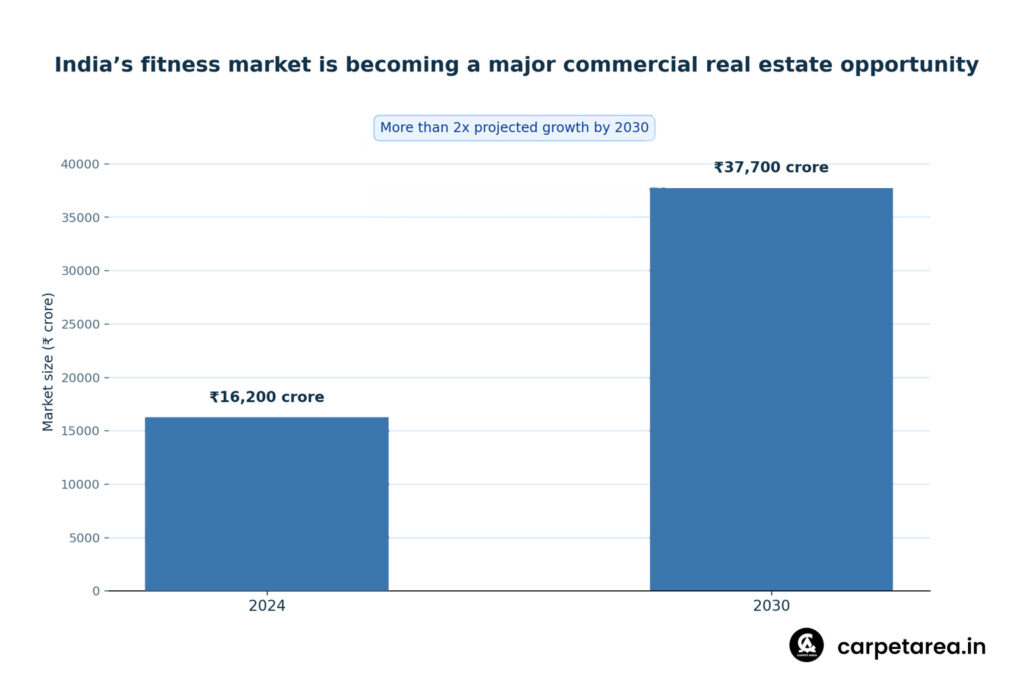
The fitness economy itself is also becoming large enough to matter for real estate. The India Fitness Market Report 2025 by Deloitte and the Health & Fitness Association estimates India’s commercial fitness sector at around ₹16,200 crore in 2024. By 2030, the market is projected to reach around ₹37,700 crore. This means the sector is expected to more than double in size in just a few years.
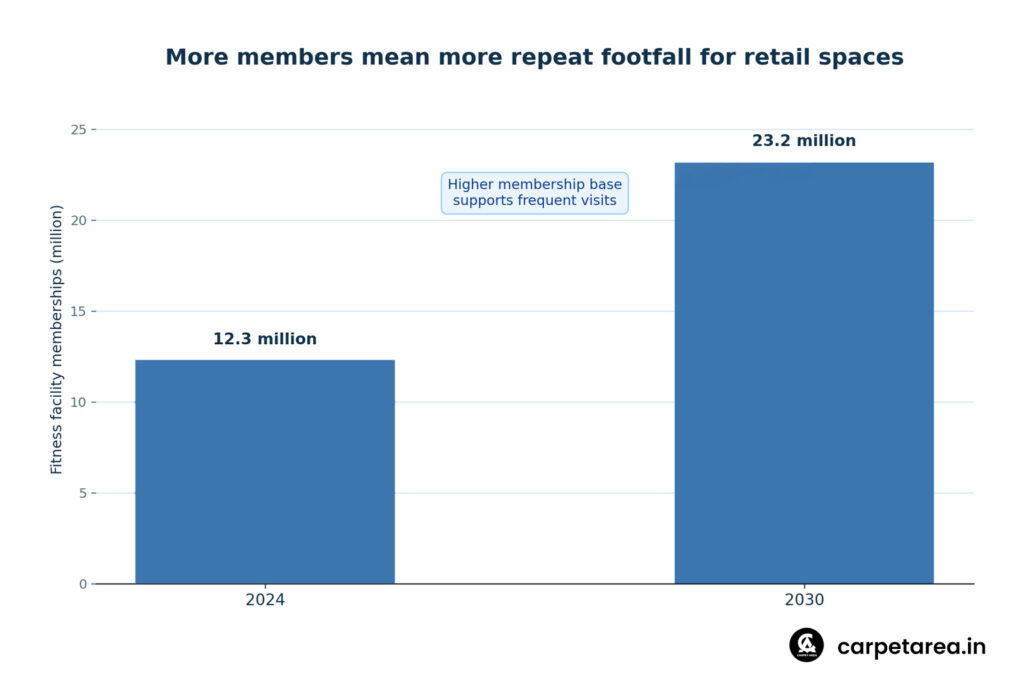
Membership numbers tell the same story. India had around 12.3 million fitness facility members in 2024, and this is projected to rise to around 23.2 million members by 2030. At the same time, fitness membership penetration is still only around 0.8 percent, which shows that the market is still under-penetrated. For commercial real estate owners, this is a major signal. Low penetration means organised gyms, boutique studios and wellness-led formats still have a long runway.
The same report also points to strong growth across the sector, with parts of the fitness economy growing at double-digit rates. This is why the opportunity is not limited to large gyms alone. The future commercial mix can include premium gyms, affordable fitness chains, yoga studios, pilates centres, strength-training clubs, recovery zones, physiotherapy-led wellness centres and sports training formats. Each of these can bring a different customer profile into the property.
For developers, the bigger advantage is routine-based traffic. A movie theatre may create strong evening and weekend movement. A supermarket may bring planned visits. Fashion stores may depend heavily on seasonality and discounts. But fitness clubs are linked to habit. A good fitness tenant can bring people early in the morning, after office hours and on weekends. This spreads activity across the day and makes the property feel more alive.
This is especially useful for mixed-use developments. A fitness club inside a commercial complex can serve office-goers before or after work. A gym near residential towers can become part of daily life for families and young professionals. A boutique wellness studio on a high street can attract premium customers who value convenience. In each case, the real estate asset benefits because the tenant is connected to lifestyle, health and routine.
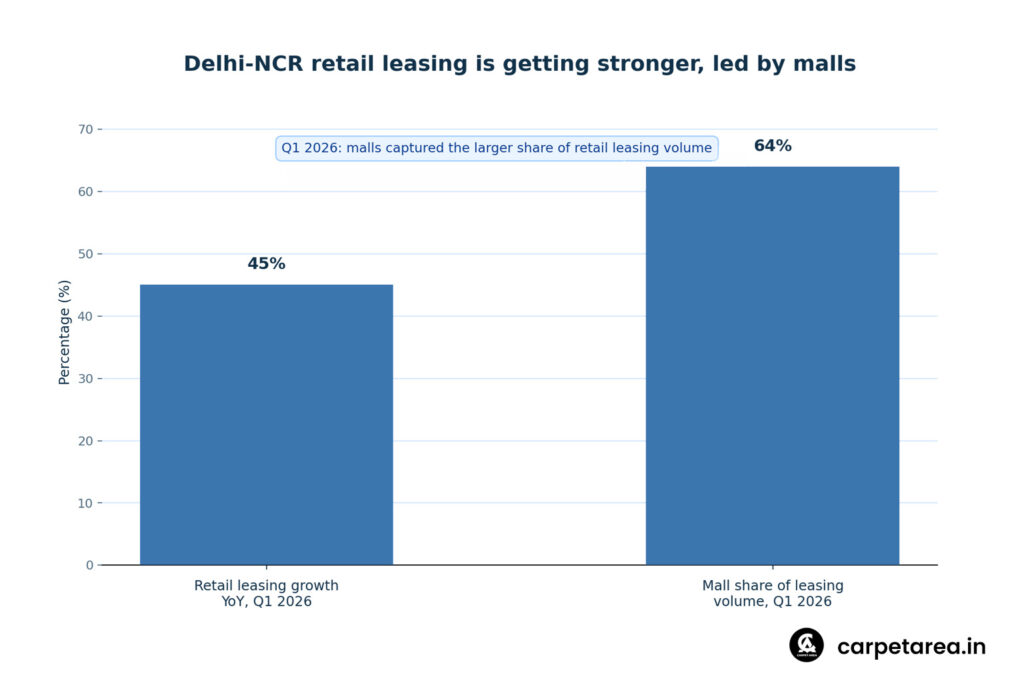
Delhi-NCR’s retail leasing numbers show why this discussion matters now. Cushman & Wakefield’s Delhi-NCR Retail MarketBeat for Q1 2026 said retail leasing in the region stood at around 0.6 million sq ft in the quarter. This was a 45 percent year-on-year increase, and malls accounted for 64 percent of the quarterly leasing volume. That mall-led leasing strength shows that quality retail assets are still attracting occupiers, but the tenant mix is becoming more important.
When malls and high streets are doing well, landlords become more selective. They do not want only tenants who pay rent. They want tenants who help the entire property perform better. A fitness club can do that because it creates repeat visits, supports nearby spending and strengthens the lifestyle positioning of the asset. This is why fitness is becoming more than an amenity. It is becoming a commercial strategy.
There is also a lease-stability angle. A fitness operator usually invests heavily in equipment, flooring, interiors, changing rooms, showers, HVAC, lighting and brand experience. Once this setup is complete, shifting location is not easy. That can make a well-performing fitness club a sticky tenant for the landlord. For commercial real estate owners looking for stable occupancy, this can be an important advantage.
However, fitness clubs do not work automatically in every property. The location must have the right catchment. Parking and access must be convenient. The building must support floor loading, ventilation, ceiling height, services and member circulation. Noise and operational planning also matter. A poorly planned gym can create friction inside a property. A well-planned fitness club can lift the entire commercial environment.
The larger message is clear. Commercial real estate is moving from pure shopping to repeat experience. The most successful malls and high streets will not depend only on what people buy. They will depend on why people keep coming back.
Fitness clubs answer that question very well. India’s fitness market is growing from ₹16,200 crore to ₹37,700 crore, memberships are expected to rise from 12.3 million to 23.2 million, and Delhi-NCR’s retail leasing has already shown 45 percent year-on-year growth with malls taking 64 percent share in Q1 2026. These numbers show why fitness is becoming a serious real estate story, not just a lifestyle trend.
The next strong commercial asset may not be the one with only the biggest fashion store or the largest food court. It may be the one where people come every morning to work out, meet friends, grab coffee, visit nearby stores and return again the next day. That is the real power of fitness as an anchor asset in commercial real estate.





Leave a Reply