

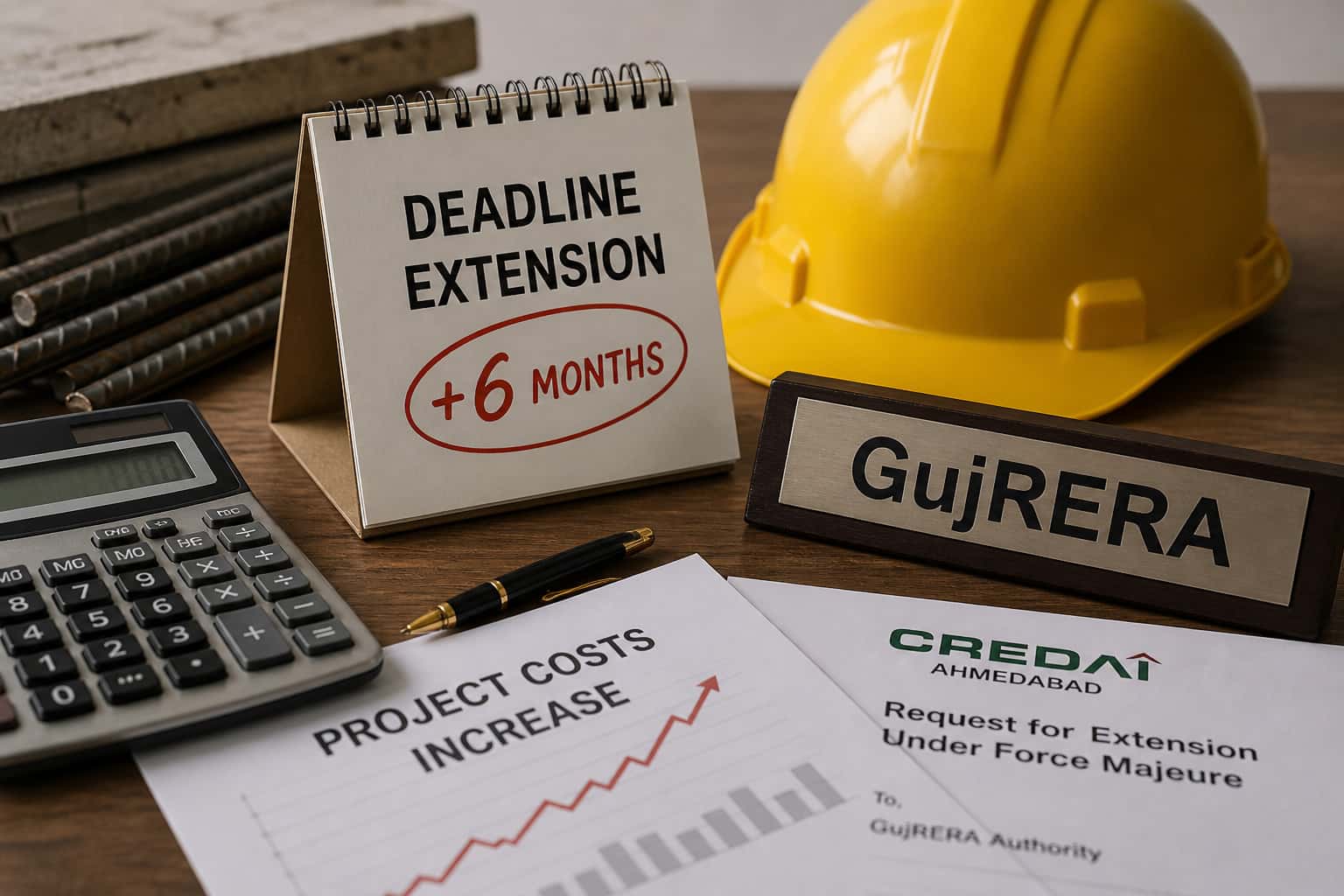
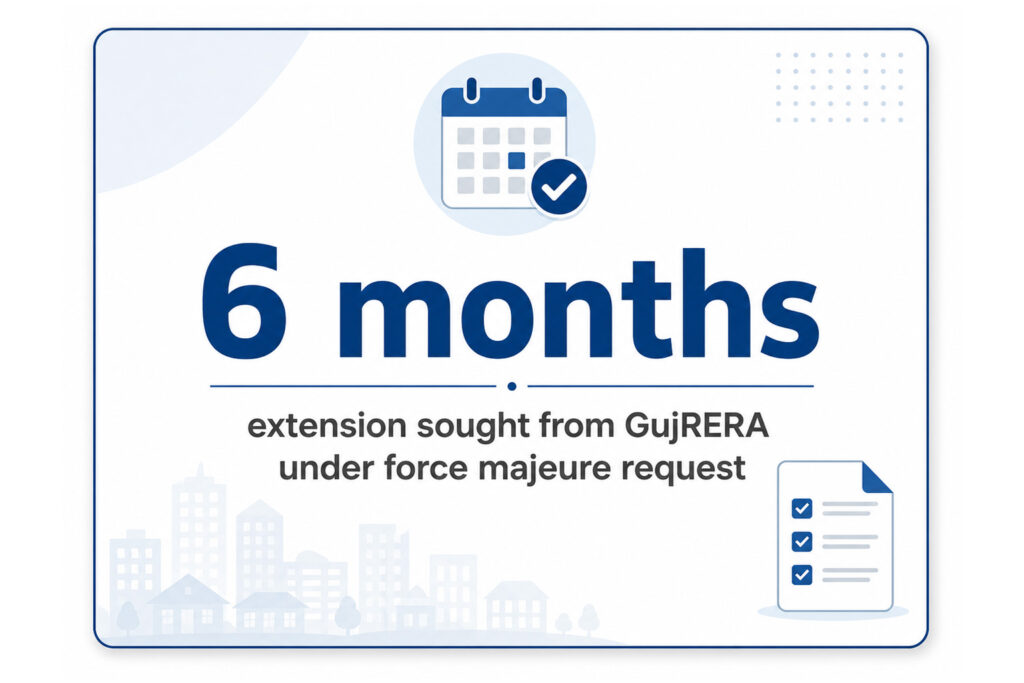
When homebuyers hear that developers are asking a real-estate regulator for more time, the first reaction is often skepticism. Many buyers immediately think of delays, missed deadlines, and the fear that another promise is being pushed further away. That reaction is understandable. But the latest request made by CREDAI Ahmedabad to GujRERA deserves a closer look because it is tied to a very specific pressure point: rising construction costs and supply disruption linked to the West Asia conflict. According to recent reporting, developers have sought a six-month extension for ongoing housing projects, saying that material shortages, labour constraints, and sharp cost increases are affecting their ability to stay on schedule.
At one level, this is a simple story. Builders are saying their costs have gone up, supplies have become less reliable, and timelines are under strain. But at another level, it reveals something much bigger about the current housing market. Real estate is often discussed as if it is driven only by local demand, pricing, and approvals. In reality, the sector is also vulnerable to global disruptions. When international conflict affects crude-linked inputs, shipping conditions, supplier behaviour, and cost visibility, the impact can travel very quickly into construction budgets in Indian cities. That is exactly what Ahmedabad developers say is happening now.
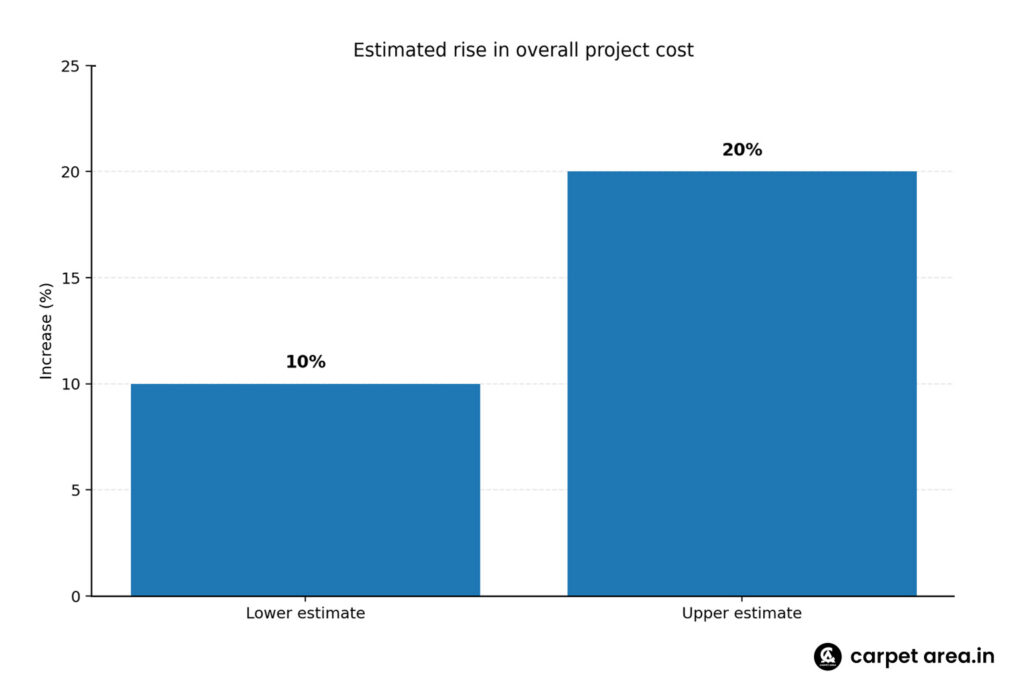
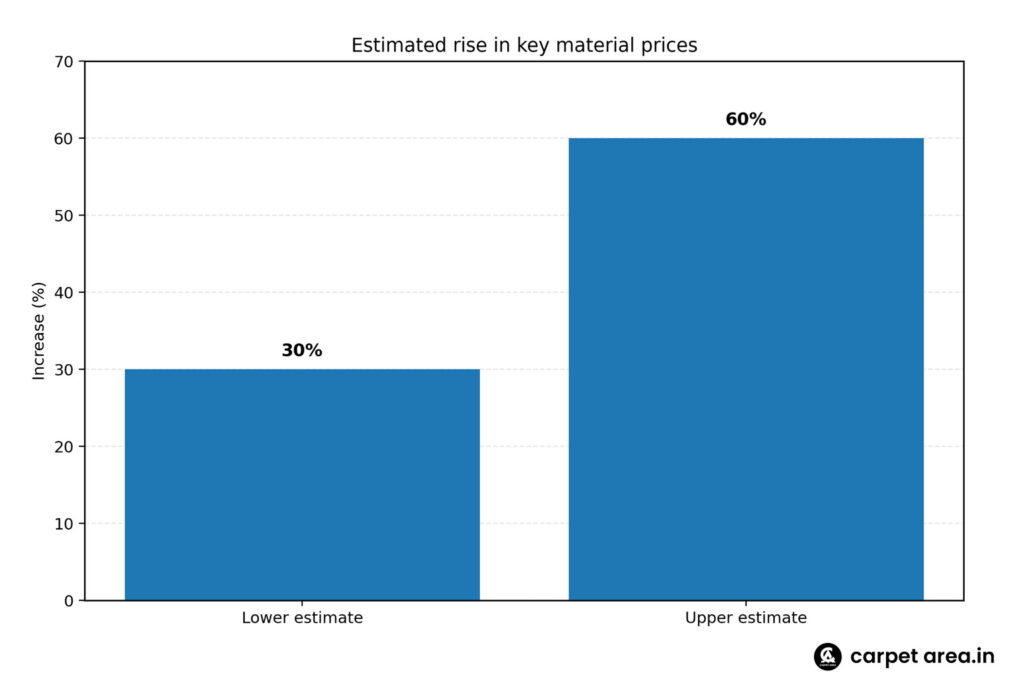
The numbers are what give this story its weight. The Times of India reported that developers have told GujRERA project costs have risen by around 10% to 20% because of current conditions. The same report says prices of crude-linked construction materials such as cement, steel, aluminium, and other major inputs have risen by roughly 30% to 60%. A separate Ahmedabad report from the same newspaper added more detail, saying the sector is facing acute shortages of items like aluminium pipes, CPVC products, ceramics, and electrical fittings, while many suppliers are unwilling to commit to fixed prices. When that happens, the problem is not just that costs rise. The bigger problem is that cost planning becomes unstable.
That distinction matters a lot in real estate. A builder can sometimes absorb a moderate price increase if it is predictable and temporary. But when supply becomes irregular, input prices swing sharply, and vendors stop offering stable rates, project planning becomes much harder. Budgets become less reliable. Procurement becomes slower. Payment schedules become harder to structure. Even when a builder wants to move fast, the project can start losing time because key inputs are simply not reaching the site on normal terms. This is why the request to GujRERA is not being framed by developers as a matter of convenience. They are treating it as a force majeure issue under Section 6 of RERA, meaning they see the disruption as something beyond their control.
There is also a second layer to the pressure. Developers have reportedly said that the summer season has reduced workforce availability further, adding to the stress already caused by materials and pricing. In construction, delays rarely come from one source alone. They usually come from multiple smaller pressures hitting the same project at the same time. If key materials are short, labour is thinner, and budgets are moving unpredictably, the project starts slipping even if demand for housing remains intact. That is why this story is worth reading carefully. It is not only about cost escalation. It is about how cost escalation and execution pressure can combine to strain delivery timelines.
For homebuyers, the obvious question is whether this is really a genuine industry problem or simply another attempt to secure more time. That is where context becomes important. Developers are comparing the current situation to a disruption cycle serious enough to justify sector-wide relief, much like the exceptional extension environment seen during the pandemic. They have asked for a blanket six-month extension and have also reportedly urged intervention to stabilize supply and prevent artificial price increases. That does not automatically mean every delayed project deserves leniency. But it does suggest the industry is facing stress that is broader than one company or one site.
This is also why the story matters beyond Ahmedabad. If a regulator grants a blanket extension because of war-linked supply disruption, it sets a tone for how similar cost shocks may be treated in the future. If it does not, developers may have to absorb more of the pressure themselves, which could affect margins, pricing, or launch strategies. In both cases, the consequences will not stay limited to regulatory files. They will move into the real market. Projects may slow, budgets may tighten, and future housing supply could become more expensive to deliver. This is an inference from the cost and supply issues reported by developers.
Another reason this story deserves attention is that it comes at a time when Indian housing markets are already becoming more selective. Across cities, buyers have become more price-conscious, and affordability is under pressure in many segments. That means a sudden construction-cost jump is especially difficult to manage now. If developers try to pass too much of the increase on to buyers, sales can weaken. If they absorb too much themselves, project economics suffer. That is the real squeeze. The sector is being pulled from both sides: rising execution costs on one hand and a more cautious buyer environment on the other. The Ahmedabad material-shortage report also said market sentiment and property sales were being affected by war-related uncertainty, which strengthens this reading.
There is a broader supply-chain lesson here too. Real estate often feels like a deeply local business because projects are tied to land, approvals, local labour, and city-specific demand. But the inputs that shape construction are often linked to global conditions. Crude-linked products, metals, transport costs, and import-dependent materials can all react to international conflict much faster than many buyers realize. The separate report on Gujarat’s plastics industry is useful here because it showed how West Asia conflict had already pushed polymer prices up sharply, with irregular supply and rising costs hurting manufacturers. Real estate is now reporting its own version of the same pressure. That pattern suggests the strain is not isolated.
For developers, the request to GujRERA is ultimately about time. In real estate, time is not a neutral issue. Every additional month of delay can affect financing costs, contractor schedules, procurement planning, customer communication, and working-capital pressure. If project budgets are already stretched by a 10% to 20% increase, then schedule pressure makes the situation worse. That is why the extension request has to be understood as a financial stability request as much as a timeline request. Developers are effectively saying that the current environment has changed the assumptions under which many ongoing projects were originally planned.
For buyers, however, sympathy comes with limits. A homebuyer waiting for possession may accept that global disruptions are real, but still expect transparency, regular updates, and credible project-level planning. That is where the regulator’s role becomes crucial. Any relief, if granted, would need to balance two truths at once: the industry may be facing genuine external pressure, and buyers still deserve protection from casual delay culture. This is what makes the GujRERA decision important. It is not just about whether the extension is approved. It is about how the system decides when an external shock is serious enough to justify relief without weakening buyer confidence. This is an inference based on the nature of the request and the buyer-protection logic of RERA.
There is also a strategic question hiding inside this story. If war-linked supply disruptions and sharp cost swings can unsettle projects so quickly, then developers may need to rethink procurement models, supplier diversification, contract terms, and inventory planning much more seriously than before. The Ahmedabad sector report said developers were already discussing joint strategies through CREDAI, including sourcing alternative suppliers and labour markets. That may sound operational, but it points to something bigger. Real-estate execution is becoming more sensitive to supply-chain resilience, not just demand outlook.
In the end, this story matters because it shows how quickly a housing market can be influenced by forces far beyond the city itself. What began as geopolitical tension in West Asia is now being cited in Gujarat as a reason for cost escalation, supply disruption, and project-timeline stress. That does not automatically mean every delay should be excused. But it does mean the pressure is real enough to force a serious appeal to the regulator. For buyers, the lesson is that project timelines are not shaped only by local approvals and builder intent. They can also be affected by global disruptions that make the economics of construction far more unstable. For the market, the bigger lesson is even clearer: when input costs rise sharply and unpredictably, housing does not just become harder to build. It can also become harder to schedule, harder to price, and harder to trust.



Leave a Reply