

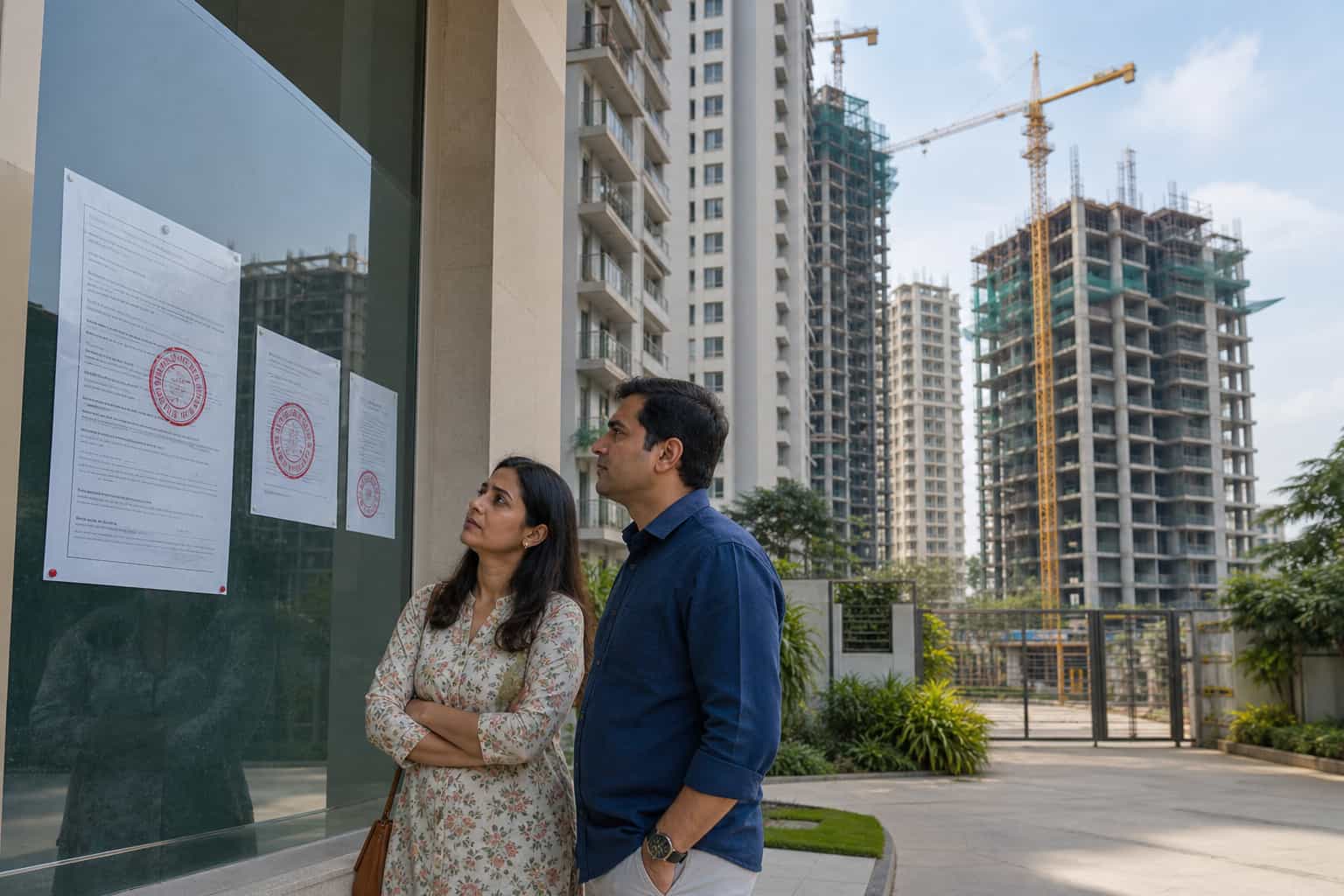
or a homebuyer, buying an under-construction flat is not just a property decision. It is a trust decision. A family pays booking amount, takes a home loan, plans future expenses and waits for possession with the belief that the project will move as promised. But that trust becomes weak when project updates are not available on time.
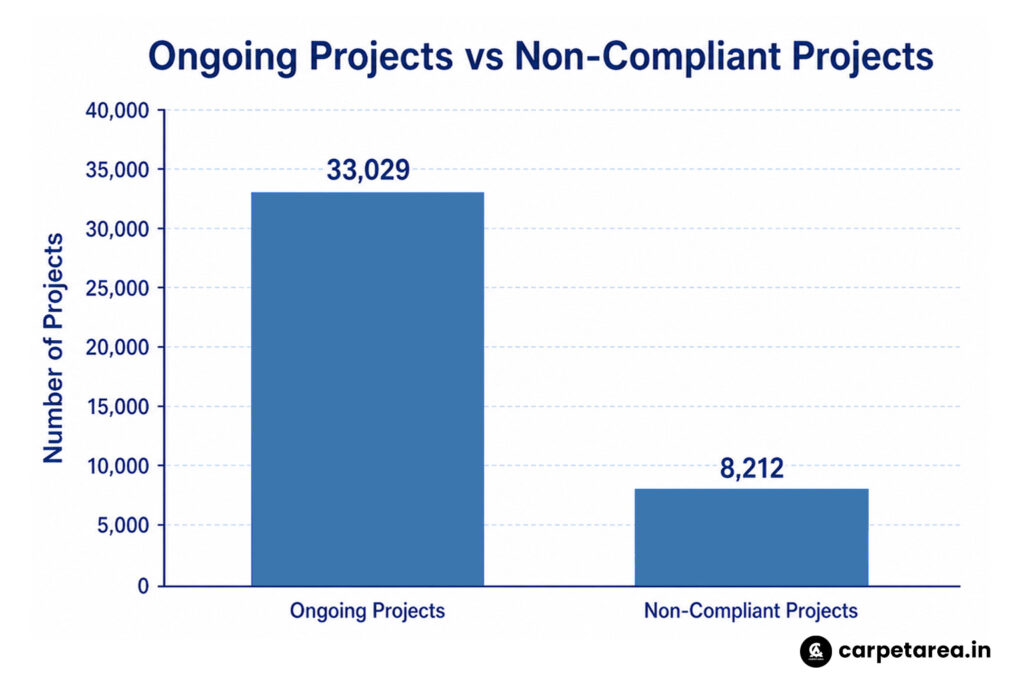
That is why MahaRERA’s latest action against 8,212 housing projects is important. The Maharashtra Real Estate Regulatory Authority has issued notices to developers who failed to submit mandatory Quarterly Progress Reports, or QPRs, within the required deadline. These reports are meant to keep buyers informed about the actual status of a real estate project. In simple words, they help a buyer understand whether the project is moving properly or whether something needs closer attention.
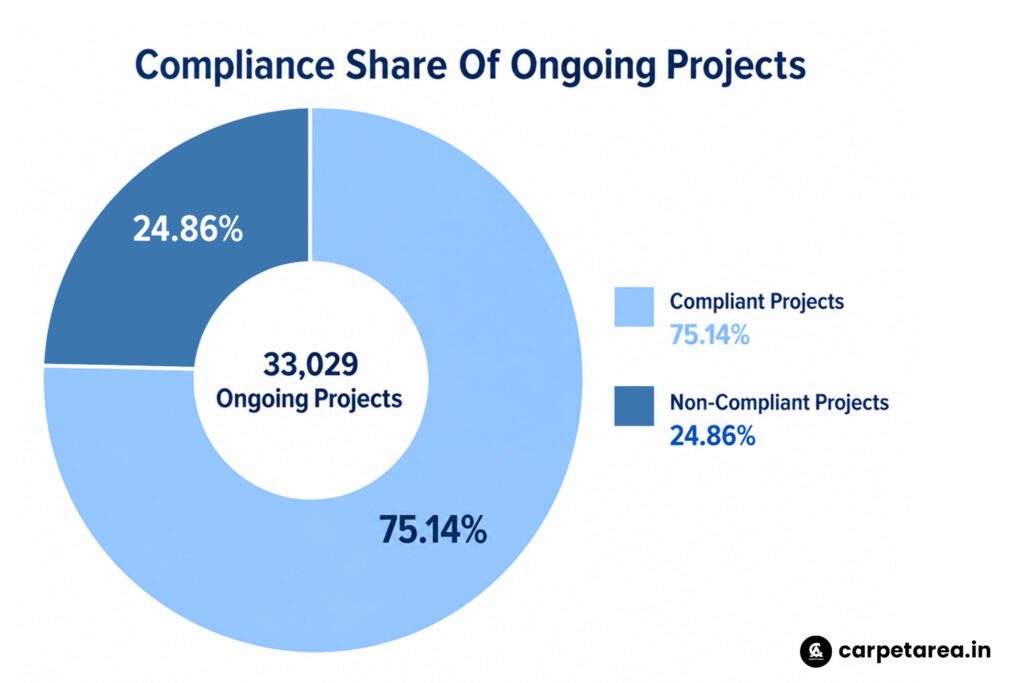
The scale of the issue is what makes this story serious. Maharashtra has around 33,029 ongoing housing projects. Out of these, 8,212 projects failed to update their QPRs for the January to March quarter by the April 20 deadline. This means nearly 24.86% of ongoing projects were non-compliant with this reporting requirement. On the other side, around 75.14% of ongoing projects were not part of this non-compliance list. These two percentages are important because they show that the issue is large, but it does not mean every project in the state is under default.
A Quarterly Progress Report is not just a formality. It gives buyers important information about the project’s construction progress, financial status, number of units sold, funds collected and any changes in approved plans. These details matter because a buyer cannot visit the site every day or personally verify every approval. The QPR works as a public record that keeps the developer accountable and gives buyers a clearer view of the project’s health.
This is why a missing QPR should not be ignored. A project may still be registered with MahaRERA, but if its quarterly updates are not filed, buyers should ask questions. Why has the update not been uploaded? Is there a delay in construction? Is there any financial issue? Has there been any change in the plan or timeline? A transparent developer should be able to answer these questions clearly.
MahaRERA’s action is also important because developers have reportedly been given 60 days to respond and update the pending reports. If they fail to comply, the possible consequences can be serious. Reports mention action such as suspension or cancellation of project registration, freezing of bank accounts, restrictions on sale, marketing and advertising of flats, and a possible ₹50,000 penalty. Authorities may also direct registration officials to halt property registrations in defaulting projects.
For homebuyers, this is where the issue becomes practical. If a project faces restrictions, the buyer’s transaction can become complicated. New bookings may get affected. Sale agreements may face delays. Banks may become cautious. Existing buyers may start worrying about whether the project will move smoothly. That is why RERA compliance is not only a builder’s legal responsibility. It is directly linked to buyer confidence.
The regional numbers also show where the maximum defaults have come from. The highest number of non-compliant projects is from the Konkan and Mumbai Metropolitan Region, with 4,644 projects. The Pune region has 2,311 projects, followed by Khandesh with 511 projects, Vidarbha with 483 projects and Marathwada with 238 projects. District-wise, Pune reportedly leads with 1,957 projects, followed by Thane with 1,465 and Mumbai Suburban with 1,263.
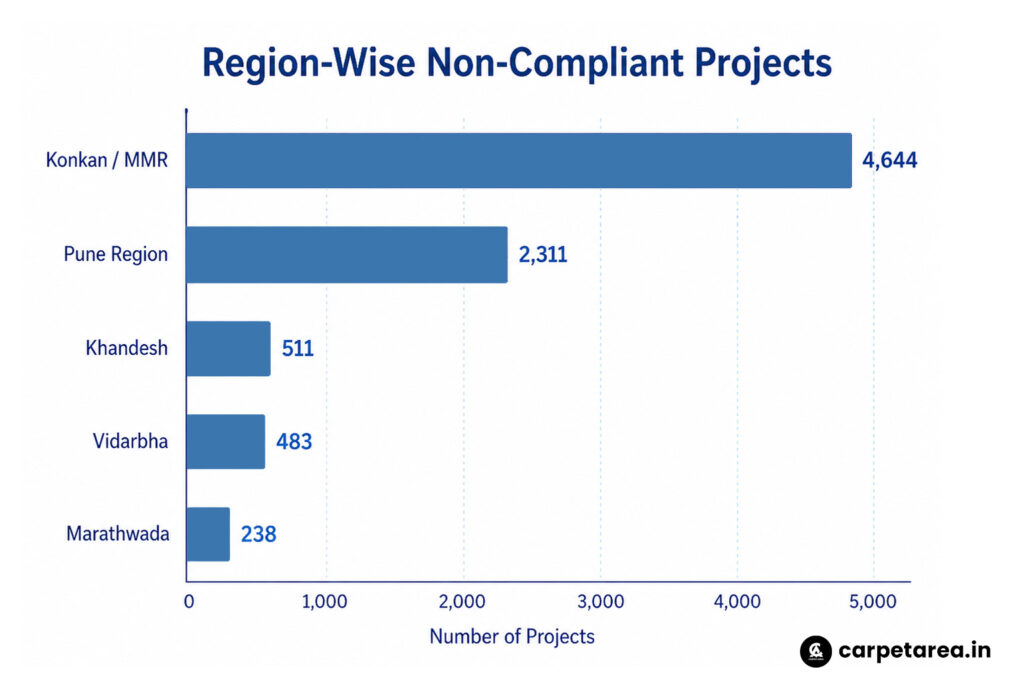
These numbers are useful for buyers because they show that non-compliance is not limited to one small market. It is spread across major real estate regions, including the Mumbai Metropolitan Region and Pune, which are among Maharashtra’s most active housing markets. This does not mean buyers should panic, but it does mean they should become more careful before booking any under-construction flat.
One mistake many buyers make is checking only the RERA registration number. That is not enough. A project may have a valid registration, but buyers should also check whether the quarterly updates are being filed regularly. They should look at project status, possession timeline, uploaded forms, approvals, construction progress and any remarks or actions visible on the MahaRERA portal.
For existing buyers, this notice is a reminder to review their own project. They should check whether the QPRs are updated, keep copies of payment receipts, review their agreement, and ask the developer for written clarification if updates are missing. Verbal assurances from sales teams are not enough when large payments are involved. Buyers should always ask for documented information.
For new buyers, this should become part of the due-diligence checklist. Before paying the booking amount, check the project on MahaRERA. See whether QPRs are available. Check the promised possession date. Compare site progress with official updates. Ask whether there are any pending approvals or changes. A little checking before booking can prevent major stress later.
At the same time, this action should not be read as proof that all 8,212 projects are unsafe. Some developers may have missed the deadline due to documentation delays or internal process gaps. But until the pending reports are updated, buyers should treat the project as needing closer verification. In real estate, missing information itself is a risk signal.
The larger message from MahaRERA’s action is clear: transparency is now central to real estate trust. Developers cannot only sell flats and disappear behind brochures, advertisements and site-office promises. Once money is collected from buyers, regular disclosure becomes a responsibility. QPRs are part of that responsibility because they help buyers track whether their investment is being used and managed properly.
For Maharashtra’s housing market, the notice to 8,212 projects can become an important compliance moment. It tells developers that reporting deadlines matter. It tells buyers that the RERA portal should be checked seriously. And it tells the market that trust in real estate will increasingly depend on visible, updated and verifiable information.
In simple terms, MahaRERA’s notice is not a panic signal, but it is a serious compliance alert. Before buying an under-construction flat, do not only ask about price, carpet area, amenities and possession date. Also ask whether the project’s QPRs are updated. Because in today’s market, a well-updated project record can be as important as a good location.



Leave a Reply