

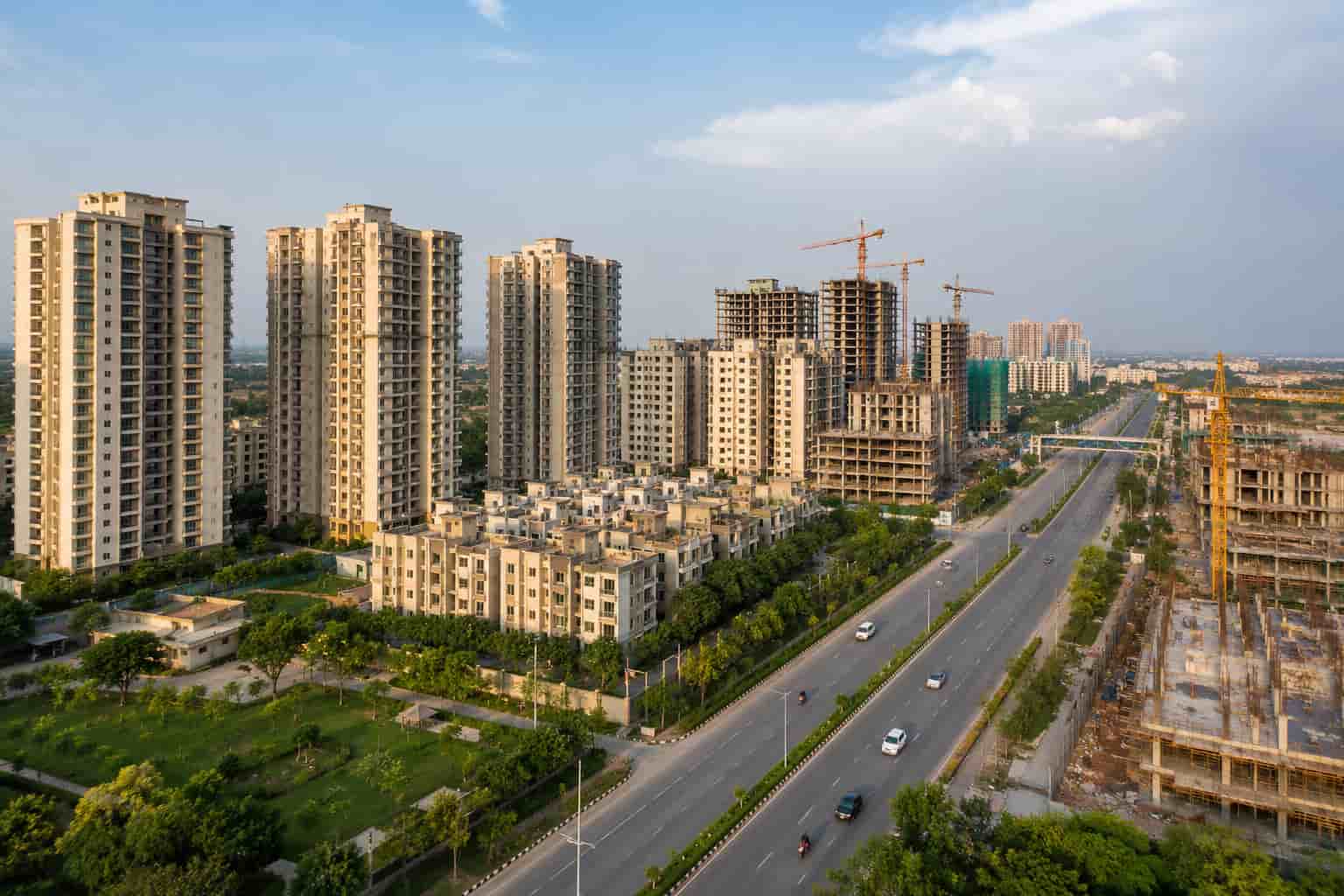
Uttar Pradesh’s real estate market is no longer just a Noida and Greater Noida story. The state is now entering a wider growth phase where capital investment, project registrations, housing supply and buyer confidence are all moving together. For homebuyers, investors and developers, this is important because UP is slowly turning into one of India’s most closely watched property markets.
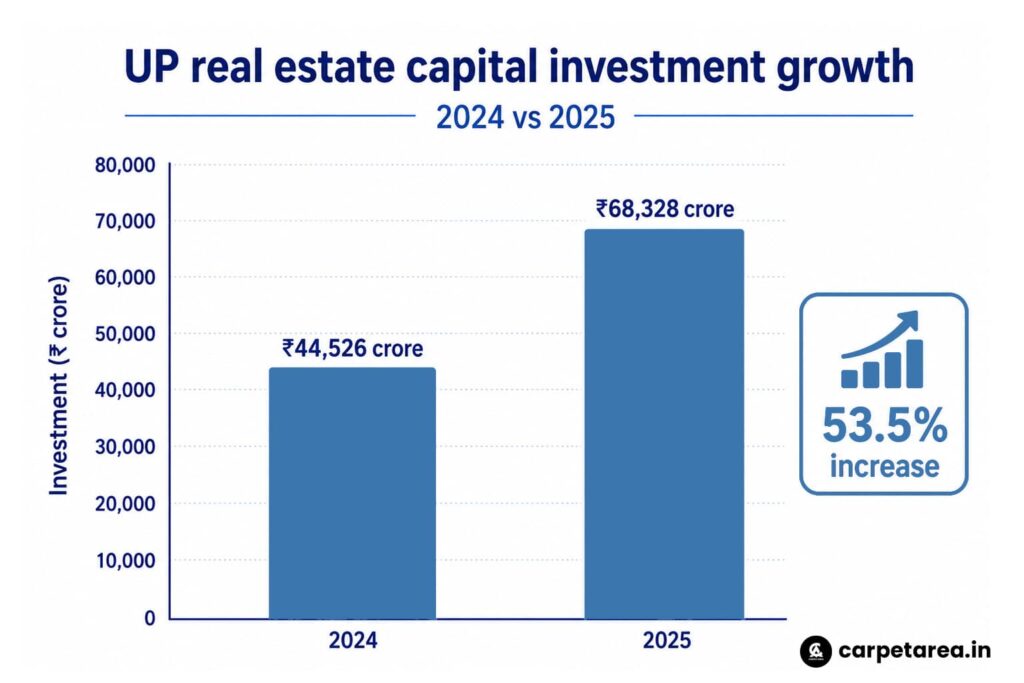
The biggest signal comes from investment. According to UP RERA data, capital investment in registered real estate projects rose from ₹44,526 crore in 2024 to ₹68,328 crore in 2025. That is a jump of ₹23,802 crore, or around 53.5% in one year. For any state market, this is a strong number because investment usually rises only when developers see future demand, better regulation and enough buyer confidence to support new launches.
This is why the UP story should not be seen only as a short-term boom. It is also a trust story. RERA implementation has made project registration, disclosure and dispute resolution more structured. When buyers feel safer and developers see a clearer regulatory environment, the market becomes more attractive for long-term capital. That is what appears to be happening in Uttar Pradesh.
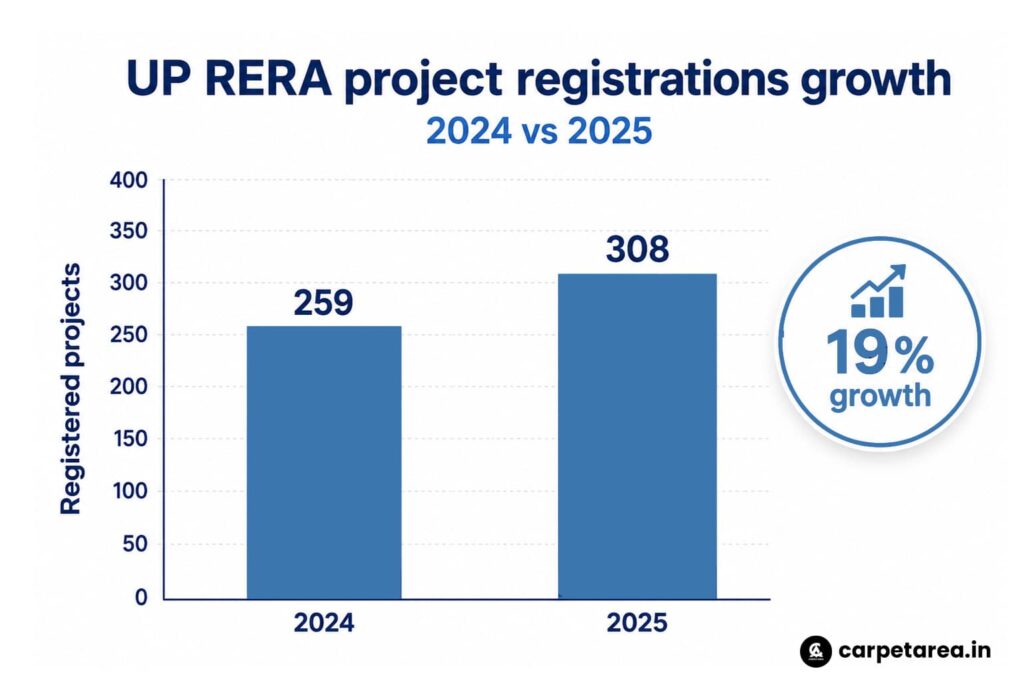
The second major signal is project registration. UP RERA registered 308 real estate projects in 2025, compared with 259 projects in 2024. This means 49 more projects were registered in one year, showing around 19% growth in project registrations. More registered projects mean more formal supply entering the market, which is important for both buyers and investors.
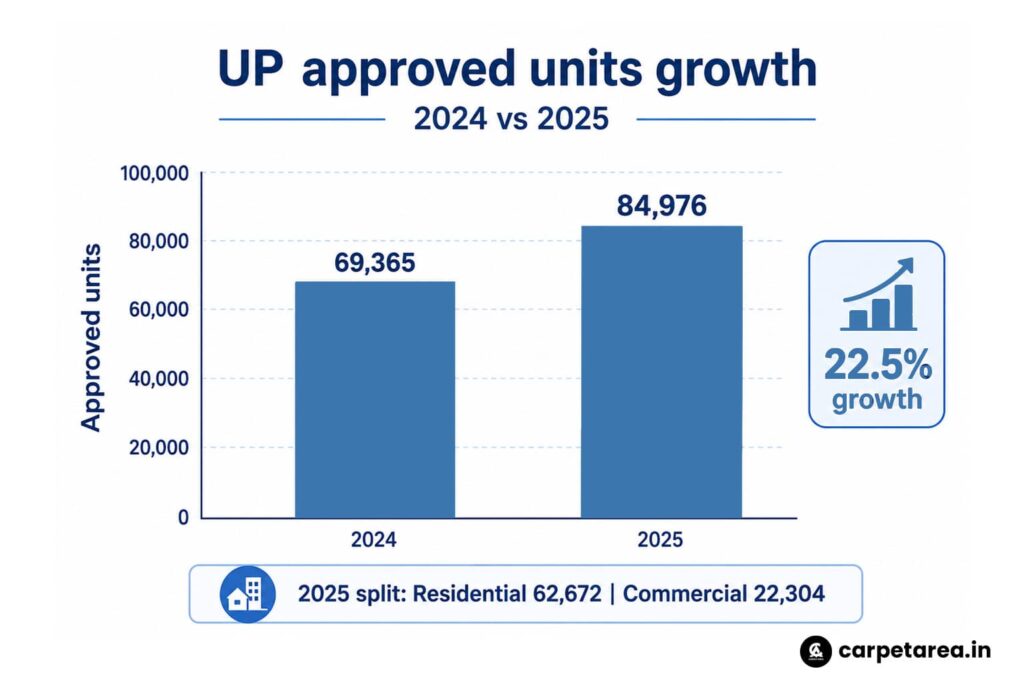
The growth is visible in approved units as well. Approved residential and commercial units increased from 69,365 in 2024 to 84,976 in 2025, which means an addition of 15,611 units and growth of around 22.5%. Out of the 2025 approvals, 62,672 were residential units, including apartments, plots and villas, while 22,304 were commercial units, including shops, studios and other commercial facilities.
For homebuyers, this matters because more approved supply can give more choice. But it also means buyers must become more careful. When new projects rise quickly, buyers should not depend only on advertisements or launch offers. They should check the RERA registration, possession date, approved plans, carpet area, payment schedule and developer track record before booking.
Noida remains the biggest growth engine. In 2025, Noida recorded 69 registered projects and 37,199 approved units. It also led UP in investment value with ₹37,161 crore, which was more than half of the total investment recorded across the state during the year. Noida’s strength comes from its NCR location, infrastructure, corporate presence, connectivity and steady demand for both residential and commercial real estate.
But the interesting part is that UP’s real estate growth is not limited to Noida alone. Lucknow recorded 67 projects in 2025, very close to Noida’s count. Ghaziabad registered 29 projects, while Mathura had 23 projects and Agra had 14 project registrations. In investment terms, Ghaziabad stood second with ₹12,750 crore, followed by Lucknow with ₹9,398 crore.
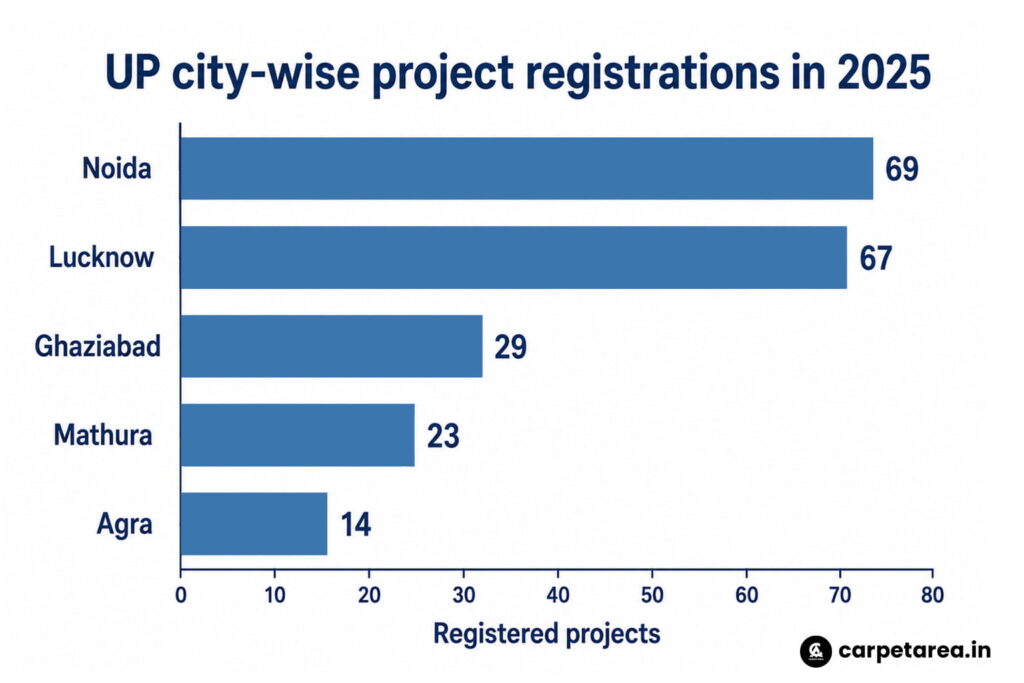
This wider spread is important because it shows that the market is becoming more balanced. Earlier, many people looked at UP real estate mainly through the lens of Noida, Greater Noida and Yamuna Expressway. Now, the growth story is moving into other cities as well. Lucknow is becoming a serious residential and commercial hub. Ghaziabad continues to benefit from NCR-linked demand. Mathura and Agra are gaining attention as infrastructure, tourism and urban development improve.
One of the strongest signals of balanced growth is the NCR versus non-NCR split. Out of 308 projects registered in 2025, 122 were in NCR districts while 186 were in non-NCR areas. This means non-NCR districts accounted for a larger number of project registrations. In 2024 also, the pattern was similar, with 89 NCR projects and 170 non-NCR projects out of 259 total registrations.
For investors, this matters because the next opportunity may not come only from the most obvious locations. Established markets like Noida and Ghaziabad may offer stronger liquidity and brand visibility, but emerging non-NCR cities may offer early-stage growth potential. The key is to separate genuine infrastructure-backed demand from hype.
Infrastructure is another reason UP is getting attention. Expressways, metro rail projects, industrial corridors, smart city programmes and urban rejuvenation schemes are improving connectivity and liveability across the state. Better infrastructure usually changes buyer behaviour because people are more willing to buy in locations where travel time, employment access and lifestyle convenience are improving.
The YEIDA belt, Greater Noida, Noida Extension, Ghaziabad and parts of Lucknow are examples of how infrastructure can influence demand. When roads, airports, industrial nodes, metro corridors and commercial hubs come together, developers become more confident about launching projects. Buyers also feel that the location has a future growth story.
However, rising investment does not mean every project is automatically a good investment. This is where buyers must stay practical. A state-level 53.5% investment surge shows market momentum, but property decisions are always local. The right question is not only whether UP is growing. The right question is whether a specific project, in a specific micro-market, at a specific price, makes sense.
For homebuyers, the checklist should be simple. Check whether the project is registered with UP RERA. Check the exact carpet area and total cost. Compare prices with nearby completed projects. Study possession timelines. Look at connectivity that already exists, not only what is promised. And most importantly, check whether the developer has a history of completing projects on time.
For NRI and HRI investors, Uttar Pradesh is becoming difficult to ignore because the numbers show both scale and diversification. Investment has increased sharply, project registrations are rising, approved supply is growing, and non-NCR districts are taking a larger role. But the best opportunities will still depend on location quality, developer credibility, infrastructure progress and resale demand.
The larger takeaway is clear. UP real estate is growing because regulation, infrastructure and developer interest are moving in the same direction. Noida continues to lead, but Lucknow, Ghaziabad, Mathura, Agra and other cities are adding depth to the market. This makes Uttar Pradesh one of India’s most important real estate growth stories right now.
In simple words, the 53.5% investment surge is not just a number. It is a signal that UP’s property market is becoming more organised, more visible and more attractive for long-term players. For buyers, this means more options. For investors, it means more corridors to study. And for the market, it means Uttar Pradesh is no longer a secondary real estate story. It is becoming a serious national growth engine.



Leave a Reply