


Uttar Pradesh’s real estate market is entering a bigger and more interesting phase. For many years, property discussions in the state were mostly centred around Noida, Greater Noida, Ghaziabad and Lucknow. These cities still remain important, but the latest UP-RERA projection shows that the state’s real estate growth is spreading wider and becoming more structured.
According to recent reports, UP-RERA is expected to sanction around 400 new real estate projects in 2026, compared with 308 projects in 2025. This is not just a small increase. It signals that developers are bringing more projects into the formal regulatory system, and that the state’s project pipeline is becoming deeper.
The growth trend becomes clearer when we look at the past few years. UP-RERA sanctioned 197 projects in 2023, 259 projects in 2024, and 308 projects in 2025. In 2026, the authority expects the number to cross 400 projects. UP-RERA chairman Sanjay R Bhoosreddy also said that 108 projects had already been sanctioned so far this year, which shows that the approval momentum has already started.

For homebuyers and investors, this matters because RERA approvals are not just paperwork. Under the RERA Act, developers need project registration before launching projects for sale. This creates a more transparent framework where buyers can check project details, timelines, approvals and developer commitments before making a decision. A rising number of registered projects means more formal supply is entering the market.
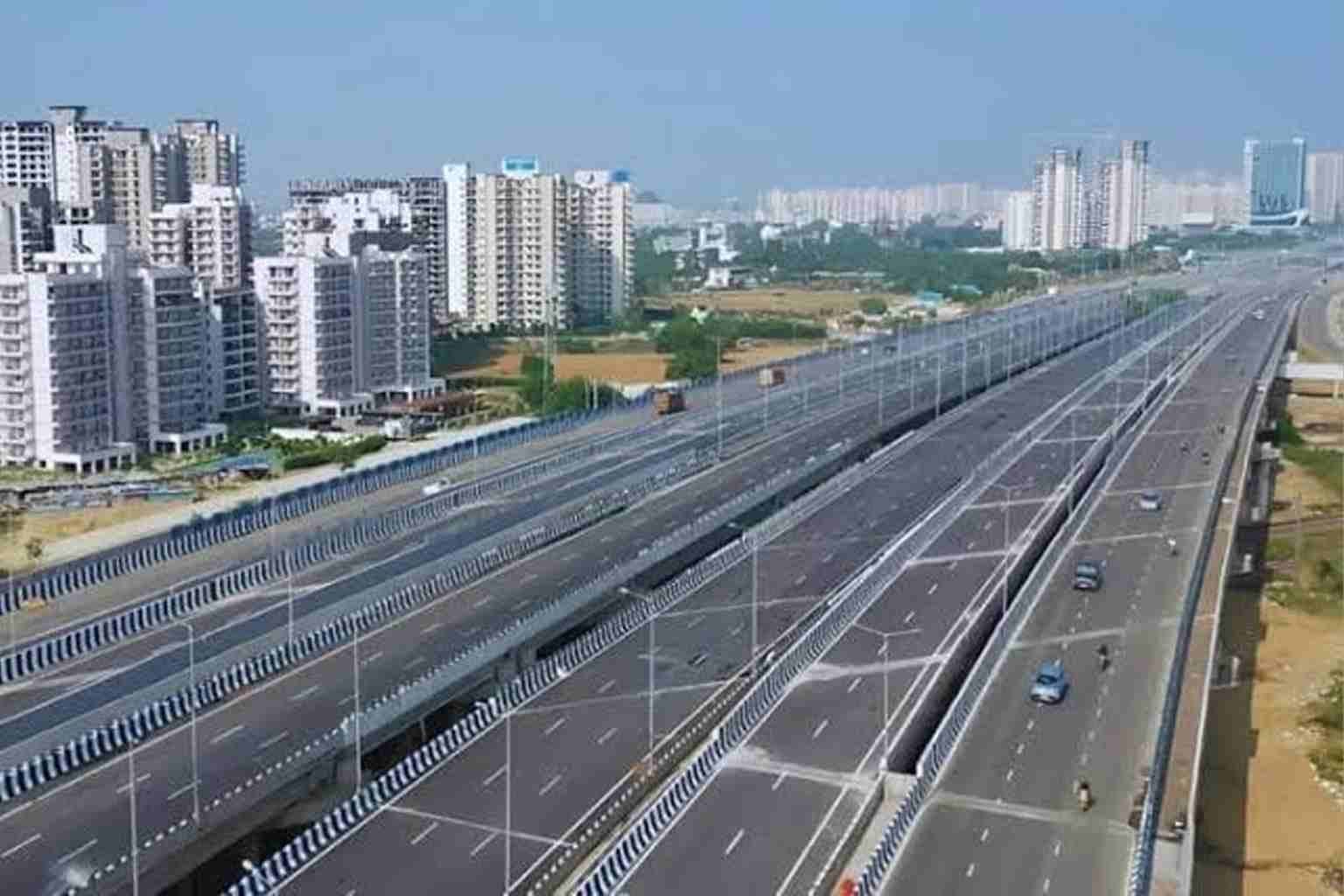
The bigger story is infrastructure. UP-RERA’s leadership has linked the rise in project approvals to infrastructure growth across the state. Major projects such as the Noida International Airport, Ganga Expressway, expressway networks and expanding metro connectivity are changing how developers and buyers look at Uttar Pradesh.
Infrastructure changes real estate because it reduces uncertainty. When a new airport, expressway, metro corridor or industrial zone improves connectivity, developers gain confidence to launch projects. Buyers also start seeing long-term value because travel time, employment access and lifestyle convenience improve. This is why real estate activity usually follows serious infrastructure development.
Western UP is one of the clearest examples. The Noida International Airport at Jewar has already become a major driver of property interest in Noida, Greater Noida, YEIDA areas and surrounding corridors. Bhoosreddy also noted that real estate prices in western UP have risen sharply because of infrastructure development, including Jewar airport.
But the most important change is that the UP real estate story is no longer limited to the traditional NCR belt. Reports say property activity is picking up in cities such as Kanpur, Gorakhpur, Varanasi, Ayodhya, Jhansi, Hapur, Bareilly, Meerut, Muzaffarnagar and Gonda. This wider spread makes the story more important because it shows that developers are looking beyond only the most obvious markets.
This can create new opportunities for buyers, but it also requires more careful decision-making. In established markets like Noida and Ghaziabad, buyers may get stronger resale liquidity, better developer choices and more visible infrastructure. In emerging cities, entry prices may be lower, but risks can also be higher if infrastructure, employment demand or project execution is not strong enough.
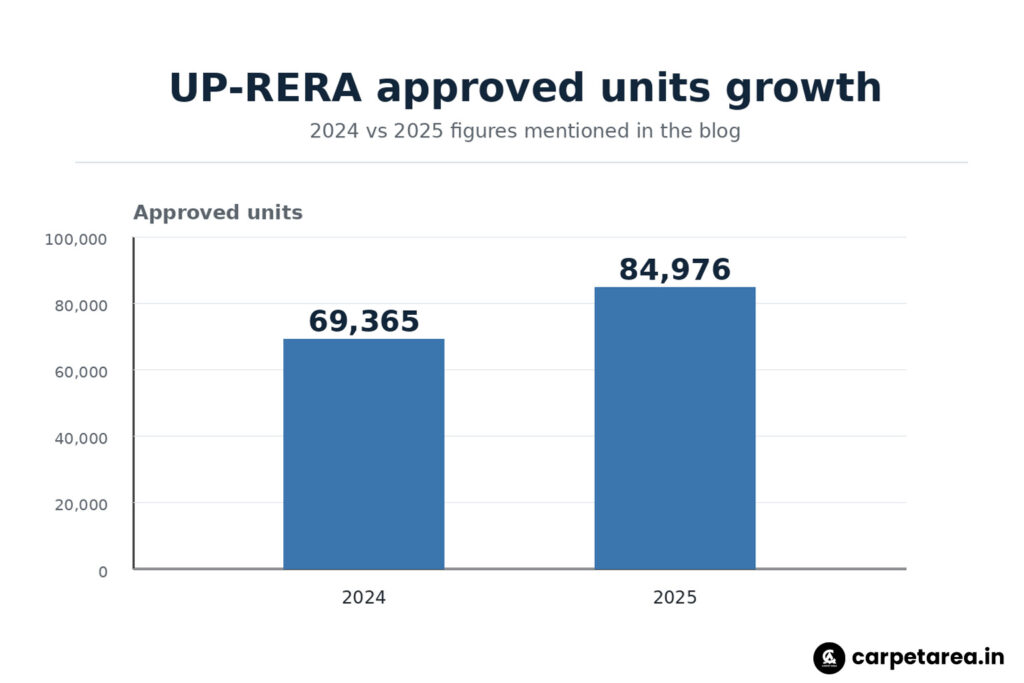
The previous year’s data also supports the growth direction. In 2025, UP-RERA registered 308 projects, up from 259 projects in 2024, and approved units rose from 69,365 in 2024 to 84,976 in 2025. Capital investment also grew from ₹44,526 crore to ₹68,328 crore, a rise of 53.5%. These numbers show that the state was already building momentum before the 2026 projection.

For buyers, the rise in approvals means more options, but more options also mean more responsibility. A project being RERA-registered is important, but buyers should still check the exact project details. They should verify possession timelines, carpet area, land title, approvals, payment plan, construction stage and the developer’s past delivery record.
For investors, the expected rise to over 400 project sanctions can be read as a sign of confidence. But the smarter approach is to study micro-markets, not only state-level numbers. A project near a real infrastructure corridor, employment centre or growing city zone may have stronger potential than a project marketed only on future promises.
This is especially important in emerging UP cities. Places like Ayodhya and Varanasi may benefit from religious tourism, infrastructure upgrades and hospitality demand. Kanpur and Gorakhpur may benefit from regional urban growth and better connectivity. Meerut, Hapur and Muzaffarnagar may gain from expressway-linked movement and NCR spillover. But each city has its own demand pattern, and buyers should not treat all locations equally.
The role of RERA is also central to this story. Bhoosreddy said the RERA law has brought a level playing field between developers and consumers. That matters because real estate growth without transparency can create buyer risk. If more projects are entering the regulated system, buyers get a better chance to track information and hold developers accountable.
However, the rise in approvals should not be seen as a guarantee that every project will perform well. A sanctioned project still needs strong execution. Developers must complete construction, maintain quality, follow timelines and communicate clearly with buyers. For homebuyers, the safest project is not only the one with registration, but the one with visible progress and credible delivery.
For Uttar Pradesh, the larger message is positive. A state that was once seen through a few real estate pockets is now becoming a wider property market. Infrastructure is expanding, regulatory approvals are rising, and more cities are entering the real estate growth map. This can deepen the state’s housing and commercial development story.
In simple words, UP-RERA’s expected 400 project approvals in 2026 is more than a number. It shows that the state’s property market is becoming broader, more formal and more infrastructure-led. For buyers, it means more choices. For investors, it means more corridors to study. And for developers, it means Uttar Pradesh is becoming a larger platform for future real estate growth.
The safest conclusion is this: UP’s real estate market is growing, but the best opportunities will still depend on location, infrastructure reality, developer credibility and project-level due diligence.

Leave a Reply