


For homebuyers in India, the real story is often not told at launch. It begins later, when construction delays stretch on, structural defects appear, and buyers are forced into long legal fights simply to recover what was promised to them. That is why two recent developments, one from Haryana RERA and the other from the Bombay High Court, deserve close attention. Together, they signal something important: buyer protection in Indian real estate is becoming more practical, more enforceable, and harder for developers to brush aside.
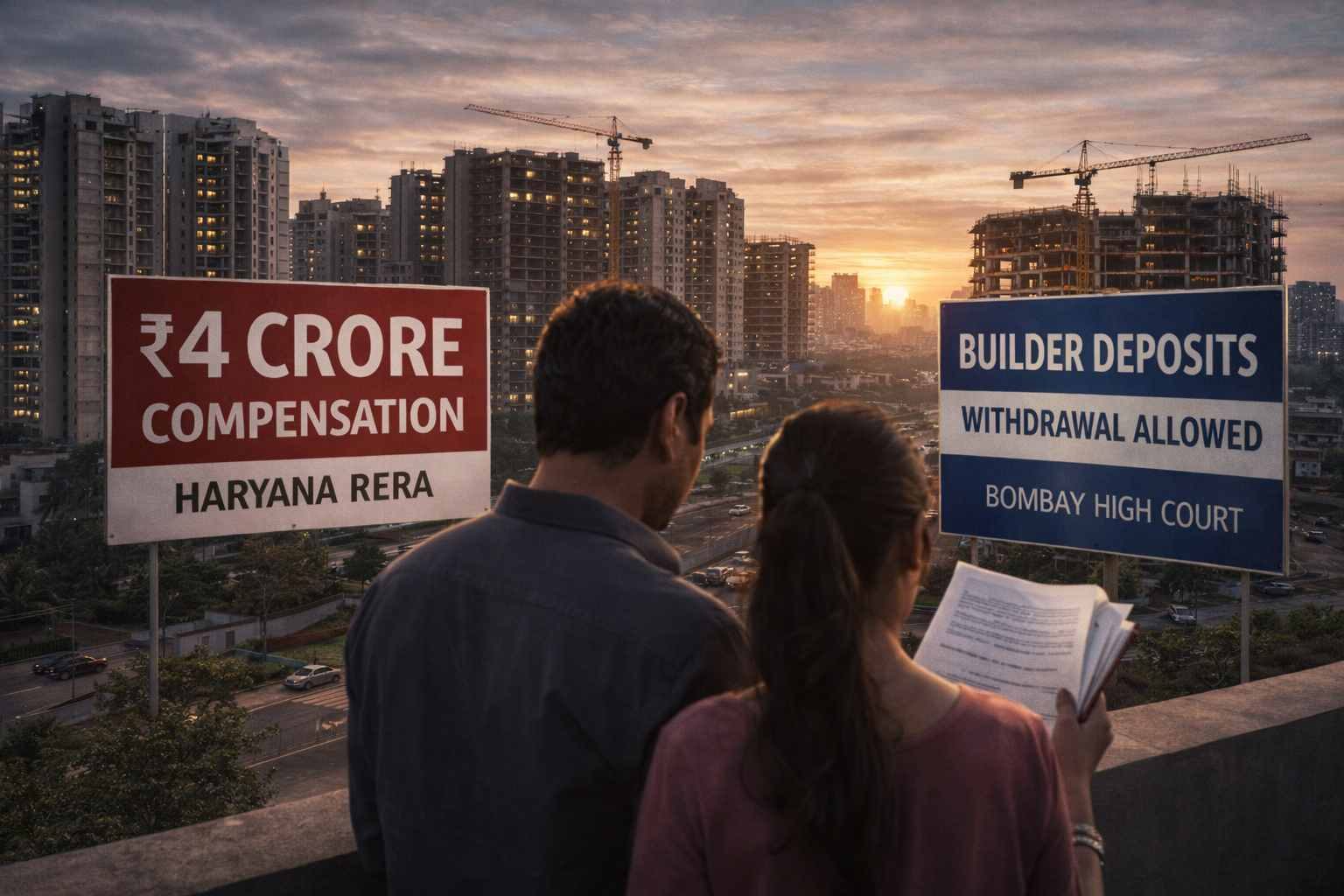
The first case comes from Gurugram, where Haryana RERA directed Chintels India to pay more than Rs 4 crore to a homebuyer in the Chintels Paradiso project. The order followed findings of grave structural defects in the project, which had already come under scrutiny after the February 2022 collapse of Tower D that killed two residents. Reports said later audits found widespread structural failures, and RERA held the developer responsible for a project that had effectively become unsafe for habitation.
What makes that order significant is not just the compensation amount. It is the logic behind it. This was not a routine delay-possession dispute. The regulator appears to have treated safety and habitability as central to the buyer’s rights, not as side issues to be managed through cosmetic repairs or long procedural arguments. In practical terms, that sends a far stronger message to the market than a standard refund case. It tells homebuyers that when a project is fundamentally compromised, the law may move beyond narrow technicalities and recognize the full seriousness of the damage. This is an inference based on the reported reasoning and outcome of the order.
The second development comes from the Bombay High Court, and it matters for a different reason. The court ruled that under RERA, in appropriate cases, a homebuyer can be allowed to withdraw money deposited by a builder during the pendency of an appeal. The case involved a delayed-possession dispute in which the builder had challenged an appellate tribunal order that allowed the buyer access to the deposited amount. The High Court backed the broader principle that a buyer should not necessarily be left waiting indefinitely even after already receiving a favorable ruling.
That may sound procedural, but its real-world impact could be substantial. One of the biggest frustrations for homebuyers is that even after winning at one stage, actual relief gets delayed because the builder files an appeal and the money remains locked up. By recognizing that appellate forums may, in deserving cases, permit withdrawal of deposited amounts with safeguards, the High Court has reinforced the idea that legal victory should not become meaningless through delay alone. The court also reportedly acknowledged the unequal position of buyers and builders, noting the financial and emotional strain that prolonged disputes can impose on allottees.
Put together, these two developments point in the same direction. The Haryana RERA order shows that regulators can take a tough view where safety and structural integrity are at stake. The Bombay High Court ruling shows that courts are also willing to prevent procedural delay from swallowing substantive relief. One deals with the seriousness of the original wrong. The other deals with the seriousness of timely remedy. For consumers, both matter.
This is also why these stories go beyond the individual cases involved. Indian homebuyers have long struggled with a system in which possession delays, poor construction quality, and endless litigation often shifted the burden onto the purchaser instead of the developer. What these rulings suggest is a gradual shift toward a more buyer-centered reading of real estate law, one that pays closer attention to vulnerability, actual hardship, and the need for meaningful relief rather than symbolic orders alone. That is an analytical reading based on the reported outcomes of both matters.
For developers, the message is equally clear. Compliance is no longer just about project registration, paperwork, or legal defense strategy. Courts and regulators appear increasingly ready to look at what the buyer actually suffered, whether that is financial loss, unsafe living conditions, or years of delay after a promised handover. That raises the cost of poor execution, and it raises the importance of trust and accountability in the market. This conclusion is an inference from the direction of the two rulings.
For buyers, the takeaway is practical. These decisions do not mean every dispute will end quickly or that every complaint will produce a large compensation award. But they do strengthen an important principle: homebuyers are not expected to remain helpless while developers delay, appeal, or avoid responsibility. And in a sector where confidence depends heavily on whether legal rights can actually be enforced, that is a shift worth paying attention to




Leave a Reply